
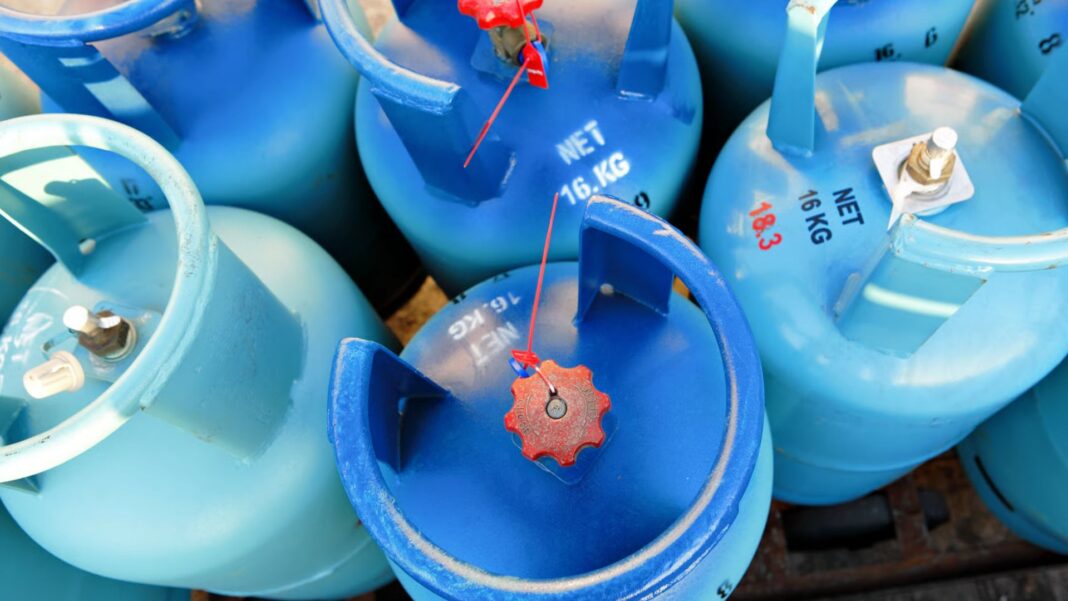

The Philippine National Oil Company secured 21,000 metric tons of liquefied petroleum gas from the United States for delivery to Batangas in late May 2026, marking the government’s first publicly confirmed LPG procurement from a non-regional source under its emergency energy program, as state entities simultaneously explore expanded national fuel storage capacity.
Key Facts At A Glance
- PNOC secured 21,000 metric tons of LPG sourced from the United States, to be shipped via Singapore, for delivery between May 20 and 31, 2026 at the Port of Batangas.
- As of April 17, 2026, the Philippines’ LPG inventory stood at 40.26 days of supply, up approximately four days from the prior week but still the tightest fuel category in the national inventory.
- For context, gasoline stood at 54.47 days, diesel at 50.13 days, kerosene at 129.93 days, and jet fuel at 60.69 days as of the same date.
- The procurement was announced April 20 by the DOE under Executive Order No. 110, which placed the Philippines under a state of national energy emergency on March 24, 2026.
- PNOC-Exploration Corporation has a broader mandate to procure up to 2 million barrels of oil and additional LPG volumes as inventory conditions require.
- The DOE identified non-traditional suppliers now in active engagement, including Argentina, Canada, Australia, Colombia, Brunei, and India.
- The Maharlika Investment Corporation (MIC) is in early-stage discussions with PNOC on a consortium model to build expanded oil storage tank farms, with a development timeline of two to three years.
LPG Procurement Shifts Westward As Regional Supply Tightens
The Philippine Department of Energy announced on April 20, 2026, that the Philippine National Oil Company has secured a cargo of 21,000 metric tons of liquefied petroleum gas from the United States. The shipment will be routed via Singapore and discharged at the Port of Batangas between May 20 and 31, 2026. The announcement was made by DOE Undersecretary Alessandro Sales at a media briefing on the same date.
The procurement represents a notable shift in origin for Philippine LPG supply. The Philippines imports the substantial majority of its petroleum products from the Middle East, and the Strait of Hormuz closure beginning in late February 2026 immediately pressured LPG availability. In late March, Energy Secretary Sharon Garin warned that LPG inventories could be depleted within 25 days absent intervention. That figure has since recovered, reaching 40.26 days of supply as of April 17, driven in part by PNOC’s active procurement program. The US-sourced cargo, once discharged, is expected to push LPG inventory higher through late May and into June.
LPG is a household fuel used by millions of Filipino families for cooking. The DOE described the commodity as vital to daily household needs, framing the procurement as a welfare-linked supply action rather than a purely commercial one. Energy Secretary Sharon Garin said the government is committed to ensuring a stable and reliable supply of LPG as part of its obligations to both households and small businesses.
Emergency Procurement Architecture Under E.O. 110
The LPG procurement sits within a broader emergency purchasing framework activated by President Ferdinand R. Marcos Jr. through Executive Order No. 110, signed on March 24, 2026. The order placed the country under a state of national energy emergency and directed urgent measures to safeguard domestic energy supply across all petroleum product categories. Under this mandate, PNOC-Exploration Corporation was empowered to purchase fuel on an emergency basis, bypassing standard procurement processes. The Bureau of Internal Revenue issued a special permit to PNOC-EC to fast-track emergency importation of petroleum products, including diesel and LPG.
Alongside the US LPG cargo, PNOC-EC is managing a separate diesel import program totaling approximately 1.042 million barrels, with successive deliveries arriving at ports in Subic Bay and Davao. As of April 21, the third diesel shipment of 320,000 barrels had arrived at the Subic Terminal, with a fourth shipment of 330,000 barrels from Singapore scheduled for Davao on April 24.
The DOE confirmed it has engaged non-traditional fuel suppliers including Argentina, Canada, Australia, Colombia, Brunei, and India. The Department of Foreign Affairs is conducting parallel diplomatic outreach with additional oil-producing nations to broaden the procurement base.
Storage Capacity Emerges As Structural Constraint
Alongside the procurement activity, the DOE and PNOC disclosed that inadequate storage capacity is emerging as a binding constraint on the Philippines’ ability to build meaningful buffer reserves. PNOC is in active discussions with the Maharlika Investment Corporation on the feasibility of a fuel storage consortium.
MIC President and CEO Rafael Consing Jr. outlined the proposed structure at a House Legislative Energy Action and Development Joint Committee hearing on April 15. Under the consortium model, PNOC would contribute land or existing assets as equity, while MIC and private sector partners would provide capital for the construction of tank farm infrastructure. Operations would be outsourced to the private sector. Consing described MIC’s role as that of a capital provider rather than a fuel inventory manager, specifically to avoid direct market risk exposure on petroleum products.
Consing estimated the storage project would take two to three years from initiation to become operational. He noted that while current national storage capacity is estimated to support approximately 60 days of fuel, utilization rates are below 60 percent of that capacity, raising questions about whether the effective storage bottleneck is physical or financial. PNOC and MIC have formed a technical working group to study design, funding, and project structure. The DOE has also directed PNOC and PNOC-EC to make coordinated use of available existing storage facilities, with non-compliance subject to permit suspension or cancellation.
The strategic petroleum reserve question has gained renewed prominence through the crisis. Lawmakers and analysts have noted that Japan maintains approximately 208 days of oil stocks as of December 2025, a benchmark that underscores the Philippines’ structural exposure relative to economies with established strategic reserves. The PNOC Industrial Park in Mariveles, Bataan, located five kilometers from Petron Corporation’s refinery in Limay, has been identified as a candidate site for reserve stockpiling infrastructure.