

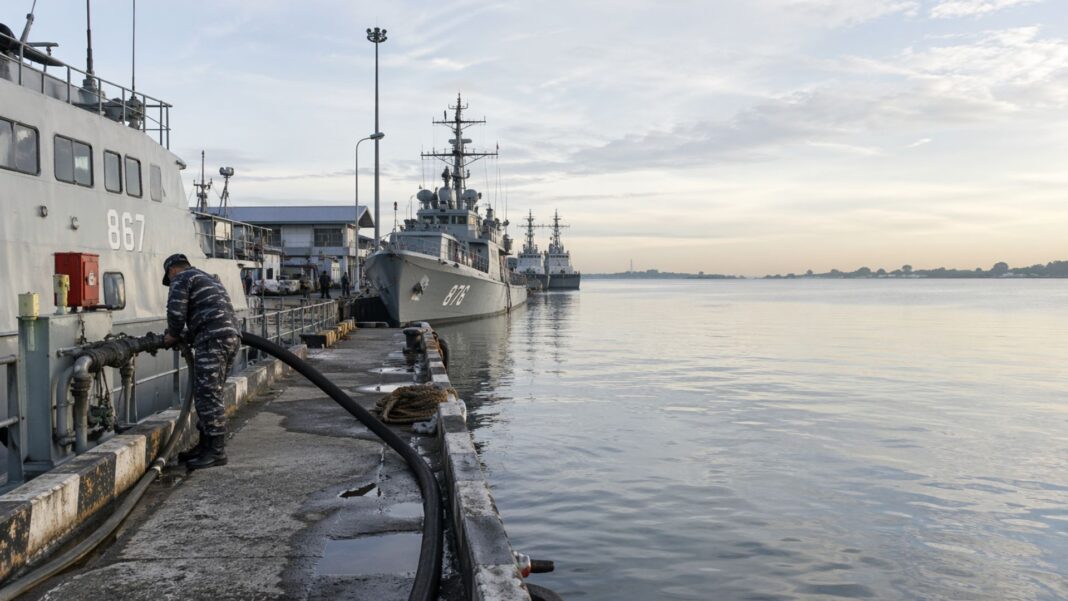

Indonesia’s Navy Chief of Staff announced on April 16 a phased transition of the service’s patrol fleet to B50 biofuel, extending the government’s palm oil-based energy mandate into national defense operations for the first time and adding institutional momentum to the July 1 civilian rollout.
Key Facts At A Glance
- Admiral Muhammad Ali announced the B50 transition at a press conference at Navy Headquarters in Cilangkap, East Jakarta, on April 16, 2026.
- B50 is a blend of 50 percent crude palm oil-based fatty acid methyl ester and 50 percent fossil diesel; Indonesian warships currently run on B35.
- Engine modifications will be required for the fleet’s existing vessels before B50 can be used operationally.
- The Navy also announced deployment of drones and autonomous submarines to reduce overall fuel consumption.
- Indonesia’s nationwide civilian B50 mandate is set for July 1, 2026, projected to save approximately IDR 48 trillion in fuel subsidies and reduce fossil fuel consumption by up to 4 million kiloliters annually.
- Industry group APROBI estimates full B50 implementation will require 17–18 million metric tons of CPO feedstock annually, absorbing an additional 1.5 to 2.3 million metric tons of domestic palm oil per year versus B40 levels.
- Road testing of the B50 blend across nine vehicle categories has been ongoing since December 2025 and is targeted for completion in May 2026.
The Navy Extends Jakarta’s Energy Mandate Into Defense
On April 16, 2026, Admiral Muhammad Ali, Chief of Staff of Tentara Nasional Indonesia Angkatan Laut, announced that the Indonesian Navy will transition its patrol fleet to B50 biofuel as part of a broader effort to reduce the service’s dependence on fossil fuel-derived petroleum products. The announcement was made at a press conference at Navy Headquarters in Cilangkap, East Jakarta, and first reported by Antara News.
The declaration brings Indonesia’s defense sector into formal alignment with the civilian energy mandate set to take effect July 1, 2026, under which all diesel distributed in the country must contain 50 percent crude palm oil-based content. Previously, the Navy’s fleet operated on B35, the standard that preceded Indonesia’s current civilian B40 mandate. The transition to B50 for naval vessels will not happen simultaneously with the civilian rollout; Ali confirmed the shift will be gradual and contingent on modifications to existing ship engines.
The Navy’s patrol, logistics, and troop transport vessels are the primary targets for the biofuel transition. Ali specified that high-mobility vessels will be prioritized in the first phase of the conversion program. He also stated that the transition would not reduce the intensity of naval patrol operations, framing fuel efficiency and operational readiness as compatible objectives.
Drones And Autonomous Submarines As Fuel Reduction Tools
Alongside the B50 announcement, the Navy disclosed a parallel strategy to cut total fuel consumption through the deployment of unmanned platforms. Ali indicated that electrically powered drones and autonomous submarines will be used in maritime patrol operations, reducing the frequency of fuel-dependent crewed vessel deployments in lower-risk surveillance tasks. The Navy currently counts approximately 245 active commissioned vessels in its inventory, making fuel expenditure a substantial operational cost center. The integration of electric unmanned systems represents a complementary layer of fuel reduction that does not require the engine modifications associated with the B50 transition.
The Civilian B50 Program: Status And Scale
The Indonesian government confirmed July 1, 2026, as the mandatory start date for nationwide civilian B50 implementation at a press conference in Seoul on March 31, led by Coordinating Minister for Economic Affairs Airlangga Hartarto. Agriculture Minister Andi Amran Sulaiman subsequently confirmed on April 19 in Surabaya that Indonesia will cease all diesel imports on the same date. The combination of higher domestic blending and increased refinery output from the Balikpapan Refinery Development Master Plan is expected to make the import halt feasible.
PT Pertamina (Persero), as the state fuel supply and distribution entity, is the primary executing body for the B50 rollout. Vehicle road tests covering nine categories of civilian and commercial machinery have been conducted since December 2025 at a blending and test facility in Lembang, West Java, with results assessed as satisfactory to date. The Ministry of Energy and Mineral Resources indicated testing will conclude in May and engine condition inspections will follow before final rollout confirmation.
The ESDM Ministry’s Director General for New, Renewable Energy and Energy Conservation, Eniya Listiani Dewi, stated on April 21 in Bandung that the program remains on track for the July 1 date and is projected to save up to IDR 157.28 trillion in foreign exchange over the remainder of 2026.
Palm Oil Supply: The Program’s Key Constraint
The B50 mandate’s feasibility depends substantially on Indonesia’s crude palm oil production capacity. Industry association APROBI previously estimated that full B50 implementation at the civilian scale would require between 17 million and 18 million metric tons of CPO feedstock annually, an increase of 1.5 to 2.3 million metric tons per year over B40 levels. Indonesia’s installed biodiesel production capacity stands at approximately 19.6 million kiloliters, with operating rates typically around 85 percent, implying that additional capacity of around 4 million kiloliters may be required to fully service the mandate.
Analysts and traders have flagged the risk of a CPO allocation contest between domestic biodiesel mandates and export markets. Indonesia accounts for approximately 60 percent of global palm oil production, and a material reduction in export availability would have direct price implications for key importers including India, China, and the European Union. The EU Deforestation Regulation, which restricts imports linked to land-use change, adds a further dimension to the upstream risk calculus for the sector.
The ESDM Ministry has not disclosed finalized FAME volume procurement targets, and road testing data on engine performance under extended B50 use in marine environments have not been publicly released. The Navy’s own timeline for engine modifications has not been specified.