

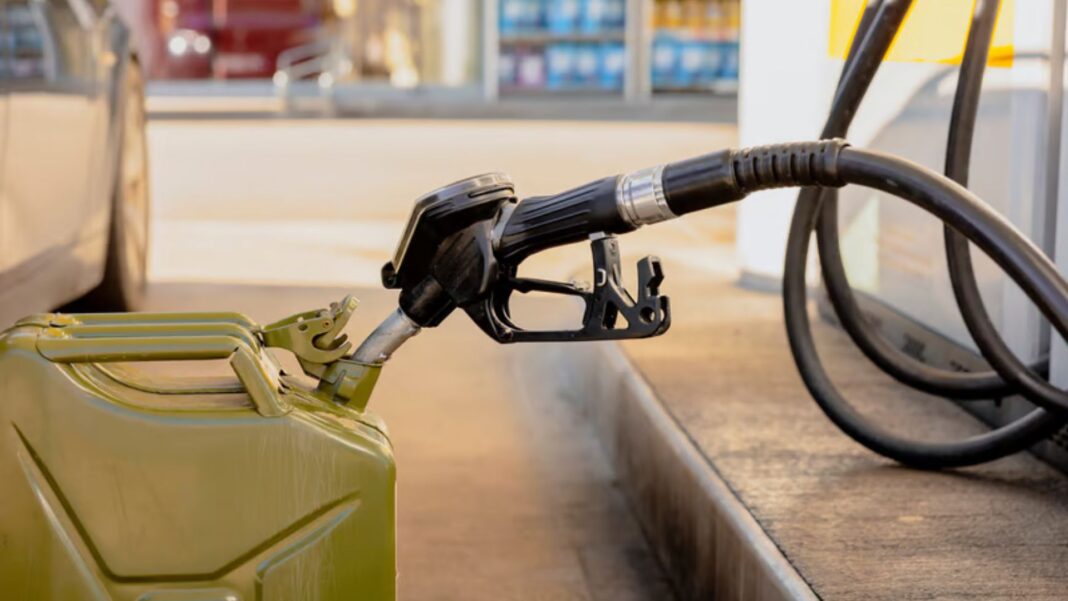

Thailand’s Energy Ministry confirmed on May 1, 2026 that domestic oil reserves were sufficient for approximately 108 days of demand, even as the Strait of Hormuz crisis continued to drive global energy market volatility. The ministry simultaneously raised retail fuel prices effective May 1: PTT Oil and Retail Business Public Company Limited (OR) and Bangchak Corporation Public Company Limited (BCP) implemented a 0.60-baht-per-litre increase on high-speed diesel B7 and B20, bringing B7 to 40.80 baht per litre and B20 to 33.80 baht per litre. Petrol and gasohol variants were raised by 0.85 baht per litre, with gasohol 95 now at 43.30 baht per litre. The Oil Fuel Fund, which had been in positive territory as recently as March 1, recorded a deficit of 63.02 billion baht as of May 1, with diesel subsidies disbursed at approximately 168.65 million baht per day.
Key Facts At A Glance
- Thailand’s domestic oil reserves stood at approximately 108 days of demand as of May 1, 2026, comprising legally required reserves, commercial stock, oil in transit, and secured supply.
- The Oil Fuel Fund recorded a deficit of 63.02 billion baht as of May 1, 2026, up from a positive balance of 2.459 billion baht on March 1, 2026.
- Diesel subsidies were being disbursed at approximately 168.65 million baht per day as of May 1.
- High-speed diesel B7 retail price was raised to 40.80 baht per litre effective May 1, while gasohol 95 rose to 43.30 baht per litre.
- Global benchmark diesel closed at approximately US$179 per barrel on April 30, compared with US$167 on April 22.
- Thailand’s six oil refineries were ordered under a 1973 emergency decree to contribute refinery margin profits to the Oil Fuel Fund, with compulsory reductions of 2 baht per litre applied from April 2026.
- Diesel reached a historic high of 50.54 baht per litre on April 5, 2026, before partially retreating.
- Every 1-baht increase in diesel prices is estimated to reduce Thailand’s GDP by approximately 0.02 percent.
Thailand entered the current Middle East energy crisis on comparatively stable footing. Its two operational LNG import terminals gave it the largest LNG import capacity in Southeast Asia, and its six domestic refineries supported a degree of domestic processing that insulated it partially from the most acute supply disruptions experienced elsewhere in the region. The country also had diversified crude procurement well before the February 28, 2026 outbreak of hostilities between the United States, Israel, and Iran, sourcing from 26 countries by 2024 with Qatar, Malaysia, and Australia as its top LNG suppliers.
The Buffer And Its Limits
The 108-day reserve figure announced on May 1 reflects a multi-layered stockpile. Under emergency measures activated in March 2026, Thailand’s Energy Ministry ordered oil traders under Section 7 of the Fuel Trade Act 2000 to progressively raise legally required fuel reserves. From March 31, requirements were lifted from 25 days to 27 days; from April 30, to 32 days. The directive targeted the crude shortfall estimated at 8.45 million barrels for March alone, stemming from the Hormuz closure. Authorities confirmed that sufficient extra crude procurement had been secured from non-Middle East sources to meet demand through at least April.
The reserve buffer does not, however, reflect energy independence. Thailand imports approximately 52 percent of its crude from the Middle East and benchmarks domestic diesel pricing against the Singapore refined products market, making retail prices directly exposed to global volatility. On April 30, the Singapore market diesel reference closed at around US$179 per barrel, compared with US$167 on April 22. The price trajectory informed the Fuel Fund Management Committee’s May 1 decision to allow another 0.60-baht retail increase rather than absorb the full increment through the fund.
The Oil Fuel Fund: A Mechanism Under Strain
The Oil Fuel Fund, established as Thailand’s primary price-stabilization mechanism for petroleum products, is a state-managed pool funded through levies on fuel transactions. The Office of the Oil Fuel Fund (OFFO) uses it to compensate retailers for the difference between market-reflective costs and the government-approved retail price. In periods of low global oil prices, the fund accumulates surpluses; in periods of high prices, it runs deficits. Historically, those deficits have been recovered through levy adjustments when prices eventually fall.
The 2026 crisis has imposed an unprecedented speed and scale of drawdown. The fund was solvent with a balance of 2.459 billion baht on March 1, 2026. By April 5, following eight consecutive retail price adjustments and continued subsidy outlays, the deficit had reached 53.226 billion baht. By May 1, it stood at 63.02 billion baht. The fund holds a 150-billion-baht credit line, but at the April burn rate of over 1 billion baht per day in diesel compensation alone, officials acknowledged that without structural intervention, that limit would be reached within months.
In response, Prime Minister Anutin Charnvirakul’s government invoked the Emergency Decree on the Correction and Prevention of Oil Shortage B.E. 2516 (1973), ordering all six domestic refineries to contribute a mandatory 2-baht-per-litre margin reduction effective from April 2026. The six refineries subject to the decree are Thai Oil Public Company Limited, PTT Global Chemical Public Company Limited, IRPC Public Company Limited, Bangchak Corporation Public Company Limited, Bangchak Sriracha Corporation, and Star Petroleum Refining Public Company Limited. Unlike the voluntary approach used in 2022, when only PTT Group subsidiaries agreed to contribute, the 2026 measure is legally binding under penalty provisions that include criminal liability.
The government calculated that a five-year average gross refining margin benchmark of approximately 2.43 baht per litre could be used as the basis for identifying excess profits. At elevated March 2026 margins of approximately 7.30 baht per litre, the difference was deemed material enough to warrant compulsory redistribution. The mandatory cut was projected to reduce the fund’s daily compensation burden by approximately 212 million baht per day.
Retail Price Trajectory
Diesel had been held at 29.94 baht per litre through the first days of the crisis under a government directive to shield transport costs. By April 5, after eight adjustments, it had reached 50.54 baht per litre, a historic high. The government subsequently allowed partial recovery in global prices to be passed through as reductions: on April 17, OR and BCP reduced diesel by 1.50 baht per litre after the Singapore reference softened. By May 1, the price had settled at 40.80 baht per litre following further adjustments.
Thailand’s retail diesel price of 40.80 baht per litre as of May 1 remains below the range reported in most ASEAN neighbors. Diesel prices across Malaysia, Indonesia, Cambodia, the Philippines, Laos, Myanmar, and Singapore ranged from 43.96 to 119.76 baht per litre equivalent on the same date, reflecting varying subsidy regimes and exposure to global market pricing.
Biodiesel As A Relief Valve
Alongside fund management measures, the government reopened the commercial B20 biodiesel market. OR and Bangchak resumed commercial B20 sales in late March 2026 after nearly four years. B20, blending 20 percent palm-oil-derived methyl ester with fossil diesel, was priced at approximately 5 baht per litre below B7 at the time of relaunch, primarily for bulk purchasers in transport, fisheries, and industry. The Thailand Energy Ministry also raised the national minimum biodiesel blending requirement from 5 percent to 7 percent effective March 2026, reducing base diesel consumption by an estimated 1.2 million litres per day against a daily consumption base of approximately 61.8 million litres.
The economic rationale was straightforward: with palm-oil-derived biodiesel domestically produced, substituting a portion of imported fossil diesel reduces both foreign exchange outflows and pressure on the Oil Fuel Fund. Thailand is already among the Asian economies that the International Energy Agency identifies as having achieved the largest savings on fossil fuel imports through biofuel adoption.