

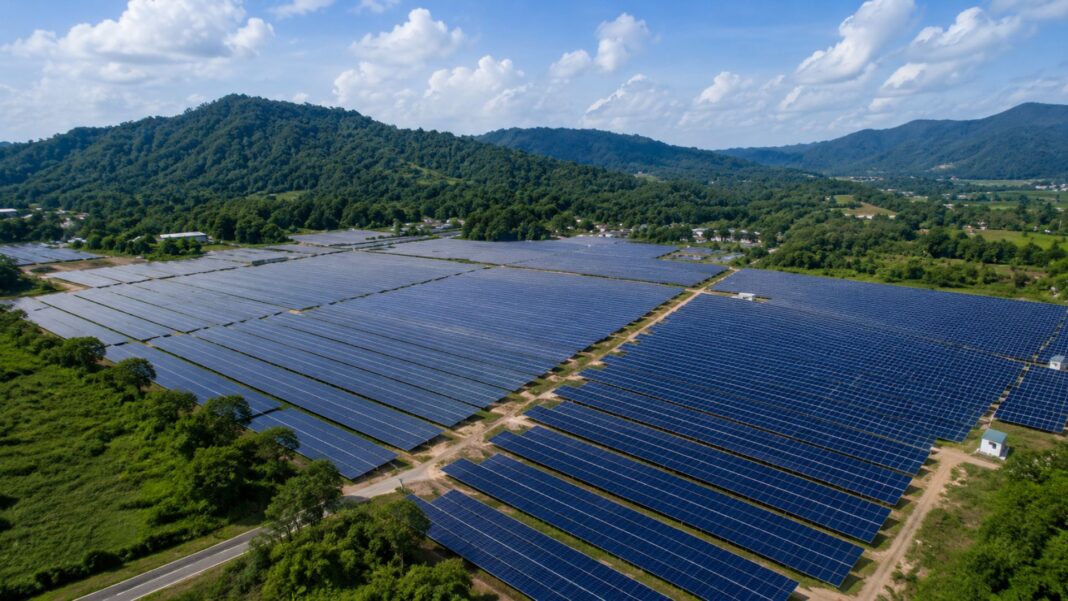

President Prabowo Subianto launched renewable energy projects spanning 15 Indonesian provinces on June 26, 2026, with combined investment of approximately IDR 25 trillion (USD 1.5 billion). The initiatives focus primarily on geothermal and solar power development and arrived two days after JETP officials publicly criticized state utility PLN for slow renewable procurement.
Key Facts At A Glance
- Launch date: June 26, 2026
- Geographic scope: 15 provinces across Indonesia
- Total investment value: IDR 25 trillion (approximately USD 1.5 billion)
- Primary technologies: geothermal and solar power plants
- National geothermal target: 5.15 GW of installed capacity by 2030
- JETP criticism of PLN procurement pace surfaced June 24, 2026, two days before the launch
- Indonesia’s renewable mix reached 17.89 percent of national generation as of April 2026, already surpassing the government’s full-year 2026 target of 16.46 percent
President Prabowo Subianto launched a series of renewable energy projects across 15 Indonesian provinces on June 26, 2026, directing a combined IDR 25 trillion, or roughly USD 1.5 billion, toward geothermal and solar power development. The launch is positioned as part of a broader energy self-sufficiency push, alongside a target of raising Indonesia’s installed geothermal capacity to 5.15 GW by 2030.
Procurement Concerns Precede The Launch
The announcement followed pointed criticism of state utility PT Perusahaan Listrik Negara just two days earlier. At a June 24 forum, Paul Butarbutar, head of the Indonesia Secretariat for the Just Energy Transition Partnership, said PLN continues to move slowly on renewable energy procurement, particularly for small-scale and off-grid projects. He noted that while reforms around local content requirements and power purchase agreements have raised industry optimism, implementation has lagged, with developers still awaiting PLN to issue PPAs reflecting the new regulatory framework. Separately, an energy analyst at the think tank Ember said PLN’s National Power Supply Plan, intended to anchor the transition, has suffered from poor execution that has created gaps in solar and wind development.
Mixed Signals On Transition Pace
The presidential launch arrives against a backdrop of mixed renewable energy data. Indonesia’s new and renewable energy contribution reached 17.89 percent of the national power generation mix as of April 2026, equivalent to 29.62 terawatt-hours of electricity production, a figure that has already surpassed the government’s full-year 2026 target of 16.46 percent. Officials attributed the gain to a wave of long-delayed hydroelectric projects entering commercial operation and accelerated phase-outs of diesel-fired generation. At the same time, Indonesia’s broader 10 GW renewable energy goal for 2025 has been described as increasingly unrealistic given persistent procurement and grid-access barriers.
Publicly available details on the specific projects included in the June 26 launch, such as individual plant names, capacities, or completion timelines, remain limited based on current reporting.