

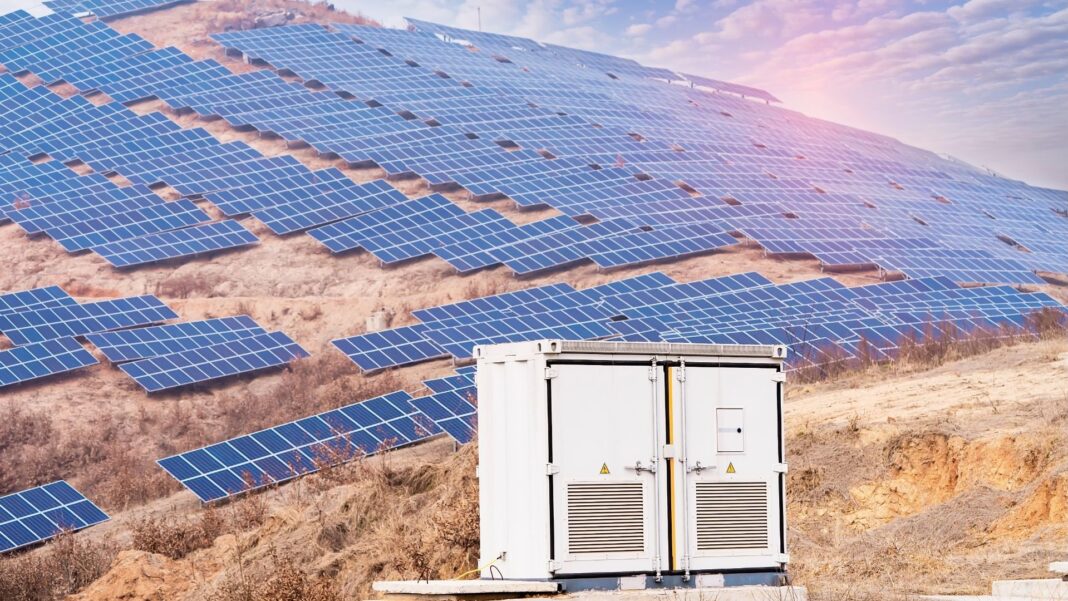

Singapore’s Energy Market Authority granted Conditional Approvals on August 7 to two companies to import a combined 900 megawatts of electricity generated from solar and battery storage projects in Johor, Peninsular Malaysia. The approvals extend a bilateral cross-border power trade push that already includes a 1 GW Sarawak import deal and a joint feasibility study for a second Singapore-Malaysia interconnection of up to 2 GW.
Key Facts At A Glance
- EMA granted Conditional Approvals to two companies on August 7, 2026, for a combined 900 MW of electricity imports from Peninsular Malaysia
- Sembcorp Utilities Pte Ltd received approval for 300 MW, backed by a 2.2 GWp floating solar project and 4.3 GWh of battery storage at the Linggiu Reservoir in Johor
- Southern Solar Alliance Pte Ltd, a wholly owned subsidiary of Malaysian developer Ditrolic Energy Holdings Sdn Bhd, received approval for 600 MW
- Sembcorp’s Linggiu project is being developed with KPRJ Environment Sdn Bhd, a subsidiary of Kumpulan Prasarana Rakyat Johor, and Qua Energy
- Both projects are targeting commercial operations around 2029, pending PPAs, financing, and further regulatory approvals in both countries
- The approvals bring EMA’s total to 13 Conditional Approvals and Conditional Licences for electricity imports, spanning Australia, Cambodia, Indonesia, Malaysia, and Vietnam
- Singapore’s power sector currently accounts for 40% of the country’s carbon emissions, according to EMA
- The announcement references an earlier Conditional Approval for 1 GW of low-carbon electricity imports from Sarawak, and a Joint Development Agreement between Singapore Energy Interconnections, SP Group, and Tenaga Nasional Berhad to study a second Singapore-Peninsular Malaysia interconnection of up to 2 GW
Singapore’s Energy Market Authority (EMA) said on August 7 that it had granted Conditional Approvals to two companies to import a combined 900 megawatts (MW) of electricity from Peninsular Malaysia, generated by solar and battery energy storage projects in the state of Johor. Sembcorp Utilities Pte Ltd, a subsidiary of Sembcorp Industries, was approved for a proposed capacity of 300 MW, while Southern Solar Alliance Pte Ltd, a wholly owned unit of Malaysian developer Ditrolic Energy Holdings Sdn Bhd, was approved for 600 MW.
Sembcorp’s share of the approval is tied to a large-scale renewable development at the Linggiu Reservoir in Johor, comprising roughly 2.2 gigawatts-peak (GWp) of floating solar photovoltaic capacity paired with up to 4.3 gigawatt-hours (GWh) of battery energy storage. The project is being developed in partnership with KPRJ Environment Sdn Bhd, a wholly owned subsidiary of Kumpulan Prasarana Rakyat Johor, and Qua Energy.
Both Sembcorp Utilities and Southern Solar Alliance are targeting commercial operations around 2029. EMA said the companies still need to secure requisite approvals from relevant jurisdictions, conclude power purchase agreements with buyers, arrange sufficient financing, and complete other project development milestones before reaching financial close.
Part Of A Broader Import Push
EMA framed the approvals as building on “strong momentum” in bilateral energy cooperation between Singapore and Malaysia. The regulator specifically cited an earlier Conditional Approval for 1 gigawatt (GW) of low-carbon electricity imports from Sarawak, as well as a Joint Development Agreement signed between Singapore Energy Interconnections (SGEI), SP Group, and Tenaga Nasional Berhad (TNB) to conduct feasibility studies for a second Singapore-Peninsular Malaysia interconnection with capacity of up to 2 GW.
With the two newest approvals, EMA has now granted Conditional Approvals and Conditional Licences to a total of 13 electricity import projects, sourced from Australia, Cambodia, Indonesia, Malaysia, and Vietnam. The regulator said electricity imports remain a central pillar of its decarbonization strategy for the power sector, which it says currently generates 40% of Singapore’s carbon emissions. EMA added that it will continue to engage companies bringing forward “credible and commercially viable” import proposals.