

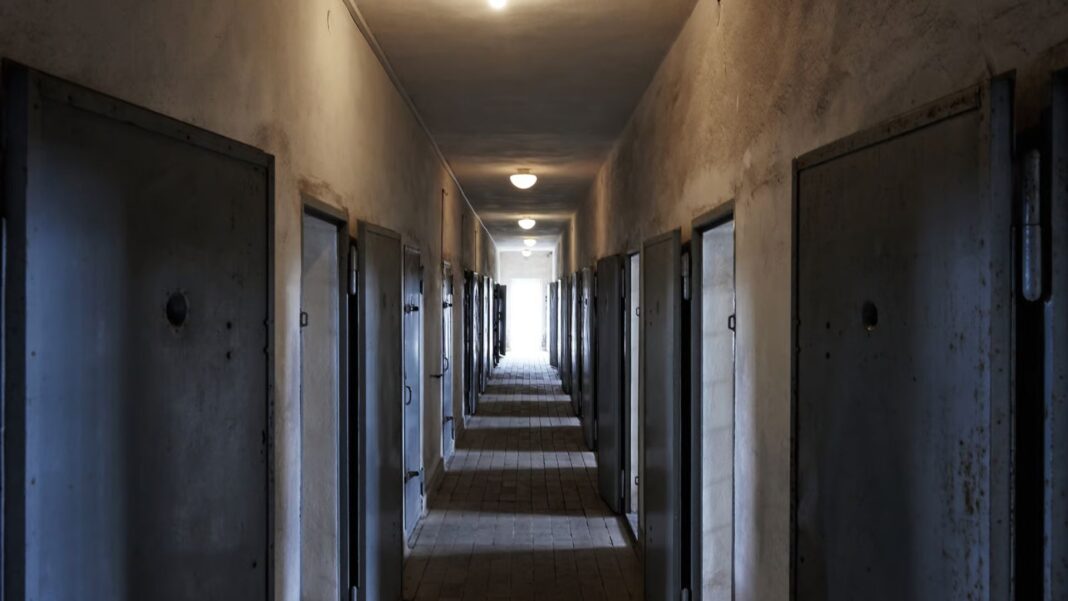

Hoshino Resorts opened HOSHINOYA Nara Prison on June 25, 2026, converting a 118-year-old Meiji-era correctional facility in Nara City into a 48-suite luxury hotel, becoming the first property of its kind in Japan and establishing a new approach to the adaptive reuse of designated cultural landmarks.
Key Facts At A Glance
- Opening date: June 25, 2026
- Location: 18 Hannyajicho, Nara City, Japan
- Property type: Adaptive reuse of the former Nara Prison, a National Important Cultural Property designated in 2017
- Guest rooms: 48 suites, each constructed from nine to eleven former solitary confinement cells
- Suite sizes: 50 sqm (nine cells), 60 sqm (ten cells), and 70 sqm deluxe signature suite (eleven cells)
- Starting rate: USD 233 per guest, per night
- On-site amenities: One restaurant, one café and lounge, spa and massage facilities, pool, public bath, meeting room, playroom
- Adjacent attraction: Nara Prison Museum, opened April 27, 2026, accessible to hotel guests and the general public
- Brand position: Tenth flagship property under the HOSHINOYA brand; part of the Hoshino Resorts portfolio
From Penitentiary To Hospitality Landmark
The former Nara Prison was completed in 1908 during Japan’s Meiji period, a time when the government undertook a nationwide modernisation of its judicial and penal systems. The structure was designed by architect Keijiro Yamashita and built according to the Haviland System, a Western prison planning concept that positioned multiple radial cell blocks extending from a central guardhouse, allowing prison staff to monitor inmates across several wings simultaneously from a single vantage point. The building was one of five grand penal institutions constructed during the Meiji era and referred to collectively as the Five Great Prisons of Meiji. Of the five, it is the only one to have survived entirely intact.
The facility operated as a prison for more than a century, serving as a juvenile detention facility from 1946 before closing in 2017 due to aging infrastructure and earthquake safety concerns. In the same year it closed, the Japanese national government designated the former Nara Prison as a National Important Cultural Property, a classification that imposed preservation obligations on any future development and triggered a multi-year search for an operator capable of meeting those requirements.
Hoshino Resorts was selected to lead the conversion and undertook a restoration project lasting approximately seven years, conducted in collaboration with national government agencies, expert conservation teams, and Azuma Architect & Associates. The work focused on preserving the building’s original character while discreetly integrating modern hospitality infrastructure. Original architectural elements retained in the finished property include the red-brick domes and arched gateways, the radial corridor layout, high-ceilinged vaulted cell rooms, and the central guardhouse structure.
The Suite Design: Cells Reimagined
Each of the 48 guest suites was created by removing the internal partitions between multiple former solitary confinement cells, opening the spaces into unified living environments while preserving the original brickwork, steel structural elements, and the characteristic proportions of the Meiji-era construction. Modern additions, including wood paneling, soft furnishings, and controlled lighting, were introduced to provide comfort without obscuring the building’s historic character.
The smallest suites, combining nine cells, measure 50 square meters and accommodate up to two guests. The ten-cell suites reach 60 square meters and include flexible partitioned living spaces in select categories. The largest accommodation is a 70-square-meter deluxe signature suite that combines eleven cells and incorporates a private dressing lounge alongside a curated collection of music and books.
Cultural Programming And The Meiji Theme
The property’s programming draws directly on Japan’s Meiji period, which ran from 1868 to 1912 and was defined by the country’s rapid adoption of Western technology, governance systems, cultural practices, and material goods. Guests are invited to attend a daily Gramophone Soirée held from 21:00 to 22:30, where music is played on a vintage gramophone in reference to the phonographic technology introduced to Japan during the era. An Evening Fragrance Blending experience, priced at JPY 12,100 and requiring advance reservation, guides guests through the perfume culture that arrived in Japan from Europe during the same period, culminating in the creation of a bespoke fragrance and a terracotta diffuser gift presented in brick-inspired packaging. The property also offers traditional rickshaw tours as an in-house activity, referencing a form of transport that became widespread in Japan during the Meiji years.
The restaurant operates as a Japanese-French dining hall, combining the two culinary traditions that defined Meiji-era cultural exchange. Meiji cuisine itself reflected the government’s deliberate policy of adopting Western food culture as part of broader national modernisation.
The Nara Prison Museum
The former Nara Prison Museum opened on April 27, 2026, preceding the hotel’s launch by approximately two months, and operates as a publicly accessible cultural institution adjacent to the hotel. The museum is divided into two sections: an exhibition area covering the building’s history, Japan’s penal system, and the lives of former inmates; and a preservation area incorporating the third cell block and the original guardhouse station. Public admission is priced from JPY 2,500 for adults. The museum complex also includes a café serving Western-influenced Meiji-era cuisine and a retail space offering handicrafts produced through historical prison work programmes. Hoshino Resorts has described the museum as integral to the project’s broader cultural mission, providing the general public with access to the heritage site alongside the hotel’s paying guests.
The Cycle Of Heritage
Hoshino Resorts has articulated a philosophy it calls the “cycle of heritage,” in which the revenue generated by luxury guests staying within the property directly funds the ongoing conservation and maintenance of a nationally significant cultural asset. The framework positions hospitality as a mechanism for sustaining heritage infrastructure that might otherwise be difficult to preserve through public funding alone. The model has drawn attention from the international luxury travel sector as a structurally distinct approach from both conventional museum conservation and standard hotel adaptive reuse.
HOSHINOYA Nara Prison is the tenth flagship property in the HOSHINOYA brand collection. Hoshino Resorts has additional openings planned for 2026, including KAI Kusatsu in Gunma Prefecture, KAI Miyajima in Hiroshima Prefecture, and KAI Zao in Yamagata Prefecture, all under its hot spring ryokan collection. HOSHINOYA Asuka, also in Nara Prefecture, is scheduled for 2027.