


Sovereign investment fund Danantara Indonesia and the Jakarta provincial government formalized a cooperation agreement on May 4 to develop waste-to-energy power plants at two sites in the capital, with the project valued at approximately USD 1 billion and targeted to begin operations by early 2028.
Key Facts At A Glance
- MOU signed May 4, 2026 between Danantara Indonesia and the DKI Jakarta provincial government
- Two designated project sites: Bantargebang in Bekasi, West Java and Tanjung Kamal Muara in North Jakarta
- Each site is designed to process 2,500 to 3,000 tonnes of waste per day; combined target is 8,000 tonnes per day
- Total investment estimated at approximately USD 1 billion, equivalent to Rp 17.4 trillion at a prevailing exchange rate of Rp 17,400 per US dollar
- Jakarta currently accumulates approximately 9,000 tonnes of waste daily, with 87 percent still managed through open dumping
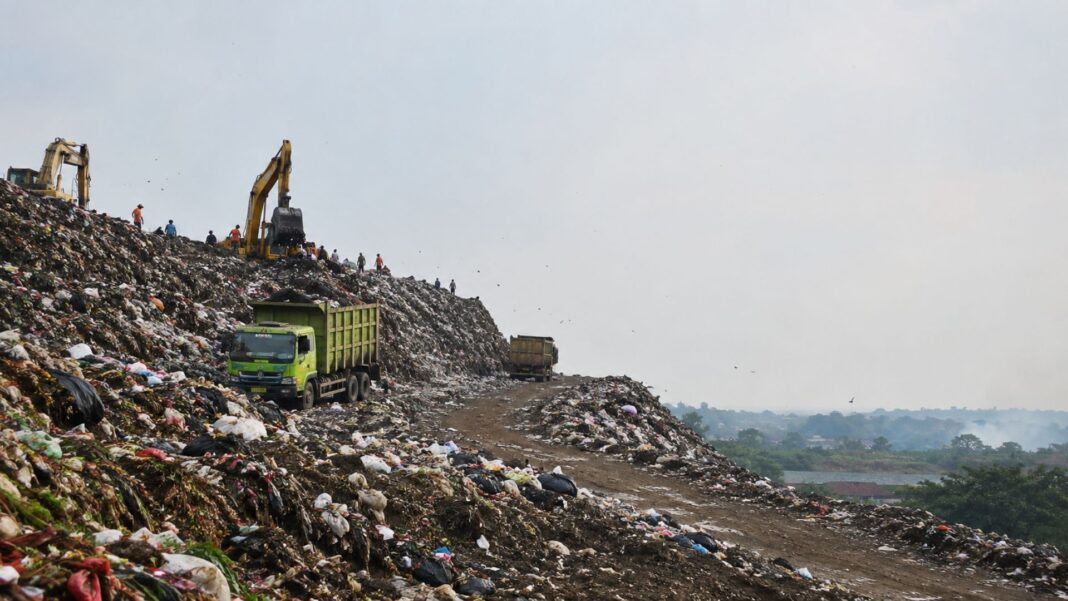
- Bantargebang landfill has exceeded capacity and currently holds waste equivalent in volume to a 16 to 17-story building
- Electricity generated will be sold to PT Perusahaan Listrik Negara at a fixed feed-in tariff of USD 0.20 per kilowatt-hour under 30-year power purchase agreements
- Danantara established PT Daya Energi Bersih Nusantara, known as Denera, on April 1 as a dedicated holding entity for its national waste-to-energy portfolio
- National rollout targets 33 cities; first-round tender winners for Bekasi, Denpasar, and Bogor projects were announced in March 2026, dominated by Chinese firms
Indonesia’s sovereign wealth fund Badan Pengelola Investasi Danantara signed a memorandum of understanding with the DKI Jakarta provincial government on May 4, 2026, at the Coordinating Ministry for Food Affairs office in Jakarta, formalizing the development of two waste-to-energy power plants in the capital. The signing was witnessed by Coordinating Minister for Food Affairs Zulkifli Hasan and Jakarta Governor Pramono Anung.
Danantara Chief Executive Officer Rosan Roeslani stated that an 8,000-tonne-per-day processing facility would require an investment of approximately USD 1 billion. He added that Danantara is open to expanding the facility’s capacity to between 10,000 and 12,000 tonnes per day in order to process both incoming daily waste and the accumulated stockpile at Bantargebang, which has long surpassed its operational limits. Each of the two sites, one at Bantargebang in Bekasi, West Java, and the other at Tanjung Kamal Muara in North Jakarta, is designed to handle between 2,500 and 3,000 tonnes of waste per day.
Jakarta Governor Pramono Anung confirmed that a third waste-to-energy plant is also being planned for Sunter in North Jakarta, separate from the two covered by the Danantara MOU. The city additionally operates a Refuse-Derived Fuel facility at Rorotan in North Jakarta, which is already processing approximately 2,500 tonnes of waste daily into alternative fuel.
The Jakarta Waste Emergency
Zulkifli Hasan described Jakarta’s waste situation as a national emergency requiring coordinated action. The city generates approximately 9,000 tonnes of waste daily, 87 percent of which is currently managed through open dumping. Bantargebang, the primary integrated waste management site, has exceeded its designed capacity by a wide margin, with accumulated waste now estimated to reach the height of a 16 to 17-story building. President Prabowo Subianto has personally engaged on the issue, with Zulkifli noting that the president was calling him nearly weekly on the matter.
The cooperation is structured under Presidential Regulation No. 109 of 2025 on accelerating urban waste processing into electricity using environmentally sound technology. The regulation defines roles for the central government, regional governments, Danantara, PLN, and private entities, with Danantara acting as a strategic partner responsible for financing arrangements and the selection of development and management entities, formally designated as Badan Usaha Pengelola dan Pembangunan. The Jakarta provincial government committed to supplying waste to the plants but stated that land for the processing and generation facilities will not come from provincial assets, relying instead on private land secured under cooperative arrangements.
National PSEL Program And Denera Structure
The Jakarta MOU sits within a broader national program targeting waste-to-energy development across 33 cities. Danantara formally established PT Daya Energi Bersih Nusantara, known as Denera, on April 1 as a holding company under PT Danantara Investment Management to centralize investment, development, and operations across all waste-to-energy assets nationwide. Danantara’s waste-to-energy lead Fadli Rahman confirmed that Denera will hold equity stakes and operational control across all facilities owned by the fund.
Each facility under the national program is projected to require between Rp 2.5 trillion and Rp 3 trillion in investment, approximately USD 148 to USD 175 million at current exchange rates, with a capital structure of 30 percent equity and 70 percent debt. Danantara’s government-side vehicle will hold a minimum 30 percent stake in each project, with the remaining 70 percent open to private partners, both domestic and international.
The first-round tender, completed in March 2026 and focused on four cities — Bekasi, Denpasar, Bogor, and Yogyakarta — was dominated by Chinese technology firms. Zhejiang Weiming Environment Protection clinched the Denpasar and Bogor contracts, while Wangneng Environment secured the Bekasi award. All three winners are expected to form consortiums with local Indonesian companies to enable technology transfer. Danantara subsequently opened a second tender round for additional cities.
Offtake And Tariff Framework
PLN is designated as the mandatory electricity buyer for all waste-to-energy output under the national program. The fixed feed-in tariff is set at USD 0.20 per kilowatt-hour under 30-year power purchase agreements. Based on operating data, every 1,000 tonnes of processed waste is projected to generate approximately 15 to 20 megawatts of electricity. A 1,000-tonne facility operating at an 85 percent capacity factor is estimated to produce approximately 134 gigawatt-hours of electricity annually. The national 33-city rollout, if fully realized, is projected to generate between 450 and 650 megawatts of total installed waste-to-energy capacity.
Indonesia’s 2025 to 2034 electricity supply plan targets 453 megawatts of waste-to-energy capacity, requiring approximately USD 2.7 billion in total investment. The Danantara-PLN offtake structure, combined with the removal of tipping fees for regional governments and centralized financing through Denera, is designed to lower barriers to participation and accelerate project timelines compared to earlier, project-by-project approaches that struggled to reach financial close.
Publicly available details on total committed equity disbursements from Danantara and the timeline for contractor selection at the Jakarta sites remain limited as of the date of this report.