

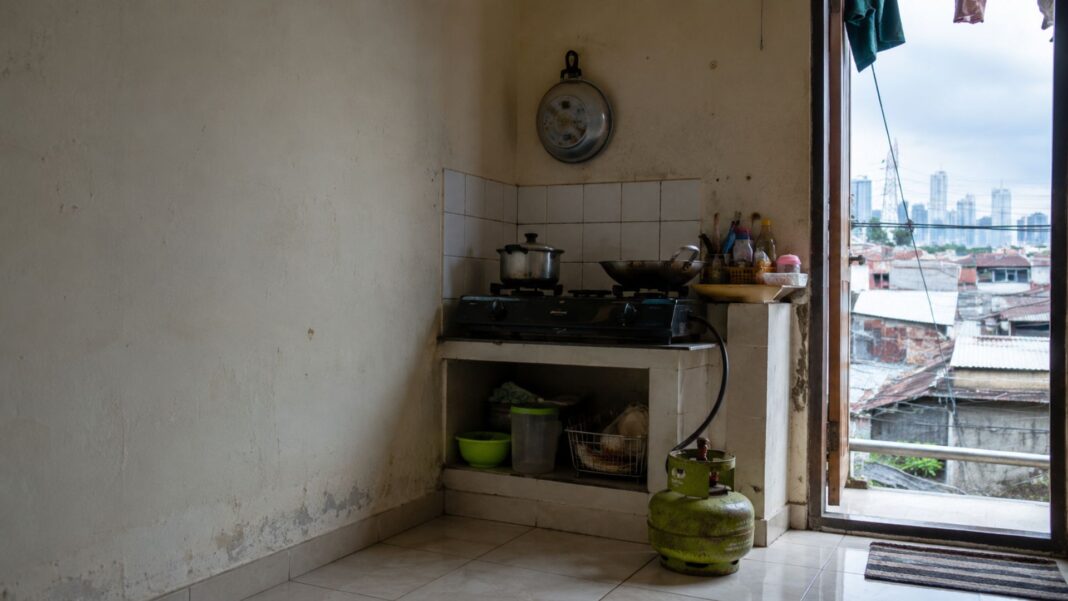

Energy and Mineral Resources Minister Bahlil Lahadalia stated on May 2, 2026, that Indonesia will maintain coal-fired power generation in its national energy mix while accelerating development of compressed natural gas in 3-kilogram cylinders as a domestically sourced substitute for imported liquefied petroleum gas. The twin announcements reflect Jakarta’s response to a structural fuel import exposure that leaves Indonesia consuming 8.6 million tonnes of LPG annually against domestic production of only 1.6 to 1.7 million tonnes.
Key Facts At A Glance
- Minister Bahlil made the joint coal retention and CNG announcement on May 2, 2026, at an event organized by the Bogor Agricultural University Alumni Association in Jakarta
- Indonesia’s 2025 coal production totaled 790 million tonnes; 254 million tonnes (32 percent) fulfilled the domestic market obligation for the power sector
- Indonesia consumes approximately 8.6 million tonnes of LPG annually; domestic production covers only 1.6–1.7 million tonnes, leaving roughly 6.9 million tonnes met through imports
- The government is developing CNG in 3-kilogram cylinders priced 30–40 percent below equivalent LPG cylinders
- CNG pilot deployment is underway in hotels, restaurants, and kitchens supporting the government’s Free Nutritious Meal program
- Household CNG rollout is in preparation but not yet at commercial scale
- CNG requires compression to 250–400 bar; Bahlil acknowledged ongoing infrastructure challenges
- The LPG-to-CNG substitution program was discussed in a meeting between President Prabowo and Bahlil on April 27, 2026
- Indonesia’s broader energy independence package includes B50 biodiesel, E20 bioethanol development, and oil and gas lifting optimization
The Coal Position: Affordability Over Acceleration
Bahlil’s May 2 statement on coal represents the clearest public articulation to date of the Prabowo government’s approach to the energy transition under crisis conditions. The minister argued that Indonesia cannot abruptly abandon coal, citing the resource’s central role in keeping electricity prices affordable for a population of approximately 284 million. He pointed to global precedent, noting that several developed countries have returned to coal-fired generation to secure domestic energy supply amid the Middle East shock. Coal accounted for approximately 68 percent of Indonesia’s electricity generation as of 2025, with the Java-Bali grid bearing the largest share of coal-fired capacity under PT Perusahaan Listrik Negara’s portfolio.
The government’s position is reinforced by resource availability. Indonesia produced 790 million tonnes of coal in 2025, the ministry’s data show, with 514 million tonnes (65.1 percent) allocated for export and roughly 254 million tonnes fulfilling the domestic market obligation covering both power and non-power sectors. That domestic reserve buffer gives Indonesia an insulating advantage that oil-import-dependent neighbors — including the Philippines, which imports 98 percent of its crude from the Middle East — do not possess. For PT PLN, coal-fired plants operating under the domestic market obligation pricing mechanism continue to generate power at costs significantly below global LNG and oil-indexed alternatives, reinforcing the short-term fiscal logic of maintaining coal output.
Indonesia’s LPG Import Exposure
The CNG announcement addresses a different dimension of Indonesia’s energy import dependency. While coal insulates the power sector, the household cooking and commercial food service sectors face acute exposure through LPG. Indonesia’s annual LPG consumption of 8.6 million tonnes against domestic production of 1.6 to 1.7 million tonnes means that approximately 80 percent of LPG supply — roughly 6.9 million tonnes annually — arrives through import routes. Indonesia spends an estimated Rp 500 trillion per year purchasing oil and gas including LPG, according to figures cited in regional reporting. The Strait of Hormuz conflict has disrupted key LPG supply routes, elevated import prices, and prompted PT Pertamina (Persero) to raise prices on non-subsidized LPG products by nearly 19 percent on some cylinder sizes.
Unlike LPG, which derives from propane and butane — hydrocarbons Indonesia produces in limited volumes — CNG is based primarily on methane and ethane, which Indonesia possesses in comparatively greater domestic abundance. CNG is already deployed in Jakarta’s Transjakarta bus fleet and in bajaj three-wheeled vehicles, demonstrating existing infrastructure precedent in the transport sector. The ministry is now attempting to translate that model into household fuel delivery using a small-format 3-kilogram cylinder designed to match the format of the ubiquitous 3-kilogram subsidized LPG cylinder that serves tens of millions of lower-income Indonesian households.
The 3-Kilogram CNG Cylinder: Commercial Logic And Infrastructure Gaps
The government’s choice of the 3-kilogram cylinder format is deliberate. The subsidized 3-kilogram LPG cylinder is Indonesia’s most politically sensitive fuel product, embedded in the household energy subsidy architecture and consumed primarily by lower-income families for daily cooking. Bahlil cited a 30–40 percent cost advantage for CNG cylinders over their LPG equivalents as the central commercial argument for substitution.
However, significant technical and infrastructure barriers remain. CNG must be compressed to between 250 and 400 bar for safe cylinder storage — a requirement that demands compression infrastructure not currently deployed at household distribution scale. The minister acknowledged these challenges publicly on May 2, characterizing them as ongoing but surmountable. As of the date of the announcement, CNG deployment remains confined to commercial establishments and government meal program kitchens using domestically sourced gas. The pathway to household rollout involves building out compression facilities, adapting distribution networks calibrated for LPG cylinder logistics, and certifying high-pressure 3-kilogram cylinders for safe domestic use — each step requiring regulatory clearance, capital investment, and coordination among the Ministry of Energy and Mineral Resources, PT Pertamina, and local distributors.
Integration With Broader Energy Independence Strategy
Bahlil positioned the CNG program within a multi-pronged energy independence strategy discussed with President Prabowo on April 27, 2026. That strategy encompasses the B50 biodiesel mandate targeting a July 1 launch, development of E20 bioethanol blends, optimization of domestic oil and gas lifting, and LPG import diversification. The CNG initiative is the domestically sourced cooking fuel component of this package — the only element of the strategy that directly substitutes a locally produced gas for an imported one at the household level, rather than blending imported fuels with local feedstocks.
The strategic coherence of the package will depend on execution pace. The B50 biodiesel rollout is the most advanced element, with PT Pertamina named as the blending executor for a confirmed July 1 start. The CNG household program is the most nascent. The government has not yet published a rollout timeline, infrastructure investment commitment, or subsidy framework for the transition from 3-kilogram LPG to 3-kilogram CNG at the household level. Until those parameters are established and funded, the program remains in a commercial pilot phase with material scale-up risk.