
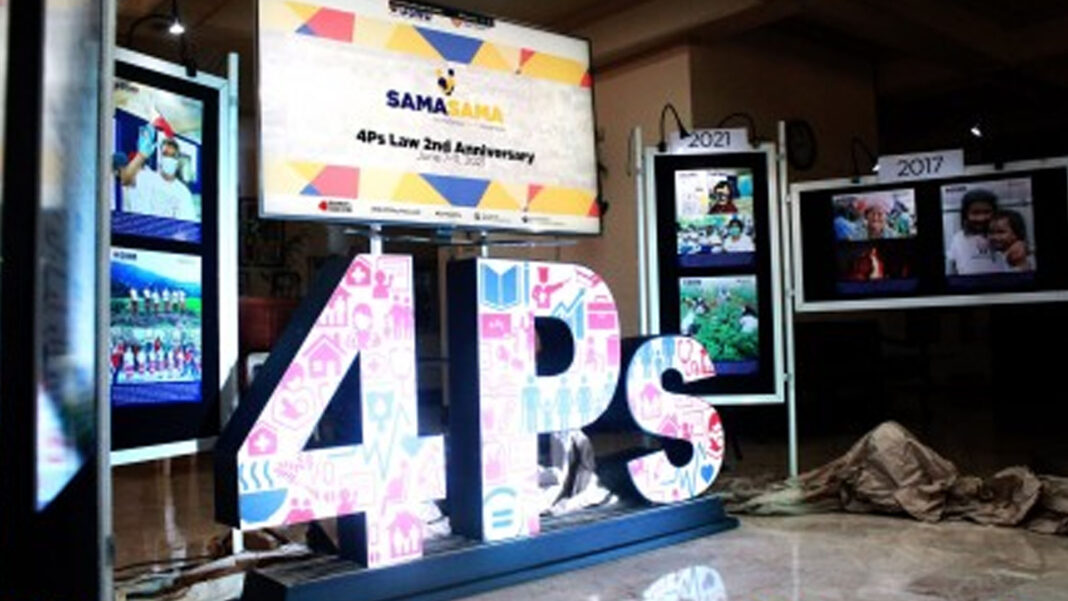

Around 493,000 families from poor households based from the 2026 Community-Based Monitoring System (CBMS) list will be registered as new beneficiaries of the Pantawid Pamilyang Pilipino Program (4Ps) after a stringent validation and verification process.
This is in line with the directive of President Ferdinand R. Marcos Jr. to ensure that all poor Filipino families receive appropriate government intervention.
The DSWD is set to begin the registration process within March after receiving the official CBMS’ nationwide list of poor and near-poor families from the Philippine Statistics Authority (PSA).
“This is good news for all the qualified families who also seek to be included in 4Ps to help them in the health and education of their children, as well in their daily expenses. We are also grateful to PSA for the CBMS list of poor and near-poor. This will be our basis in targeting new beneficiaries of the program,” DSWD spokesperson Assistant Secretary Irene Dumlao said in a news release on Wednesday.
With the passage of Republic Act No. 11315, or the Community-Based Monitoring System Act, the DSWD has committed to institutionalize the use of the CBMS as its standardized targeting system in identifying the 4Ps beneficiaries.
This policy direction represents a key reform in ensuring that the selection of poor households is guided by a unified, data-driven, and transparent mechanism.
All households included in the new list will still undergo a thorough three-step process –pre-registration, registration proper, and post-registration phase.
During the pre-registration phase, a list of prospective beneficiaries will be posted for 15 days by respective barangays. This process aims to prevent duplication, ensure eligibility, and verify the accuracy and existence of listed beneficiaries.
The identification of the target beneficiaries will be authenticated through the Philippine Identification System (PhilSys), or National ID, while social workers will conduct assessments to confirm each family’s eligibility.
“The names from the CBMS are still not considered as the final list of new 4Ps beneficiaries. Of course, we still need to assess and verify the status of these families with the help of our social workers,” Dumlao said.
The DSWD’s Field Office IV-A (Calabarzon) has begun validating around 11,000 families as potential beneficiaries.
Meanwhile, the DSWD’s FO 12 (Soccsksargen) has started distributing lists of potential beneficiaries to local chief executives (LCEs) for validation in coordination with 4Ps City and Municipal Operations Offices (MOOs).
Other regions have also commenced their respective validation processes.
After validation at the pre-registration phase, the registration of new beneficiaries will proceed.
“Once validated and registered, they will attend an orientation para malaman nila kung ano ang kanilang responsibilidad at benepisyong matatanggap sa programa (to know their responsibilities and the benefits they will receive under the program). There will also be signing of oath of commitment to ensure understanding of the program conditionalities, alongside truthful disclosure,” Dumlao said.
For the post-registration phase, the new 4Ps beneficiaries will be notified by their municipal or city links on the next steps such as opening of their payroll accounts and other important announcements.
As more beneficiaries prepare to graduate from the program this year, the inclusion of newly qualified families will enable the 4Ps to continue extending support to those who need it most.
The 4Ps is the government’s flagship poverty reduction initiative and conditional cash transfer (CCT) program.
It provides financial assistance to eligible households to support the health, nutrition, and education of children aged 0–18, with the goal of breaking the intergenerational cycle of poverty through sustained investment in human capital. (PNA)