

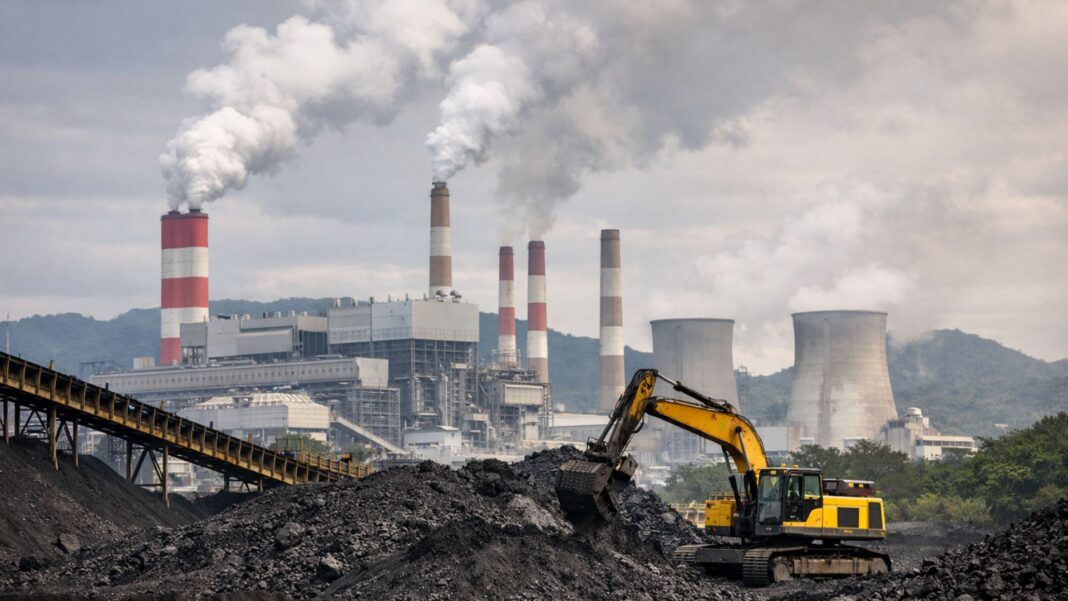

Asian utilities across the Philippines, Vietnam, and Thailand are actively substituting coal for LNG-fired generation as Asia spot LNG prices double to three-year highs, and Wood Mackenzie projects Northeast Asian LNG demand to fall by 4–5 million tonnes through Q3 2026, assuming a two-month disruption. A separate Wood Mackenzie forecast cited by Reuters on March 17 places the broader reduction in Asian LNG imports at approximately 5 million tonnes for the full year, against a prior projection of 12.4 million tonnes.
Key Facts At A Glance
- Asia spot LNG prices have surged above USD 20 per million British thermal units, shifting from a discount to a premium relative to European prices, per Wood Mackenzie’s March 11 press release
- Wood Mackenzie projects Northeast Asian LNG demand to fall 4–5 million tonnes through Q3 2026 under a two-month disruption scenario; a separate Wood Mackenzie estimate cited by Reuters on March 17 puts the full-year Asian LNG import reduction at approximately 5 million tonnes from a prior forecast of 12.4 million tonnes
- The Hormuz closure has removed 1.5 million tonnes of LNG per week from global supply, equivalent to 19 percent of global exports; approximately 90 percent of Qatari and UAE LNG exports were destined for Asia
- The Asian thermal coal benchmark rose 13.2 percent in March 2026; European coal futures rose 14.2 percent over the same period
- Thailand’s Electricity Generating Authority of Thailand is operating the Mae Moh Power Station—Thailand’s largest coal-fired plant, with a remaining contracted capacity of 1,140 megawatts—at full output to conserve LNG
- Electricity Vietnam told Reuters it is negotiating additional coal supply; the Philippines has formally directed grid-scale LNG-to-coal substitution
- Most Asian LNG contracts are indexed to oil prices on a three-month lag, meaning contract costs for Asian buyers are expected to rise further from June 2026 onwards
- Global Energy Monitor, in a report published the week of March 10, estimated that USD 107 billion in proposed LNG infrastructure investments in South Asia are at risk of cancellation or delay
The effective closure of the Strait of Hormuz since February 28, 2026, and Qatar’s concurrent halt of LNG exports have together removed the equivalent of 19 percent of global LNG supply from available markets. Wood Mackenzie’s March 11 analysis found that approximately 90 percent of LNG exports from Qatar and the United Arab Emirates were destined for Asia, making the region the most exposed in the world to the disruption. Asian LNG spot prices surged above USD 20 per million British thermal units as a result, shifting from a discount to a premium relative to European benchmarks for the first time in years.
Southeast Asia’s Simultaneous Coal Activation
In the Philippines, the Department of Energy formally directed a grid-scale ramp-down of LNG-fired generation and ramp-up of coal output—a reversal of the country’s first annual decline in coal-fired power in nearly two decades, recorded in 2025. Energy Secretary Sharon Garin told Reuters on March 13 that the Philippines faces a potential 16 percent rise in power prices by April absent government intervention and that Manila was simultaneously in bilateral talks with Indonesia to secure additional coal supply to cover the substitution volume. The Manila Electric Company confirmed it held sufficient contracted coal and was coordinating with power suppliers to contain generation charges.
In Thailand, the state-owned Electricity Generating Authority of Thailand activated the Mae Moh Power Station in Lampang province at full operational output. A Nation Thailand report citing an EGAT source confirmed that in 2026 Mae Moh retains three operational generating units—Unit 8 at 270 megawatts, Unit 11 at 270 megawatts, and Unit 14 at 600 megawatts—for a combined contracted installed capacity of 1,140 megawatts. The plant draws on domestic lignite from the adjacent Mae Moh mine, insulating its fuel supply entirely from the Hormuz disruption. Coal accounts for approximately 13 percent of Thailand’s power generation fuel mix under normal conditions, against 58 percent for natural gas—a ratio that EGAT is now actively widening.
In Vietnam, state utility Electricity of Vietnam told Reuters it is negotiating additional coal supply to replace LNG-dependent generation. Vietnam faces an acute structural exposure: its fuel reserve buffer stands at fewer than 20 days—among the thinnest in the region—and the Nghi Son Refinery and Petrochemical LLC, Vietnam’s largest refinery, was designed specifically for Kuwaiti crude, whose supply has been disrupted by the Hormuz closure.
The June Pricing Lag
Wood Mackenzie’s analysis identifies a deferred pricing pressure embedded in Asian LNG contract structures. Since most regional LNG supply contracts are indexed to crude oil prices on a three-month lag, the surge in crude above USD 100 per barrel in early March will translate into elevated contract-linked prices for Asian buyers from June 2026 onwards. This creates a second wave of cost pressure on top of the immediate spot market shock, compressing the relief that a future ceasefire might otherwise provide in the near term.
Miaoru Huang, research director for Asia Pacific gas and LNG at Wood Mackenzie, noted that even after a ceasefire, some demand loss may persist as fuel switching continues and LNG prices remain elevated relative to pre-crisis levels. Wood Mackenzie’s analysis assumes Qatari production would gradually ramp back to pre-crisis levels by the end of May under a two-month disruption scenario, with the final Qatari cargoes loaded before the Strait closure expected to arrive in Asia by mid-March.
Structural Consequences For LNG Investment
Global Energy Monitor, in a report published in the week of March 10, estimated that USD 107 billion in proposed LNG import infrastructure in South Asia—terminals, regasification facilities, and pipeline networks—is at risk of cancellation or delay. The consultancy cited elevated LNG costs following Russia’s 2022 Ukraine invasion and shortages of city gas pipeline networks as prior drivers of project attrition in the region, with the current supply shock expected to reinforce investor hesitancy toward new long-term LNG commitments across price-sensitive markets.
Sam Reynolds, LNG research lead at the Institute for Energy Economics and Financial Analysis, stated that the repeated shocks “once again refute the case for relying on imported fossil fuels in energy sector development plans, potentially creating more opportunities for renewables.” The immediate coal pivot, however, is constrained by its own bottlenecks: the Asian thermal coal benchmark rose 13.2 percent in March, though analysts noted the rally is limited for now by major buyers, including China, Japan, and South Korea, drawing on ample existing stockpiles and long-term supply contracts.