

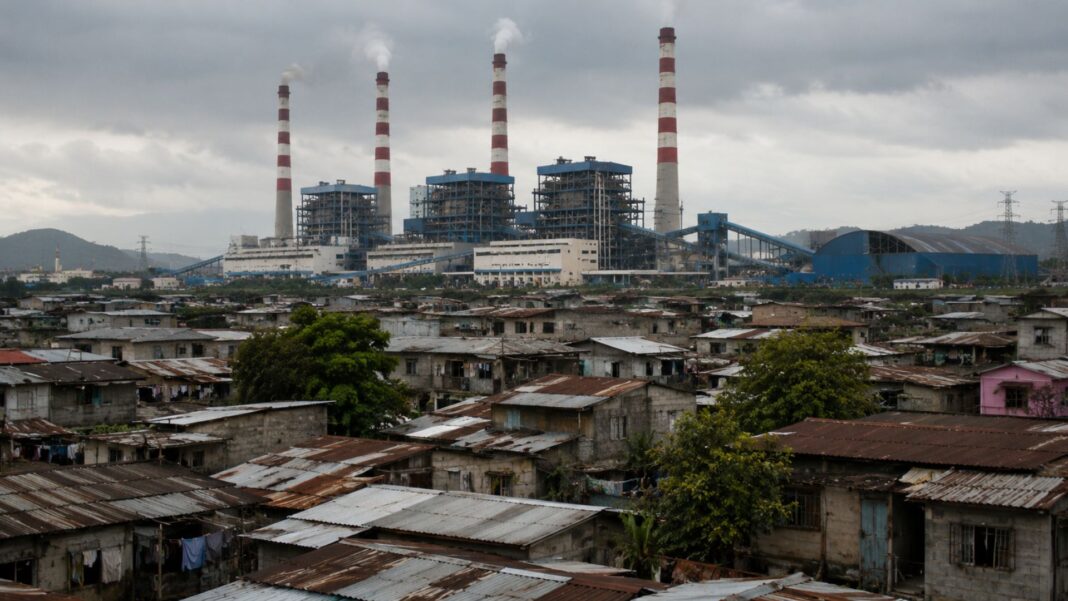

The Philippine Department of Economy, Planning, and Development publicly called for suspending the country’s six-year moratorium on new coal-fired power plants in April 2026, triggering a weeks-long interagency debate that was formally closed — for now — on May 8, when the Department of Energy reaffirmed the ban remains in effect and will not be lifted.
Key Facts At A Glance
- The coal moratorium was imposed in October 2020 by then-DOE Secretary Alfonso Cusi, prohibiting new greenfield coal-fired power plant endorsements.
- Department of Economy, Planning, and Development Secretary Arsenio Balisacan first proposed suspension at a Senate PROTECT Committee hearing on April 13, 2026, citing global parallels with Japan, Germany, and Italy.
- DOE Secretary Sharon Garin initially said the department was “considering it” (April 20), then reversed position by April 27, stating “there is no compelling need to suspend or lift the moratorium.”
- On May 8, the DOE issued a formal statement reaffirming the moratorium “remains in effect and will not be lifted,” directing project proponents to proceed with already-approved pre-moratorium contracts.
- Coal currently supplies approximately 60 to 63% of Philippine electricity generation; coal prices rose 20 to 30% following the Strait of Hormuz closure.
- The DOE estimates roughly 20 GW of coal capacity already holds pre-moratorium permits and could still proceed under existing approvals.
- The Philippine Chamber of Commerce and Industry backed the review, with PCCI Energy Director David Chua stating the priority is “ensuring the lights stay on” while maintaining long-term RE goals.
- A 2025 DOE clarificatory advisory already permits new on-grid coal plants under “exceptional circumstances,” including declared power crises.
A Six-Year Ban Under Strain
The Philippines’ coal moratorium was introduced by Secretary Cusi at Singapore International Energy Week in October 2020, framed as a structural pivot away from fossil baseload and a signal to renewable energy investors. At the time, the Institute for Energy Economics and Financial Analysis projected the policy could attract USD 30 billion in RE investment over the following decade. The moratorium prohibited new DOE endorsements for greenfield coal projects but left standing a large inventory of pre-moratorium approvals, and included exemptions for off-grid areas, industrial parks operating their own capacity, and projects serving the mining of critical minerals. The ban was never a total prohibition on coal; it was a forward gate, not a phase-out.
By the time the Strait of Hormuz closed in late February 2026, the moratorium was already operating in a weakened form. A 2025 DOE clarificatory advisory had widened its exceptions to explicitly permit new on-grid coal capacity under “declared or imminent power supply crisis” conditions. The Marcos administration had retained the moratorium’s language but progressively expanded its carve-outs, and the inventory of pre-moratorium projects — representing an estimated 20 GW of potential capacity — had been authorized to proceed regardless of the ban’s existence.
The Balisacan Proposal
The formal push to suspend the moratorium came from outside the DOE. Speaking at the Senate PROTECT Committee on April 13, Secretary Balisacan argued that energy security must take precedence over transition timelines during the current supply shock. Balisacan cited Japan, Germany, and Italy as countries revisiting their RE transition timelines, and framed suspension as a “short-term option” while renewable energy capacity continues to come online. He simultaneously recommended allowing lower-grade standard fuels and revisiting nuclear power development, framing the coal question as part of a broader diversification discussion rather than a standalone reversal.
Energy Secretary Garin initially gave ground, telling reporters on April 20 that the DOE was reviewing the moratorium to determine if private developers should be allowed to resume coal-based projects. Garin’s qualified opening — “yes, we’re considering it,” contingent on “cleaner technology” and retained transition plans — generated immediate industry reaction. The Philippine Chamber of Commerce and Industry issued a statement calling for a reversal of the ban, with PCCI President Ferdinand Ferrer stating the priority must be “stability and affordability of our power grid.” PCCI’s position was careful to frame the call in conditional terms, endorsing only projects using “modern, high-efficiency technologies.”
The DOE Reversal
Within two weeks, Garin reversed course. By April 27, the DOE’s public position had shifted: the moratorium would remain in place, with the agency stating it “sees no compelling need to suspend or lift” the policy because coal plants already under development are projected to provide sufficient near-term capacity. Garin’s rationale centered on the existing pipeline: “We already have enough permits issued to allow additional coal power plants. There is no need to lift the moratorium. What we need is for proponents to proceed with their contracts and complete these projects.”
The DOE’s May 8 formal statement consolidated this position, directing the agency’s efforts instead toward a performance review of existing coal-fired plants — particularly aging units prone to unplanned outages — with facilities found to be unreliable flagged for potential voluntary retirement, repurposing, or transition to cleaner sources. The agency also disclosed it is assessing which pre-moratorium projects in the pipeline may no longer be financially feasible. The framing of coal plant retirements as an active agenda item, alongside the maintained moratorium, represents a policy posture that attempts to address grid reliability and investor signals simultaneously — without formal policy reversal.
Regional Context
The Philippines’ internal debate mirrors a pattern playing out across Southeast Asia. The Diplomat reported on May 13 that Thailand has restarted decommissioned coal plants, Vietnam has moved to secure additional coal supplies, and Indonesia has raised its 2026 coal production target to 733 million tonnes from an earlier target of approximately 600 million tonnes. Indonesia’s Coordinating Economic Minister Airlangga Hartarto also announced expanded coal quota allocations and a review of coal export taxes designed to capture windfall revenues from the global price spike.
These responses reflect a regional energy security calculus that is structurally disconnected from climate commitments. The Climate Action Tracker assessed the Philippines as “Almost Sufficient” overall, but noted that coal generation is projected to continue rising through 2030 under current planning scenarios, and that none of the DOE’s published planning scenarios include a coal phase-out timeline. The moratorium itself does not trigger phase-out; the 20 GW pre-moratorium pipeline could extend coal’s dominant role in the Philippine generation mix well beyond 2030 without any formal policy reversal.
Investor Signal Risk
The moratorium’s original function — as a signal to renewable energy investors — may be its most contested dimension. IEEFA’s 2020 analysis credited the policy with unlocking USD 30 billion in potential RE investment, and multiple domestic banks including Rizal Commercial Banking Corporation had publicly exited coal financing in alignment with the ban’s trajectory. A formal lift would have introduced uncertainty into the regulatory environment that has supported the Philippines’ renewable energy project pipeline — now reportedly 12 times the country’s current installed RE capacity according to the Climate Action Tracker.
Balisacan’s proposal drew a distinction between crisis-response pragmatism and long-term policy reversal, but critics from environmental groups and clean energy advocates noted that the threshold for new coal under the DOE’s 2025 “exceptional circumstances” carve-out is already triggered by the current declared national energy emergency. The moratorium’s formal language may have survived the April-May debate intact, but the regulatory and practical architecture around it continues to expand in ways that narrow the gap between the policy on paper and new coal development in practice.