

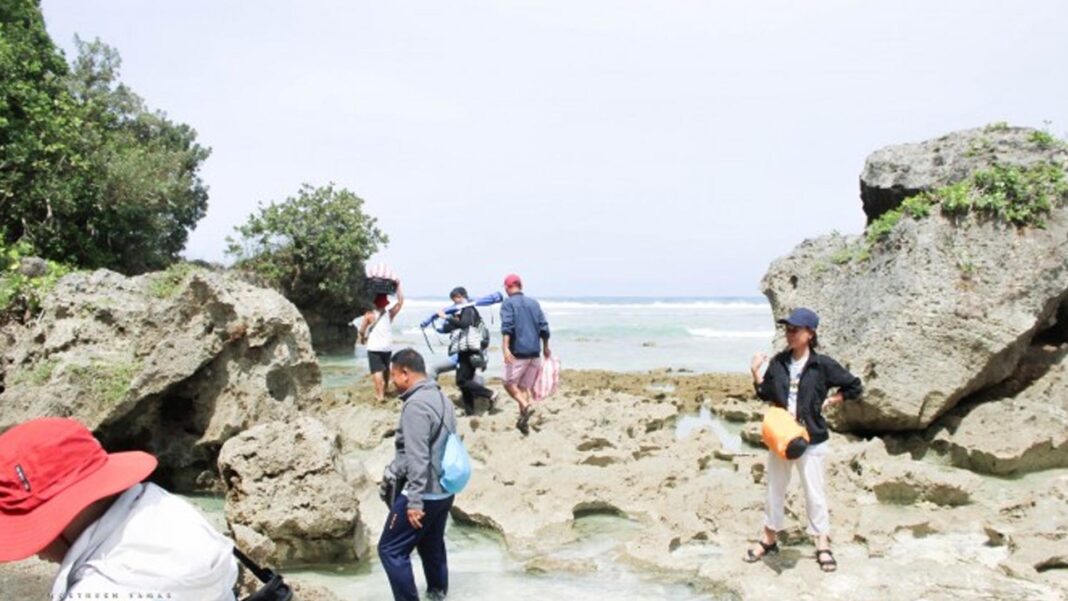

The National Museum of the Philippines has explored the town of Laoang and its surrounding islets, including Batag Island and Cahayagan Island, highlighting their significance in ancient maritime trade, officials said Monday.
The initiative marks what officials describe as the first systematic archaeological reconnaissance in the province since the 1960s, aiming to reassess sites of cultural and scientific significance and shed light on the region’s precolonial past.
Batag Island, known for its lighthouse, has long been associated with maritime navigation. Researchers believe its strategic position suggests that early coastal communities may have flourished in the area, playing a role in ancient trade and seafaring networks.
The Northern Samar provincial government reported that initial fieldwork has included site inspections, ground surveys, and documentation of visible archaeological and cultural features.
The islands sit along the San Bernardino Strait, a historically significant passage believed to have served as a gateway for trade, migration, and cultural exchange.
“Early observations and local accounts have already pointed to possible burial sites and temporary settlements. Experts say further study of these locations could provide insights into patterns of migration, subsistence practices, and interactions among early communities across centuries,” the provincial government added.
The research team is led by NMP museum curator Mary Jane Louise Bolunia, with museum personnel Gerard John Palaya, Ivan Cultura, and Melchor Lagamayo Jr. The group has been visiting potential archaeological sites in Lavezares, Palapag, Biri, and Laoang since last week.
Northern Samar is believed to have played a significant role in regional history due to its strategic position along maritime routes during the Manila–Acapulco Galleon Trade, which linked Asia and the Americas from the 16th to the 19th centuries. (PNA)