

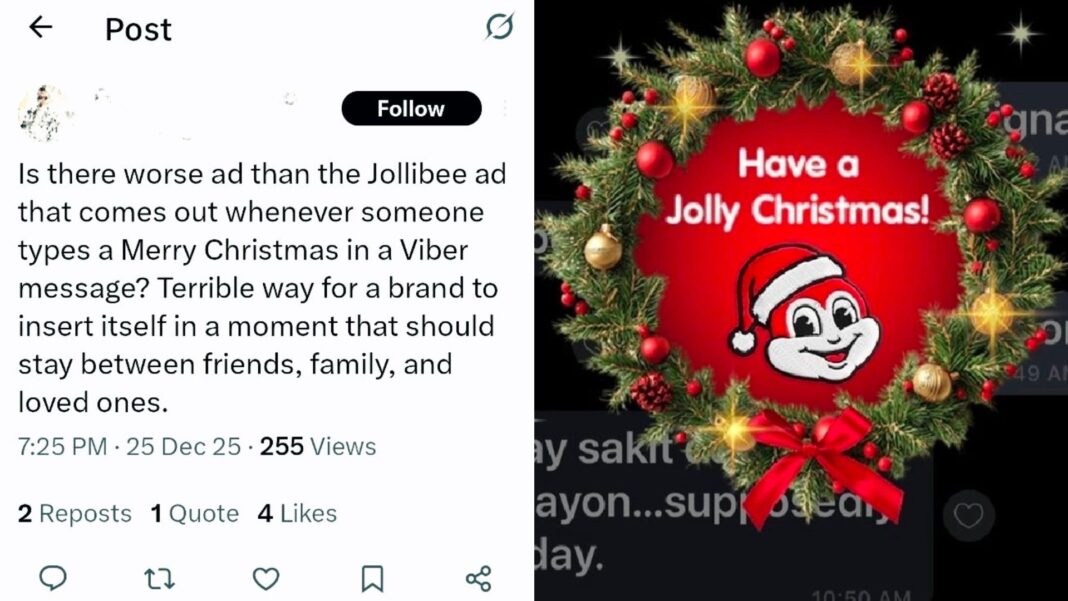

A Christmas campaign by Jollibee on the messaging platform Viber has drawn criticism from users who say the brand crossed a line by inserting itself too deeply into private digital conversations.
Over the holiday season, Jollibee-branded Christmas stickers and greetings became highly visible on Viber, appearing frequently in one-on-one chats and group conversations. While the campaign was clearly designed to spread festive cheer and brand recall, several users took to social media to complain that the brand’s presence felt excessive and intrusive.
Unlike typical social media advertising, messaging apps are widely perceived as private spaces. Critics argue that placing branded content so prominently inside personal chats blurs the boundary between marketing and personal communication.
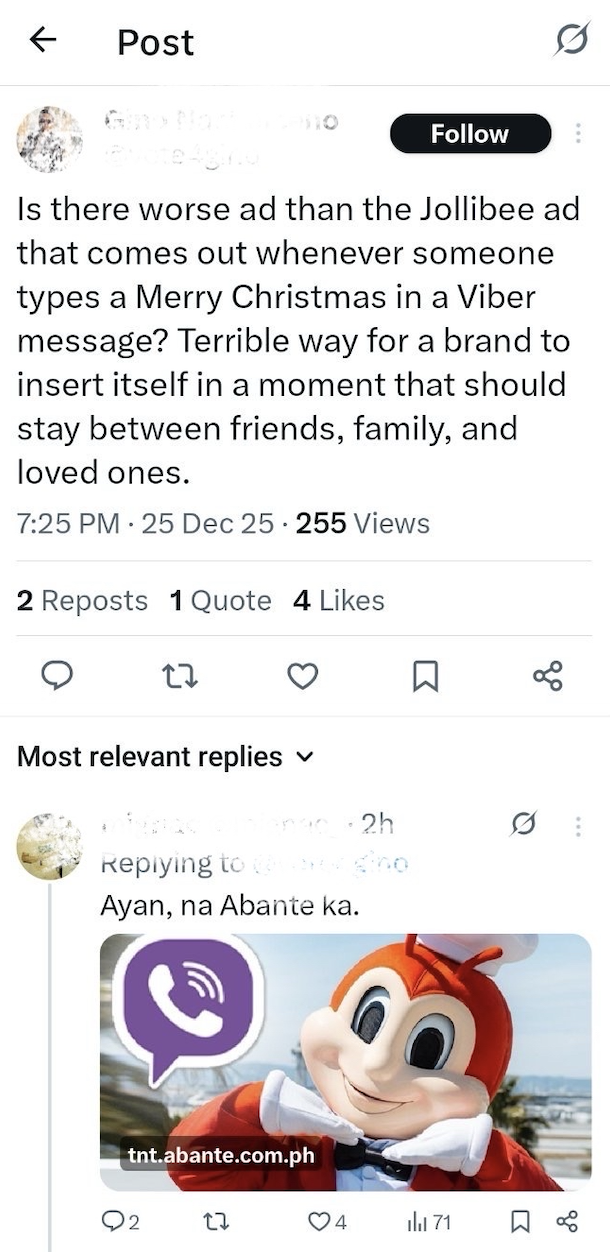
“This isn’t Facebook or YouTube, where you expect ads,” one Viber user said. “This is where I talk to family and friends. A brand suddenly being everywhere feels forced.” Another asked, “Whoever thought of that Jollibee Viber greeting needs some serious explaining to do. So overwhelming. That was a bad call”. Another social media post asserted, “Terrible way for a brand to insert itself ina moment that should stay between, friends family, and loved ones. Others were more direct “Invasing and disrectful”, “ Sinira nyan pa greet ng “Merry Christmas” sa Viber. A renown public figure even said, “I hate you for this Jollibee”.









From warmth to overreach
Jollibee is known for its emotionally driven Christmas campaigns, many of which have been praised for their restraint and storytelling. The Viber campaign, however, marks a departure from that approach by prioritizing ubiquity over subtlety, according to marketing observers.
“The issue is not the message. It’s the location,” said a digital marketing expert. “When a brand built on warmth and intimacy becomes unavoidable in a private space, it risks undermining the very emotional equity it relies on.”
The criticism has not escalated into organized backlash or calls for a boycott. Still, analysts warn that even mild irritation can signal deeper problems if ignored, particularly for brands that trade heavily on emotional trust.
Pressure shifts to the platform
While Jollibee absorbs most of the visible criticism, industry watchers say the larger reputational risk may rest with Viber. Messaging platforms operate under an unwritten social contract that prioritizes user control and consent. When branded content appears to be embedded by default, that contract is put under strain.
“Platforms are gatekeepers,” a senior marketer stressed. “When they allow brands to enter private conversations without clear opt-in or easy opt-out mechanisms, users begin to question whose interests are being protected.”
As competition among messaging apps intensifies, maintaining trust in private spaces is seen as critical to long-term user retention.
A cautionary tale for Christmas campaigns
The episode highlights a broader challenge facing brands during the holidays. Christmas marketing often assumes heightened emotional goodwill, but experts caution that the season actually raises sensitivity around personal boundaries.
“Christmas does not suspend the rules of consent,” said the marketing experts. “If anything, people become more protective of their private spaces.”
As of publication, neither Jollibee nor Viber has released a public statement addressing the criticism. The debate continues online, serving as a reminder that in digital spaces, reach without restraint can quickly turn festive visibility into reputational friction.