

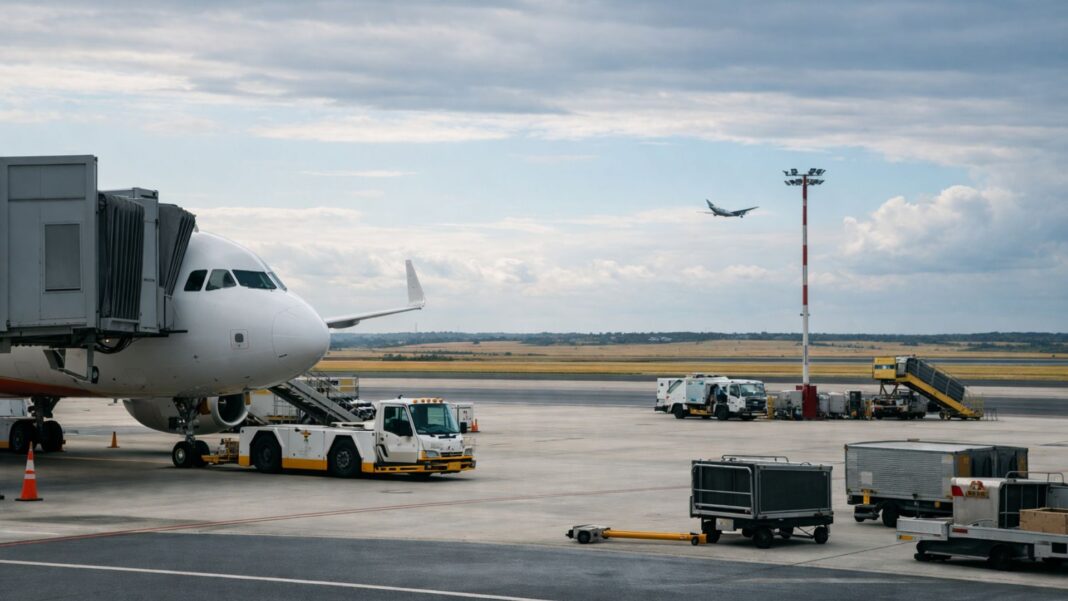

Jetstar Airways today operated its inaugural flight from Melbourne Avalon Airport to Denpasar, Bali, marking the first time the Victorian regional gateway has hosted an international service. The launch is accompanied by the forthcoming reinstatement of the Qantas-Jetstar Bali codeshare, which had been suspended since the pandemic.
Key Facts At A Glance
- Service commenced March 23, 2026, operating five return flights per week on Airbus A321LR aircraft
- Flight time is just over six hours, connecting western Melbourne, Geelong, the Surf Coast, and the Bellarine Peninsula directly to Denpasar
- The route adds more than 120,000 seats annually on the Avalon-Bali corridor
- The Avalon-Bali service is Jetstar’s eleventh direct Australian route to Indonesia
- Jetstar’s broader Avalon expansion adds more than 330,000 low-fare seats annually across new and increased routes
- Launch fares to Bali from Avalon started at A$195 one-way in a 48-hour inaugural sale
- Qantas will reinstate its codeshare with Jetstar on 11 Australia-Denpasar routes from March 29, 2026, covering all mainland capitals plus Avalon, Cairns, Darwin, Newcastle, and the Sunshine Coast
Today, Jetstar Airways Pty Ltd operated the first international departure from Melbourne Avalon Airport, commencing its five-times-weekly Airbus A321LR service to Ngurah Rai International Airport in Denpasar, Bali. The launch transforms Melbourne Avalon, long established as the Qantas Group’s secondary Victorian gateway for domestic travel, into a dual-purpose airport capable of handling international leisure traffic.
A Milestone For Victoria’s Second Gateway
Jetstar will operate five return flights a week between Melbourne Avalon and Bali (Denpasar), aboard its Airbus A321LR aircraft, adding over 120,000 seats a year. Jetstar The A321LR, the long-range variant of the Airbus A321neo family, is central to the economics of the route, offering improved fuel efficiency on the just-over six-hour sector that makes the service viable from a secondary airport without the passenger volumes available at Melbourne’s primary Tullamarine facility.
This afternoon’s inaugural departure marks Jetstar’s first international route from Melbourne Avalon Airport, and the airport’s return to international flying. Travel Weekly Jetstar Chief Executive Officer Stephanie Tully said the expansion represents a strategic investment in the region. “Adding 330,000 seats a year out of Melbourne Avalon gives the region great value flights and with Bali now on the map, there has never been a better time to fly from Melbourne’s west. Bali has always captured the hearts of Australians and now it’s more accessible than ever for the Geelong region and beyond.” Travel Weekly.
Bali Network Depth And The Qantas Codeshare
The route becomes Jetstar’s 11th direct Australian service to the Indonesian island, following recent launches from Sunshine Coast, Newcastle, and Gold Coast. AeroTime The density of Jetstar’s Australia-Bali network now spans every mainland capital city plus five regional airports, reflecting the scale of Australian leisure demand for Indonesia’s primary tourism destination.
Alongside the Avalon inauguration, the Qantas Group is reinstating a structural commercial arrangement that further deepens the network’s reach. Qantas at the launch of the Northern Summer 2026 season plans to resume its Jetstar codeshare partnership to Denpasar, covering 11 routes effective from March 29, 2026. AeroRoutes Those routes cover Adelaide, Avalon, Brisbane, Cairns, Gold Coast (Coolangatta), Darwin, Sunshine Coast (Maroochydore), Melbourne, Newcastle, Perth, and Sydney. The agreement, suspended during the pandemic and never fully re-established, will once again let QF-coded passengers depart from every mainland capital (plus Avalon, Cairns, Darwin, Newcastle, and the Sunshine Coast) and connect seamlessly onto Jetstar-operated Airbus A321LR and Boeing 787 services to Bali. VisaHQ
For corporate travel managers the comeback is significant. Only Qantas fares can be loaded into many global distribution systems used in managed programs, meaning travellers on constrained “full-service-only” policies were previously pushed onto higher-priced Qantas flights via Sydney or Singapore, or forced to request policy exceptions. VisaHQ The codeshare reinstatement therefore carries commercial implications beyond leisure travel, unlocking Bali access for managed business travel programs that previously could not load Jetstar-operated inventory. Industry analysts expect Qantas’ international seat capacity to Bali to jump by roughly 40 percent compared with the March 2025 baseline, providing more than 4,000 extra weekly seats in the peak Easter and winter school-holiday periods. VisaHQ
Infrastructure And Ground Connectivity
A terminal upgrade investment of roughly AUD $23 million will add more seating capacity, upgraded security lanes, extra parking and improved public-transport connectivity, including a new Route 18 bus to Lara Station serving Avalon seven days a week. Aviation A2Z The Victorian Government confirmed the new Route 18 bus service will connect Avalon to Lara Station, complementing existing Skybus and MyBus coach transfers. The combination of improved air and ground access is aimed at drawing a larger share of western Victorian travelers, currently estimated to represent a multi-hour road journey to Tullamarine, directly through a closer gateway.
Market Context
The Avalon-Bali launch arrives within a disrupted global aviation environment. With Gulf hub capacity significantly contracted following Middle East airspace closures in early March 2026, Australian carriers have faced a combination of higher fuel costs and concentrated demand on alternative Asia-Pacific corridors. Jetstar’s expansion into Avalon, locked in before the current crisis, proceeds on schedule, adding meaningful low-cost inventory to the Australia-Indonesia corridor at a moment when premium Asia-Pacific fares on competing routes have risen sharply.