

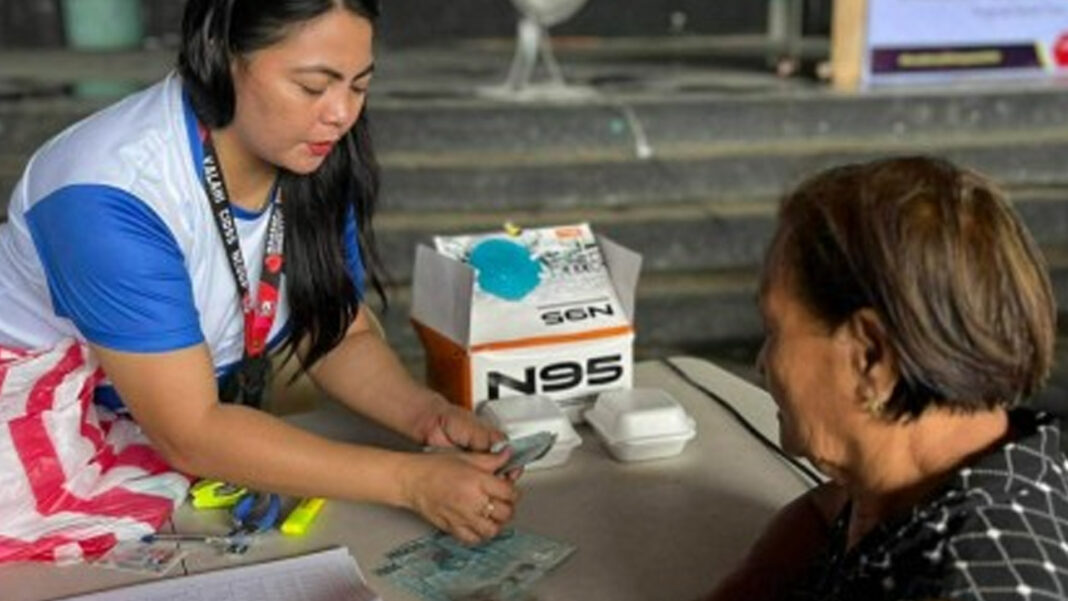

The Department of Social Welfare and Development (DSWD) recorded a 100 percent payout of the Emergency Cash Transfer (ECT) assistance to Typhoon Tino-hit households in three local government units (LGUs) in Negros Occidental as of Monday.
These include the municipalities of Hinigaran, La Castellana, and Isabela, which were among the worst-hit by the devastation brought by heavy rains and floods in central and southern Negros in November 2025.
Data from the DSWD-Negros Island Region (NIR) showed Hinigaran has 23,636 beneficiaries, who received PHP142.72 million; La Castellana, 18,521 beneficiaries, PHP106.05 million; and Isabela, 14,602 beneficiaries, PHP96.933 million.
“The distribution of ECT in various areas continues to provide assistance to the affected families in the region,” the DSWD-NIR said in a report.
The beneficiaries from the three LGUs are among the 195,186 households in Negros Island that have received a total of PHP1.143 billion in ECT aid since February.
Beneficiaries whose houses were destroyed were given PHP10,325 each, while those with damaged houses got PHP5,369 each.
Other LGUs include Bago City, with 22,294 beneficiaries who received PHP127.32 million; Binalbagan, 23,307 beneficiaries, PHP126.993 million; Himamaylan City, 30,129 beneficiaries, PHP161.83 million; and La Carlota City, 15,198 beneficiaries, PHP92.8 million.
In Moises Padilla, 11,584 beneficiaries were given PHP79.05 million; Pontevedra, 8,171, PHP47.35 million; Pulupandan, 3,892 beneficiaries, PHP28.11 million; San Enrique, 3,658 beneficiaries, PHP21.16 million; Valladolid, 3,831 beneficiaries, PHP20.95 million; Bacolod City, 12,956, PHP69.87 million; and Canlaon City, 3,407 beneficiaries, PHP21.46 million.
The DSWD’s ECT program is a post-disaster intervention that provides unconditional cash assistance to affected families to meet their immediate needs.
The initiative bridges disaster relief and early recovery by empowering households to set their priorities using available local resources, thereby contributing to the early restoration of the communities. (PNA)