


The Department of Social Welfare and Development in Western Visayas (DSWD-6) is aiming to implement three social protection programs in the region this year.
DSWD-6 Regional Director Joselito Estember, in an interview on Thursday afternoon, said the department continuously advocates for social programs that are ready for implementation.
He said they target three programs that hopefully will be adopted by local government units (LGUs) in the region, including the Tara Basa Tutoring Program for indigent college students, Project Aruga for persons with disability (PWD), and ProtecTEEN for adolescent mothers, aimed to respond to teenage pregnancy.
Estember said ProtecTEEN is being piloted in Iloilo City, covering 70 beneficiaries, and is currently undergoing monitoring and impact assessment.
The Project Aruga was piloted in San Jose de Buenavista in Antique.
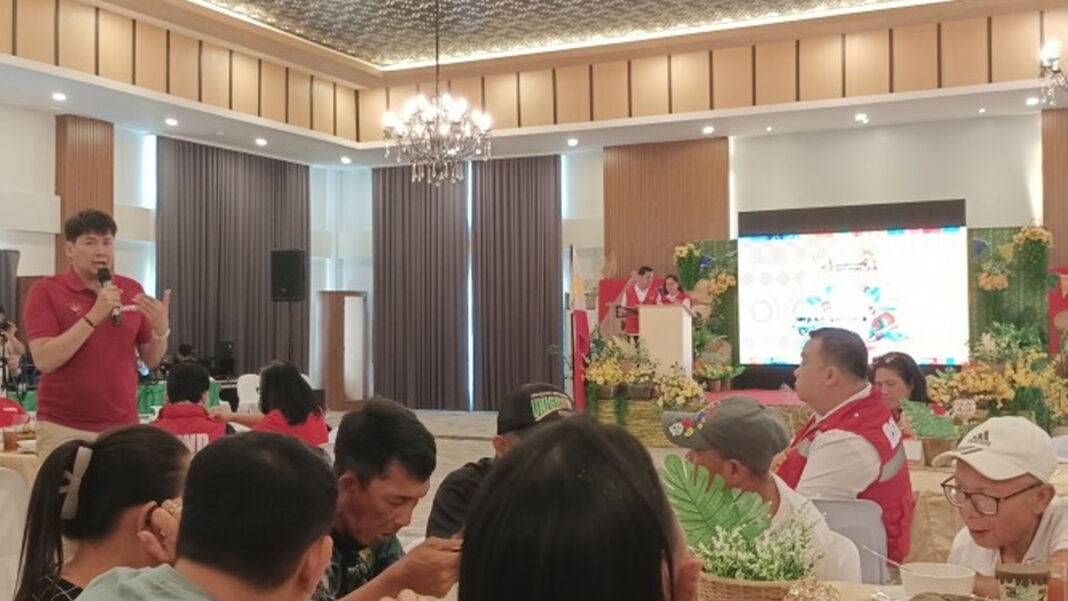
“Hopefully, we can roll that out because it has a very positive impact assessment result, as conducted by the Asian Development Bank. And hopefully, it will be a streamlined project,” he said during the DSWD Innovations Caravan in the municipality of Pavia in Iloilo.
The official said local government units are encouraged to adopt the program because the PWD sector is among the sectors with few services from the local governments.
Estember said they also want to pilot the Tara Basa in Iloilo province to complement the family and youth development centers established in LGUs.
Undersecretary Eduardo Punay, in a separate interview, said the Innovations Caravan provided a venue for local governments to express their intention to replicate a program, which they deem beneficial for their constituents.
Most LGUs are interested in the Tara Basa because education is among their top priority.
“The Tara Basa Tutoring Program is in partnership with DepEd (Department of Education) to address illiteracy and college attrition,” he said.
However, Punay said the challenge is their limited budget because it’s a newly-developed program.
The strategy, he said, is for them to partner with local governments, where they will provide a counterpart fund.
Under the program, college students serving as tutors receive a grant equivalent to one month of regional minimum wage for a 20-day session.
The tutors have to be listed in the community-based monitoring system to qualify for the program. (PNA)