

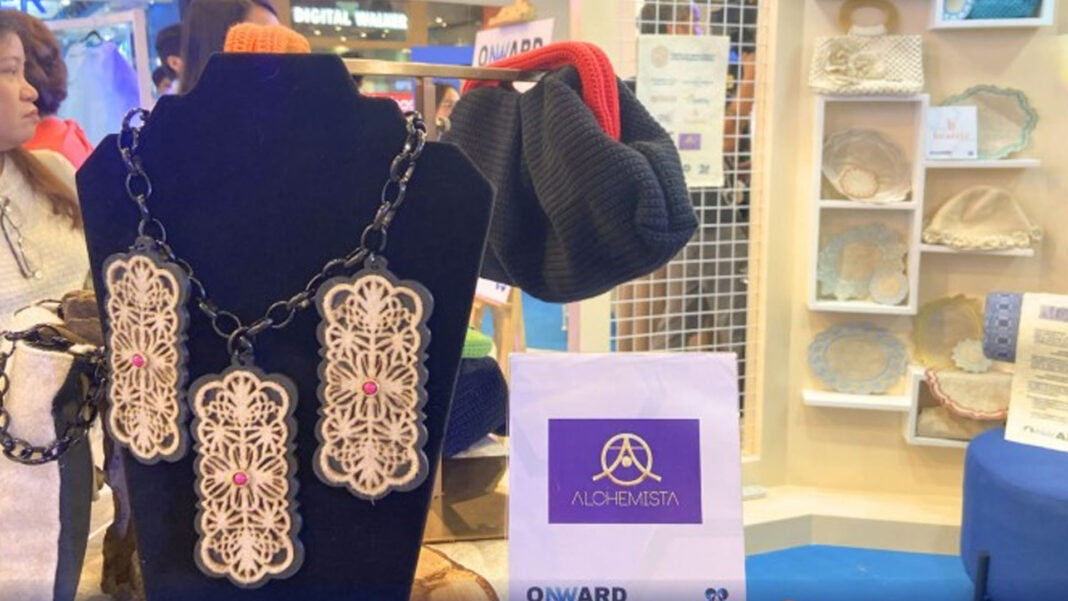

The Department of Science and Technology (DOST) showcased non-woven textiles on Wednesday, highlighting its potential and value in several industries.
“When we hear the word textiles, we often think of clothing and garments. But textiles are much more than what we wear,” DOST Secretary Renato Solidum Jr. said in a video message.
Non-woven textiles are engineered fabrics formed directly from fibers through heat, pressure, mechanical bonding or binders, rather than traditional weaving or knitting.
Solidum said among the use of non-woven textiles are to protect food from contamination, filter air and water, reinforce roads and buildings, safeguard agricultural harvests, and improve health, hygiene and mobility.
“Their efficient manufacturing process makes them highly versatile, cost-effective, and ideal for a wide range of industrial applications,” he said.
The DOST and its partners have developed non-woven materials designed for healthcare, construction, agriculture, filtration, mobility, among others.
By January 2027, Solidum said the DOST will open the Non-woven Textile Innovation Center in its compound in Bicutan, Taguig.
The center seeks to empower industries to develop application-specific materials, accelerate innovation, reduce dependence on imports and produce globally competitive, high-value products.
“Through advanced textile engineering, we can now develop materials with customized properties—from mechanical strength and thermal insulation to air permeability, filtration efficiency, and durability tailored to meet specific industry needs,” Solidum said
The DOST chief, thus, called on the public to expand Philippine textiles beyond apparel.
He also urged the attendees to harness the country’s natural fibers and sustainable materials for next-generation products, as well as support stronger partnerships within the industry. (PNA)