

Public school teachers and non-teaching personnel can now avail of a five-day wellness leave per year, the Department of Education (DepEd) said Friday.
Wellness leave is a leave benefit on top of the existing vacation and sick leaves, which can be used for mental health care, physical wellness activities, or a restorative break from work.
The grant of wellness leave is in line with the directives of President Ferdinand R. Marcos Jr. to ensure the welfare and protect the mental health of Filipinos, including those in the education sector.
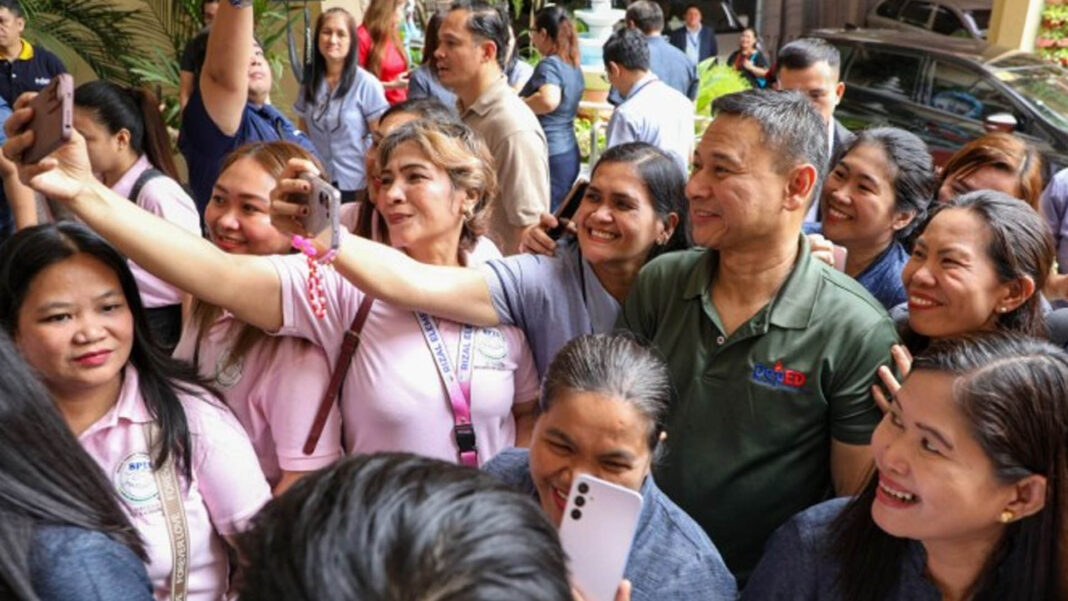
In a statement, DepEd Secretary Sonny Angara stressed the significance of the said measure, considering the growing demand in teaching and administrative work.
“Kinikilala natin na ang kanilang kalusugan, lalo na ang mental health, ay mahalaga sa patuloy nilang paglilingkod sa ating mga mag-aaral (We acknowledge that their health, especially mental health, is important for them to continuously serve our learners),” he said.
Angara said the five-day wellness leave is granted to all its personnel regardless of position or employment classification.
“Ito ay handog natin sa bawat kawani ng DepEd – mula sa central office hanggang sa mga rehiyon, division offices, paaralan, at community learning centers, at anuman ang kanilang employment status (We offer this to each DepEd employee – from the central office, down to the regions, division offices, schools, and community learning centers, regardless of their employment status).”
DepEd officials and employees may avail of the said wellness leave, including permanent, temporary, casual, contractual, coterminous, substitute, provisional positions, Contract of Service, and Job Order personnel, per Memorandum Circular (MC) No. 01, s. 2026 of the Civil Service Commission (CSC).
Eligible personnel may file the leave at least five days in advance, except for emergency situations.
It can be used up to three consecutive days at a time or be spread across the year in a non-consecutive manner.
However, it can neither be subject to accumulation nor cash conversion when left unused.
Trimester system
The DepEd, meanwhile, proposed a transition to a trimester system to grant longer and more flexible learning settings in public schools.
In a separate statement, Angara said this will help advance higher quality instructions and reduce teacher workload throughout the academic year.
Under the proposal, 201 school days are set to be distributed across three terms to provide better pacing for lessons and minimize teaching interruptions.
For the first term, an opening block will be allotted for activities related to school opening.
Per term, about 54 to 61 days will be used as instructional blocks allocated for teaching, learning, as well as enrichment blocks for remediation, computation of grades, preparation and checking of school forms and wellness break, among others.
Trimester breaks, meanwhile, will provide educators with more time to enhance their instructional deliveries through planning, assessment and other related professional tasks.
“Itinutulak natin ito upang magkaroon ng mas mahahabang, tuloy-tuloy na panahon ng pagkatuto, mas maayos na pacing ng mga aralin, at mas mababang administrative burden para sa ating mga guro (We are promoting this to have longer, continuous time for learning, better pacing for lessons and lesser administrative burdens for our teachers),” Angara said.
Based on the proposed calendar for School Year 2026 to 2027, classes will open in early June.
Under the proposal, the first trimester will run from June to September; followed by the second term from September to December; and the last term from January until late March. (PNA)