

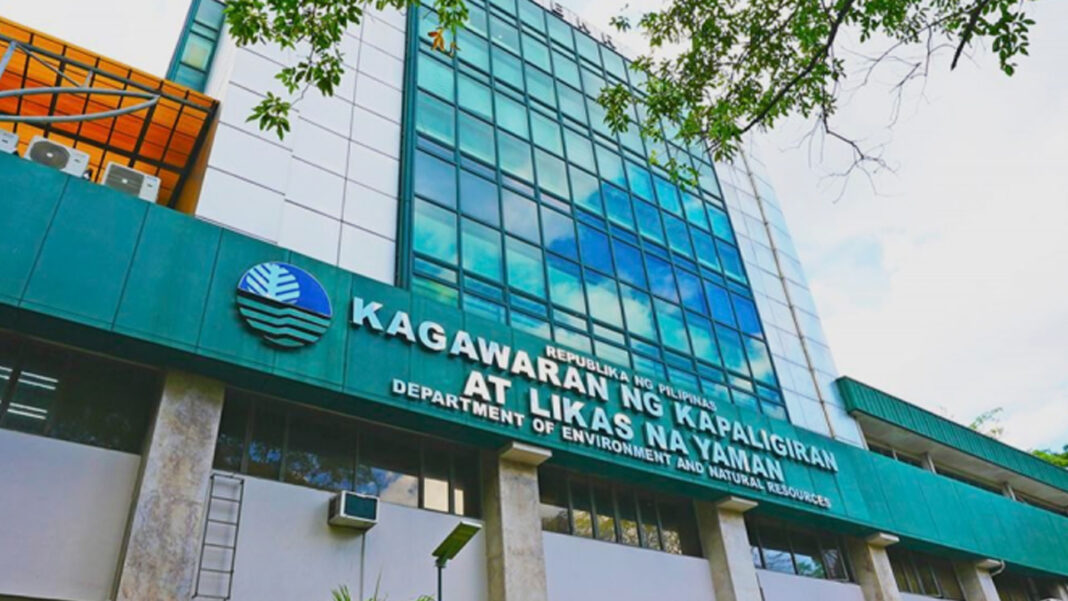

The Department of Environment and Natural Resources (DENR) has placed its Water Resources Management Office (WRMO) in charge of water supply-related projects, while the National Water Resources Board (NWRB) is tapped to identify areas that should be prioritized for water supply development.
In a public advisory posted on Thursday, the DENR-Environmental Management Bureau (EMB) cited Department Administrative Order (DAO) No. 2026-35, which states that the WRMO is designated as the lead implementing and monitoring office for all DENR water supply-related projects.
The DENR said DAO 2026-35 aims to institutionalize the implementation of water supply projects, specifically the development of alternative water sources, water tanks, rainwater harvesting facilities, small water impounding systems, water filtration systems, water refilling stations, water service expansion, and spring development.
The WRMO shall be in charge of providing clear guidelines for the evaluation, implementation, monitoring and assessment of water supply projects to promote efficiency, accountability and transparency.
The WRMO is also tasked with defining the specific roles and responsibilities of the concerned DENR offices to ensure effective coordination and collaboration in project implementation.
It will review project plans and designs; coordinate with DENR offices, local government units (LGUs), local water districts (LWDs) and other stakeholders; monitor the progress and long-term sustainability of completed projects; and check compliance with environmental standards and regulations and facilitate partnerships for the development of water supply systems.
Priority areas
Section 5.1 of the DAO directs the WRMO to coordinate with the NWRB in determining where water supply projects are most needed.
The projects are intended to address water supply needs of LGUs, LWDs and communities, particularly those in small island, upland, and water-scarce areas.
The order defines water supply-related projects as programs and interventions meant to improve the availability, accessibility and quality of water for domestic and municipal use.
At the regional level, the Water Resources Utilization Section (WRUS) will gather baseline information on local water sources, existing service coverage and water demand to support the WRMO’s planning and prioritization.
The WRUS will also conduct site inspections and preliminary water quality and environmental checks; assist project beneficiaries in securing permits; and monitor ongoing and completed water systems.
Disaster assistance
The new rules also provide for DENR assistance to local water districts whose public water systems are damaged or disrupted by a national calamity or disaster.
Upon request of the Local Water Utilities Administration (LWUA) and recommendation by the WRMO, the DENR may provide technical and financial assistance to affected LWDs.
“Such assistance may include, but shall not be limited to, the assessment of water source integrity, rehabilitation of damaged pipelines or supply facilities, deployment of portable water treatment or purification units, and other appropriate interventions necessary to restore access to safe and potable water in affected areas,” Section 10 of the DAO read.
“The WRMO shall support the LWUA and other concerned agencies to ensure that emergency assistance is consistent with national disaster response protocols and aligned with available government resources,” it added, noting that all assistance shall be subject to existing budgetary, accounting, and auditing rules and regulations.
Project beneficiaries
The order covers LGUs, LWDs and other qualified entities as project beneficiaries, who will be responsible for providing project sites and logistical support, properly managing project funds, and operating and maintaining completed water supply systems.
They must also submit regular progress reports and allow DENR representatives to inspect and audit projects.
All water supply projects must comply with existing environmental, water resource and land-use regulations.
Depending on the project, beneficiaries may be required to secure environmental clearances, water permits and other permits from the appropriate agencies. (PNA)