

The Department of Environment and Natural Resources (DENR) is open to waste-to-energy (WTE) technology to address the country’s growing waste volume but said no machinery should move forward unless it is tested safe for the environment and public health.
In a Radyo Pilipinas interview on Tuesday, DENR Assistant Secretary for Legal Affairs, Enforcement, Human Resources and Field Operations-Luzon Norlito Eneran said the agency agrees with President Ferdinand R. Marcos Jr.’s assessment that the Philippines is facing a waste crisis.
“Kami naman dito sa DENR dahil wala pa nga tayong batas patungkol sa waste-to-energy, kaya open tayo dun sa mga teknolohiya na sa tingin natin magpapabawas dun sa volume ng basura (Since we do not yet have a law regarding waste-to-energy, we at the DENR are open to technologies that we believe will reduce the volume of waste),” Eneran said.
“But of course we’re very careful especially dun sa effect or impact nito sa ating environment kaya we are assuring the public na i-evaluate natin at masusi nating pag-aaralan itong mga technologies na ito and make sure that walang adverse impact sa environment at sa kalusugan ng tao (But of course, we’re very careful especially regarding its effect or impact on our environment, so we are assuring the public that we will evaluate and thoroughly study these technologies and make sure that there is no adverse impact on the environment and human health),” he added.
Waste management
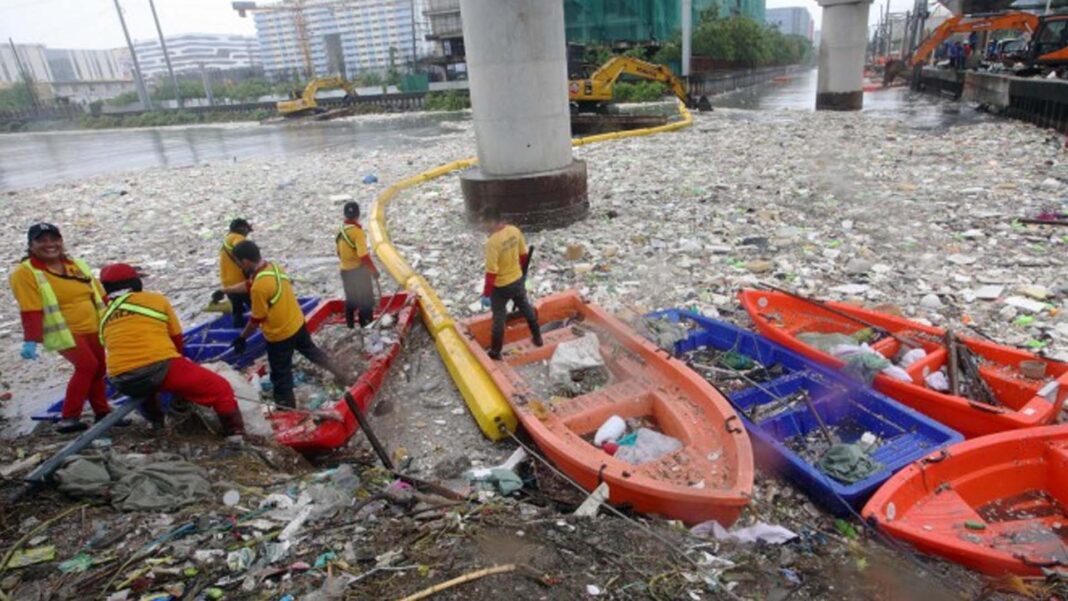
Eneran said the immediate challenge now is the volume of garbage entering waterways and eventually reaching landfills.
He said the DENR has installed 196 trash traps across Metro Manila to catch floating waste and help identify its possible source.
The agency has also deployed 1,387 estero rangers in 364 priority waterways across 448 barangays in Metro Manila.
He said estero rangers patrol their assigned areas and collect garbage as part of the DENR’s continuing cleanup operations.
Eneran said the DENR also agrees with the President that the waste collection and disposal system should be fixed first.
“Kasi kung maayos ang sistema natin, matutulungan ang ating mga kababayan na maitapon nang maayos ang kanilang mga basura (Because if our system is in order, we can help our fellow citizens dispose of their waste properly),” he said.
Currently, he said the waste management hierarchy is still being followed, particularly reduction, segregation, recycling and composting, recovery and disposal.
Waste-to-energy
Waste-to-energy technologies are commonly classified as burn (thermal combustion) or non-burn (non-combustion) methods.
Eneran said several proponents have already approached the DENR to ask about requirements for WTE projects, particularly those involving burning waste.
He clarified, however, that no burn-type WTE process has been approved in the country so far.
“Yung burn, ito yung pino-propose ngayon pero wala pa tayong naaaprubahan (What is being proposed now is the burn, but we haven’t approved anything yet),” he said.
“As of now, wala pa tayong na-approve na waste-to-energy sa Pilipinas pagdating sa burn waste-to-energy na process. Pero may ibang klase ng waste-to-energy, yung non-burn, using plasma and microwave para sa pag-convert ng basura into energy. So wala pa rin tayong ganon (we have not yet approved any waste-to-energy in the Philippines when it comes to the burn waste-to-energy process. But there is another type of waste-to-energy, the non-burn, using plasma and microwave to convert waste into energy. But we still don’t have that),” he added.
Eneran said the DENR’s assessment will focus on whether the technology can reduce waste without creating new environmental and health problems.
He stressed that even as the government explores WTE, the DENR wants households to focus first on producing less waste and properly separating what they throw away.
He also called for greater participation from businesses and households, stressing that government cleanup efforts alone will not solve the problem. (PNA)