

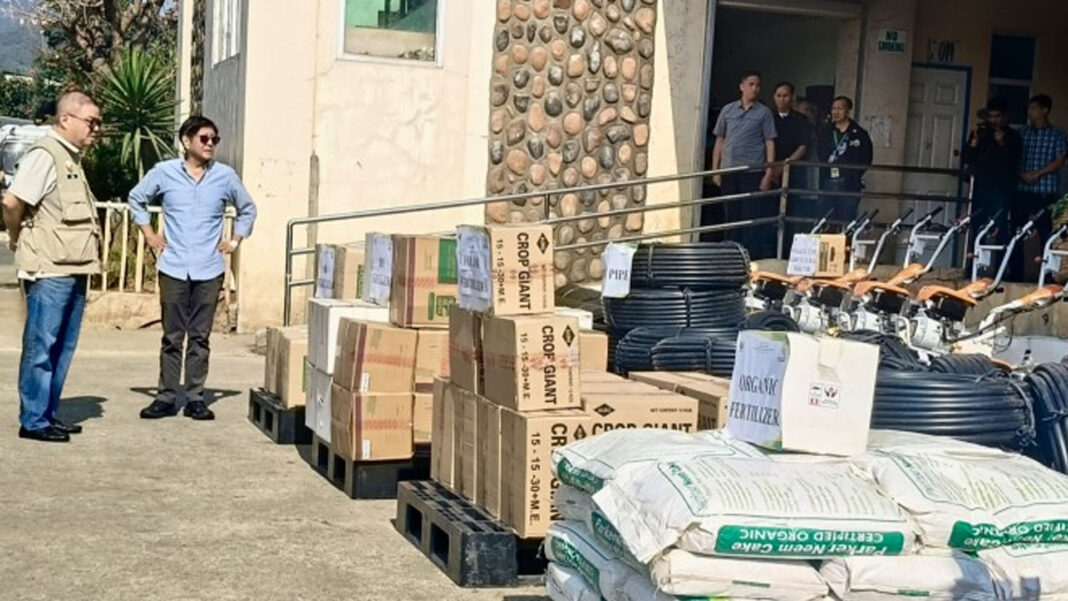

Government interventions have helped the Cordillera region maintain its role as the country’s leading source of temperate vegetables, supplying more than 70% of the national requirement, the Department of Agriculture-Cordillera (DA-CAR) said.
DA-CAR Regional Director Jennilyn Dawayan said the region remains a major contributor to national food security through continued support for farmers, modernization programs, and infrastructure investments.
“The region remained a major contributor to the country’s food basket, supplying more than 70 percent of the nation’s temperate vegetables, reaffirming its vital role in national food security,” Dawayan said in a report.
She said the agriculture and fisheries sector in the region posted a 4.3% growth rate, reflecting resilience and renewed momentum. The region also recorded a 2.09% food inflation rate from 2022 to 2025.
Dawayan attributed the gains to various programs, including drone-assisted farming, precision agriculture, solar-powered irrigation systems, and farm clustering under the Farm and Fisheries Clustering and Consolidation (F2C2) program.
Government investments also supported irrigation, farm-to-market roads, rice subsidies, climate adaptation initiatives, livelihood programs and agricultural research.
Records showed that the government allocated PHP2.37 billion for irrigation projects in the region, PHP446.3 million for farm-to-market roads, PHP582.15 million for rice subsidies, PHP19.2 million for sustainable livelihood programs for farmers’ cooperatives and associations, and PHP17.5 million for the LAWA at BINHI program.
The DA-CAR also continues to provide farm machinery and equipment to help reduce production costs and improve yields.
“All of these contributed to improved productivity, reduced production costs, enhanced market access, and strengthened the resilience and competitiveness of the sector,” Dawayan said.
The region’s vegetable industry remains active, with about 1.9 million to 2.3 million kilograms of assorted vegetables traded daily at the Benguet Agri-Pinoy Trading Center, La Trinidad Vegetable Trading Post and two other trading facilities.
Dawayan said community-based food security initiatives, including urban agriculture, sustainable food production systems and the LAWA at BINHI program, have further strengthened local food systems and improved access to safe and nutritious food.
She acknowledged that challenges remain due to the region’s terrain but said the government will continue to focus on increasing local food production, strengthening community food systems and promoting nutrition-sensitive agriculture.
Dawayan urged farmers to adopt good agricultural practices, organize through cooperatives, register in government farmer databases and consider crop programming to avoid oversupply.
“The government endeavors to help farmers in different ways. Group yourselves for easier access to support. Let us adapt to world trends and continue to produce food for our people and hopefully soon, for export,” she said. (PNA)