

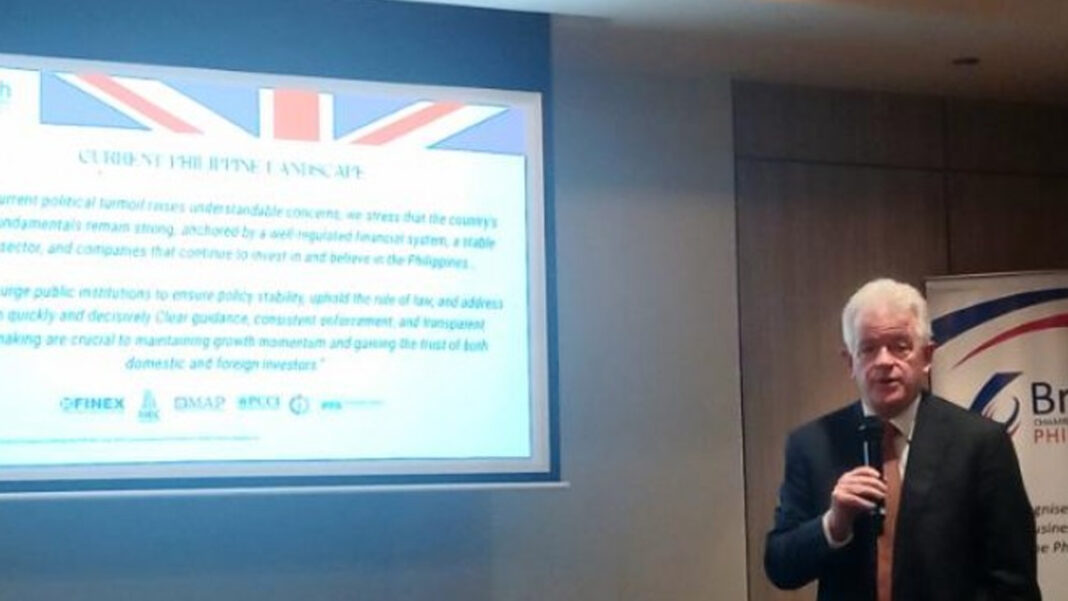

An official of the British Chamber of Commerce in the Philippines (BCCP) on Wednesday cited the need to base any adjustment in the minimum access volume (MAV) for pork imports on the country’s latest population level to ensure food security and inflation stability.
This was after Department of Agriculture (DA) Secretary Francisco Tiu Laurel Jr. earlier said they were studying the possible revision of the MAV rules since the figures are already outdated, as they were put in place in 1996 when the population was about 70,000 million.
For now, the DA has changed import allocations, increasing the share of pork processors to 50 percent, to prevent significant upticks on the price of processed meats when supply declines.
Previously, 70 percent of MAV allocations were given to the largest importers.
BCCP Executive Director Chris Nelson, in a briefing on Wednesday, noted that pork supply in the country is affected by the African swine fever (ASF), and recovery is expected to be slow given the volume of hogs affected by the virus.
Data from DA show that about 51 villages in Luzon and the Visayas are affected by ASF as of July 11, lower than the previous year’s levels due to government interventions.
With the ASF’s impact on the domestic pork supply, Nelson suggested that revised policies on MAV should consider the population to ensure access to supply.
He said that while the Philippines’ pork imports from the UK are not significant, it still helps, noting that more producers are willing to provide supply.
“We will be one of the countries supplying it. Not the only one, we’re not the largest, but what we want to do is create long-term relations,” he said.
Citing data from the DA Trade System, Nelson said the Philippines imported about 16.99 million kg. of meat from the UK as of the end of September. (PNA)