

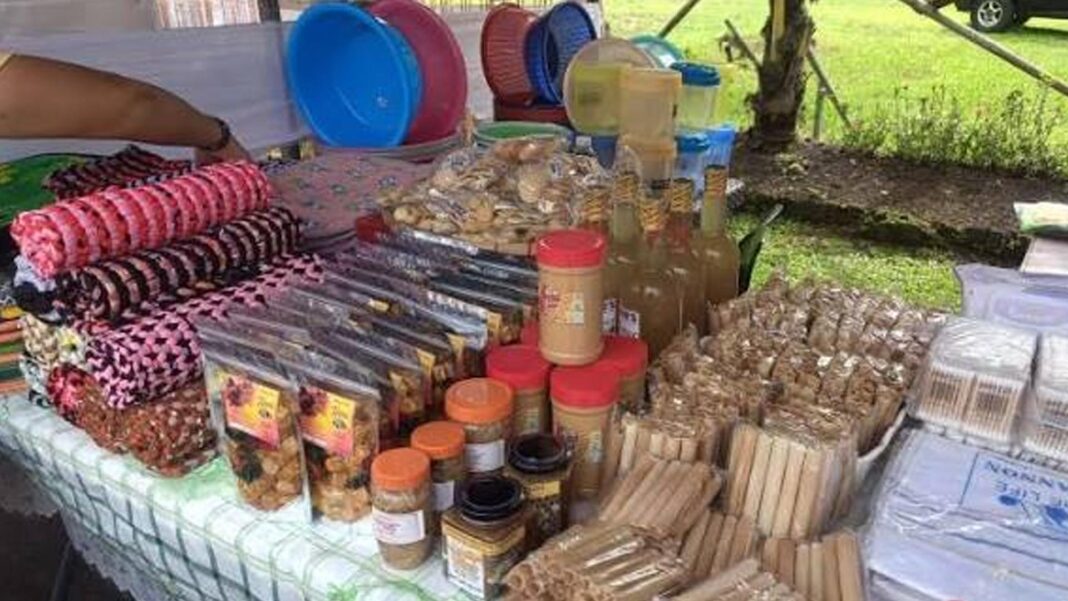

The Bicol University’s (BU) Guinobatan Campus is showcasing agricultural products, innovations, and technologies while encouraging young people to consider agriculture as a viable career and industry during its four-day Agri-Festival that kicked off Tuesday.
With the theme “POSTHARVEST: Promoting Opportunities for Sustainable Transformation, Harnessing Agri-Aqua Resources for Value-Addition in Empowering Stakeholders and Technology,” the event features 99 exhibitors, along with seminars, campus tours, and other activities aimed at strengthening linkages among the academe, farmers, producers, students, and other stakeholders toward sustainable agricultural development.
Dr. Roscefe Dy, dean of BU-Guinobatan, said the campus recorded an increase in enrollment this academic year, with 1,513 students compared with 1,480 last year.
She said the increase was particularly evident in agriculture-related programs, including Bachelor of Science in Agriculture (BSA), which exceeded its target enrollment of 70 percent after attracting 80 percent.
The campus also exceeded its targets for Bachelor of Science in Agricultural and Biosystems Engineering (BSABE), Doctor of Veterinary Medicine (DVM), and Bachelor of Science in Development Communication (BS DevCom).
She said the campus is also working on a new curriculum offering for a BSA major in Precision Agriculture, which it hopes to present this year and offer by 2028.
She said the Agri-Festival is among the initiatives being used by the campus to encourage more students to pursue agriculture-related courses.
“We have several seminar series where we invited senior high school students and conducted campus tours for them to realize that there is beauty in agriculture,” Dy said.
For this year’s festival, the campus also invited influencer Ethan Hernandez to discuss forestry on Sept. 10, while successful BU-Guinobatan alumni in the agriculture sector are set to conduct seminar sessions throughout the festival.
Dy encouraged the public to visit the festival and support the exhibitors, particularly local farmers and producers.
“We encourage the public to join us and visit us in this four-day activity wherein they can see the activities here and the products of our local farmers, which can help them improve their lives,” she said.
Meanwhile, BU president Baby Boy Benjamin Nebres III said the festival’s theme underscores the need to look beyond agricultural production and focus on creating greater value from what farmers and fisherfolk produce.
“Agriculture does not end when we harvest. In fact, that is where another harvest begins, and that is the harvest of opportunity,” he said.
He pointed out that while farmers work hard to produce crops, much of the value may be generated only after the products leave the farm.
“Somebody else gets rich selling rambutan shake than the one who planted it,” he said, citing the importance of postharvest transformation and value addition.
He said the sector must shift from simply measuring how much was produced to determining how much value can be created from agricultural products through technology, innovation, research, entrepreneurship, and education.
Farmers, he said, should not be limited to being producers but could also become processors, entrepreneurs, innovators, and owners within the agricultural value chain.
Similarly, fisherfolk can move beyond selling fresh catch by developing products, brands, franchises, and livelihood opportunities that showcase the identity of their communities.
He also urged young people to see agriculture not as an industry of the past but as an industry of the future.
“The future of agriculture is not simply about producing more; it is about producing smarter, better, and sustainably, competitively,” he said. (PNA)