

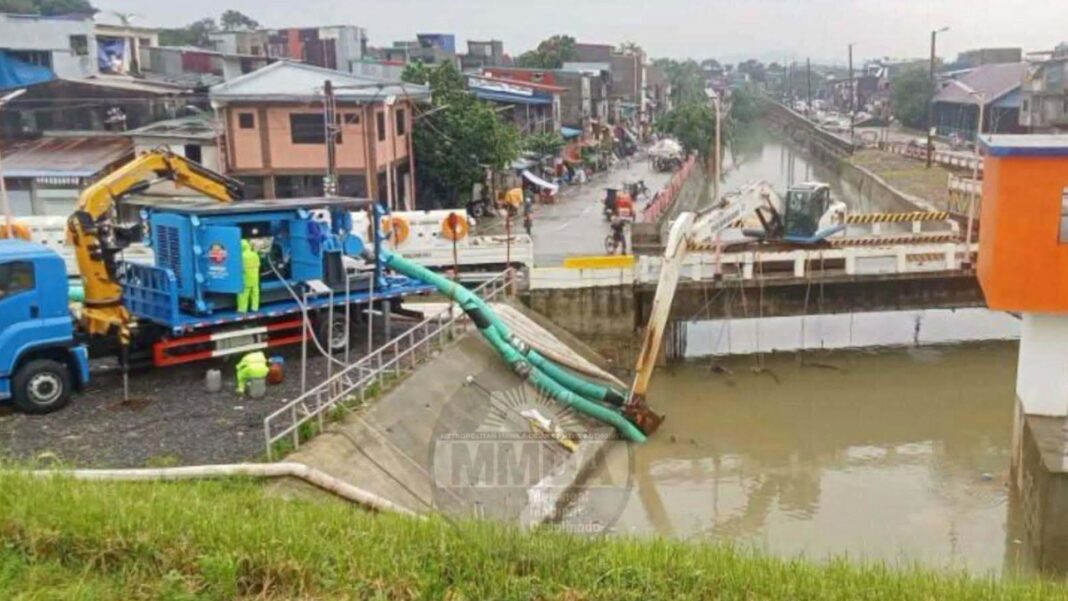

More than half of the Metropolitan Manila Development Authority’s (MMDA) proposed PHP6.56 billion budget for 2027 will go to flood control and sewerage management, making flood mitigation its largest spending priority despite a reduction in the agency’s overall funding.
During Thursday’s Senate Committee on Finance hearing, MMDA Chairperson Romando Artes presented a PHP3.4 billion allocation for flood control, accounting for nearly 52 percent of the agency’s proposed budget.
Of the amount, PHP2.51 billion is intended for capital expenditures, PHP813.63 million for maintenance and operating expenses, and PHP82.22 million for personnel services.
The funding will support flood mitigation operations, including the maintenance and improvement of drainage systems, pumping stations, and related infrastructure across Metro Manila.
The proposed MMDA budget is PHP222 million less than its PHP6.78 billion allocation under the 2026 General Appropriations Act.
Senator JV Ejercito, who chairs the finance committee, raised concerns over heavily silted rivers and tributaries in Metro Manila and questioned whether additional funding would be needed for dredging operations.
Apart from flood control, the agency is proposing PHP1.99 billion for solid waste disposal and management, PHP866.03 million for traffic and transport management, PHP180.57 million for road maintenance, and PHP119.21 million for the Pasig River Ferry Service.
The proposed spending priorities come as the government pursues the rehabilitation and upgrading of pumping stations to improve Metro Manila’s capacity to handle intense rainfall.
President Ferdinand R. Marcos Jr. earlier announced plans to install or upgrade 13 pumping stations in the metropolis, with operations targeted by late 2026 or early 2027.
Meanwhile, the MMDA is developing a broader network of rainwater catchment facilities to temporarily store excess rainfall before it overwhelms drainage systems.
In a Sept. 2 Palace briefing, Artes said 39 potential sites had been identified following nearly three years of technical studies and consultations with local governments.
“We cannot guarantee flood-free Metro Manila,” Artes said, acknowledging the limitations of infrastructure improvements as extreme rainfall events become more frequent.
The agency has also identified five priority rainwater impounding projects in Quezon City and Manila, with a combined proposed storage capacity of 107,600 cubic meters.
The facilities, estimated to cost PHP4.05 billion, are being considered for separate funding under the National Disaster Risk Reduction and Management Fund’s rehabilitation and reconstruction assistance program.
The planned structures are designed to temporarily capture stormwater and release it gradually, easing pressure on drainage networks and reducing flooding in surrounding communities. (PNA)