

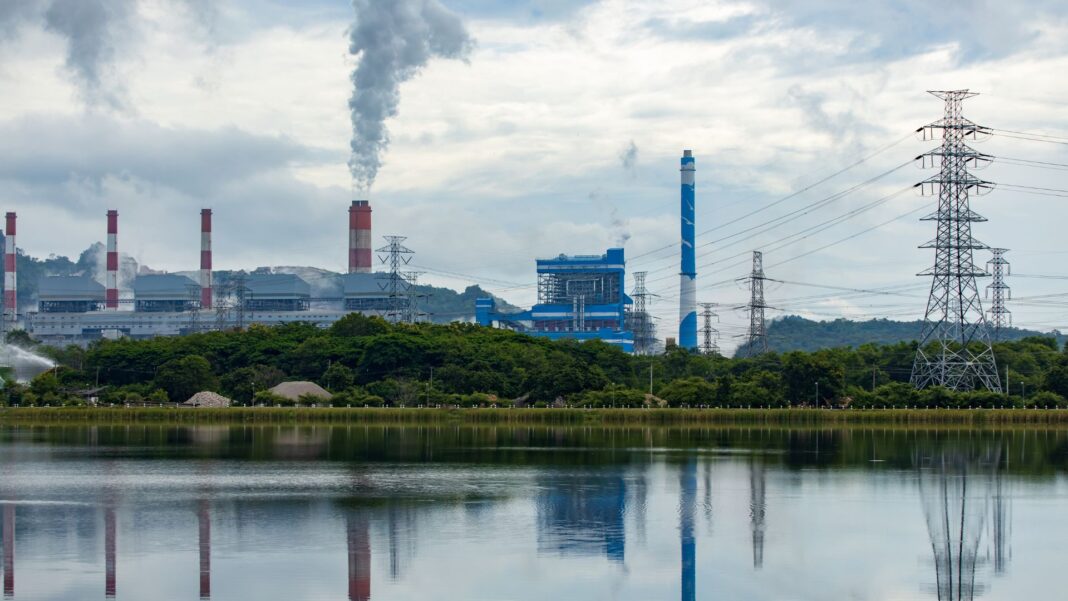

Indonesia’s Ministry of Energy and Mineral Resources set the first-period November 2026 Coal Reference Price (HBA) at US$125.60 per ton on November 3, a 0.95% decrease, while benchmarks for medium- and lower-calorie coal rose. The decision followed remarks by Minister Bahlil Lahadalia in Jakarta on November 2 that the government will continue controlling coal production through annual work plan approvals, a policy that bears on coal supply and pricing for power producers that rely on Indonesian coal.
Key Facts At A Glance
- The first-period November 2026 HBA was set at US125.60perton,downUS1.21, or 0.95%, from US$126.81 in the second period of October.
- HBA I (5,300 kcal/kg GAR) rose 4.52% to US97.85 per ton; HBAII (4,100kcal/kgGAR) rose 4.81% to US69.28; HBA III (3,400 kcal/kg GAR) rose 2.44% to US$46.64.
- The benchmarks apply from November 1 to 14, 2026.
- The early-November HBA is US21.85 per ton, or about 21% ,above the US103.75 set for the same period of 2025.
- Bahlil said Indonesia supplied about 540 million tons of coal in 2025, which he described as roughly 43% of global supply.
- Bahlil said companies submitting coal work plans (RKAB) increased from about 500 in 2025 to 650 in 2026.
- Bahlil said non-tax state revenue reached Rp141 trillion as of October 1, 2026.
The Ministry of Energy and Mineral Resources of the Republic of Indonesia (ESDM) set the main Coal Reference Price, or Harga Batubara Acuan (HBA), for the first period of November 2026 at US125.60 per ton. The figure is US1.21 per ton, or 0.95%, lower than the US$126.81 recorded for the second period of October 2026.
The ministry attributed the correction to lower actual coal sale prices. The calculation is based on sales transactions with shipping dates from September 8 to October 7, 2026, which are also used for royalty payments through the ePNBP Minerba application.
Benchmarks for lower-calorie categories moved upward over the same period. HBA I, covering coal with an equivalent calorific value of 5,300 kcal/kg GAR, was set at US97.85 per ton, up 4.52%. HBAII ,at 4,100kcal/kgGAR, reached US69.28 per ton, up 4.81%, and HBA III, at 3,400 kcal/kg GAR, was set at US$46.64 per ton, up 2.44%.
All four HBA categories apply from November 1 to 14, 2026. The main HBA is used to calculate the Coal Benchmark Price (HPB) for coal above 6,000 kcal/kg GAR, with adjustments for calorific value, moisture, sulphur and ash content. The pricing follows Ministerial Decree No. 268 of 2025, under which HBA is calculated as the volume-weighted average of coal sale prices at the Free on Board vessel delivery point.
Compared with a year earlier, the main HBA is US21.85 per ton, or about 21% ,higher than the US103.75 set for the first period of November 2025.
Production Controls
Speaking at the opening of the Mineral and Coal Convention Expo (Minerba Convex) 2026 at JIExpo Kemayoran, Jakarta, on November 2, Bahlil said the government has opted to control coal production through the annual Work Plan and Budget (RKAB) process.
Bahlil said global coal consumption is about 8.9 billion tons per year, of which about 1.3 billion tons is traded internationally. He said Indonesia supplied about 540 million tons in 2025, equivalent to about 43% of global supply by his account. He said that volume had not translated into proportional company profits or state revenue, and that coal prices this year could reach US$154 under the current approach.
He said the number of companies submitting RKAB applications rose from about 500 in 2025 to 650 in 2026, and asked producers not to compete to front-run one another for quotas. Bahlil said non-tax state revenue (PNBP) was in the range of Rp130 trillion to Rp135 trillion in 2025 and had reached Rp141 trillion as of October 1, 2026, with an estimate of Rp160 trillion to Rp165 trillion by year-end.
Work Plan Cycle
The RKAB 2027 submission period opened in October and runs to mid-November 2026, according to Kontan. The Indonesian Mining Experts Association (Perhapi) has proposed setting the national coal production quota for 2027 at around 700 million tons. Separately, the ministry has projected 2026 coal production of about 720 million tons, a 12% decline, according to Katadata.
Publicly available details on the November 2 and 3 developments remain limited to ministry releases. The ministry has not published 2027 production quotas.