

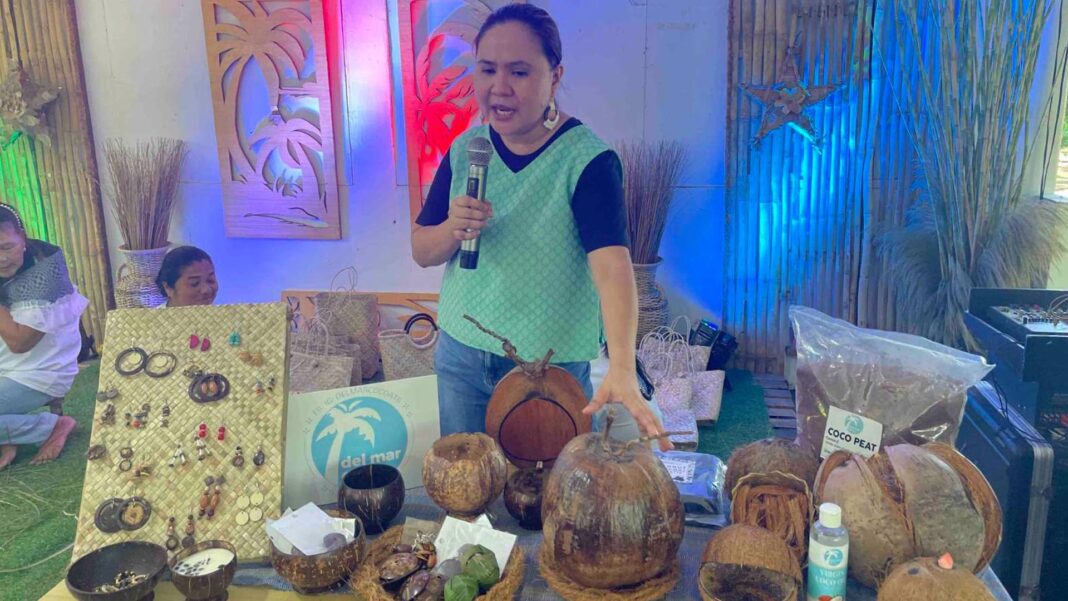

Turning what is often considered agricultural waste into valuable products, coconut shell craft makers in Pagudpud, Ilocos Norte are preparing to take their creativity to wider markets through eco-friendly handicrafts that promote zero-waste practices and a circular economy.
Through community-based livelihood initiatives, some 120 local artisans here transform discarded coconut shells into functional and decorative products, showing how they can maximize natural resources while creating sustainable income opportunities for rural households.
With support from various government agencies, particularly the Department of Trade and Industry (DTI), which provides machinery, training, benchmarking, product development and marketing for their coconut-based products, the growing enterprise is helping local craft makers improve their products, strengthen their production capabilities and prepare for potential export opportunities.
“We are so thankful to DTI for the assistance they have given us through the years. From making coco shell handicrafts and souvenirs, our products have improved and expanded into what they are now,” Elizabeth Benemerito, chairperson of the Del Mar Shellcraft Multi-Purpose Cooperative said in an interview.
Coconut shells are commonly discarded after the meat and water are extracted. They are then transformed into various household accessories, decorative items and novelty products.
The process gives agricultural by-products a second life, reducing waste while creating products that appeal to consumers looking for environmentally responsible alternatives.
“We used to collect seashells from the beach and turn them into souvenir items like trinkets for tourists, but as we go along, the government has banned the collection of corals and seashells. So, we thought of looking for other alternatives and the coco shells are just around Pagudpud,” she added.
Beyond producing handicrafts, Benemerito said the initiative promotes a circular economy by maximizing the use of coconut resources and minimizing materials that would otherwise go to waste.
The community-based enterprise provides livelihood opportunities for residents, particularly artisans who rely on traditional skills and handcrafts to support their families.
“It’s really hard to make, but we are happy that a lot of visitors are happy with our products,” handicraft maker Daisy Jimenez told the Philippine News Agency in an interview.
By combining environmental responsibility with entrepreneurship, the coconut shell craft industry shows how sustainable production can generate economic benefits at the grassroots level.
Benemerito saud the continuing assistance from various government agencies, such as DTI, Cooperative Development Authority, Philippine Coconut Authority, Agricultural Training Institute, Department of Labor and Employment, Department of Social Welfare and Development, Department of Science and Technology, Technical Education and Skills Development Authority, Philippine Center for Postharvest Development and Mechanization, Department of Public Works and Highways, and Department of Tourism, plays an important role in strengthening the capabilities of local craft makers in Pagudpud town.
Organized as a cooperative in 2007, the cooperative has evolved from a community of shell gatherers into a diversified social enterprise that focuses on making coco shell handicrafts, while ensuring that nothing is wasted along the process.
Through enterprise development interventions, product improvement, skills training, and market-linking activities, the coop continues to enhance the quality and competitiveness of its food and non-food coconut-based products, which now include virgin coconut oil, coco peat, coconut charcoal briquettes and twining, among others.
In September, the DTI brought some of their innovative coconut-based products to China through the 23rd China-ASEAN Expo, participated in by 27 Filipino exhibitors to explore a wider market.
“With sustained support, Pagudpud’s coconut shell craft makers are export-ready,” Mariane Joy de Guzman, product development specialist of DTI Ilocos Region, said in a recent interview.
For Pagudpud’s artisans, their products represent more than creative expressions. They reflect a commitment to environmental protection, community empowerment and the responsible use of natural resources. (PNA)