

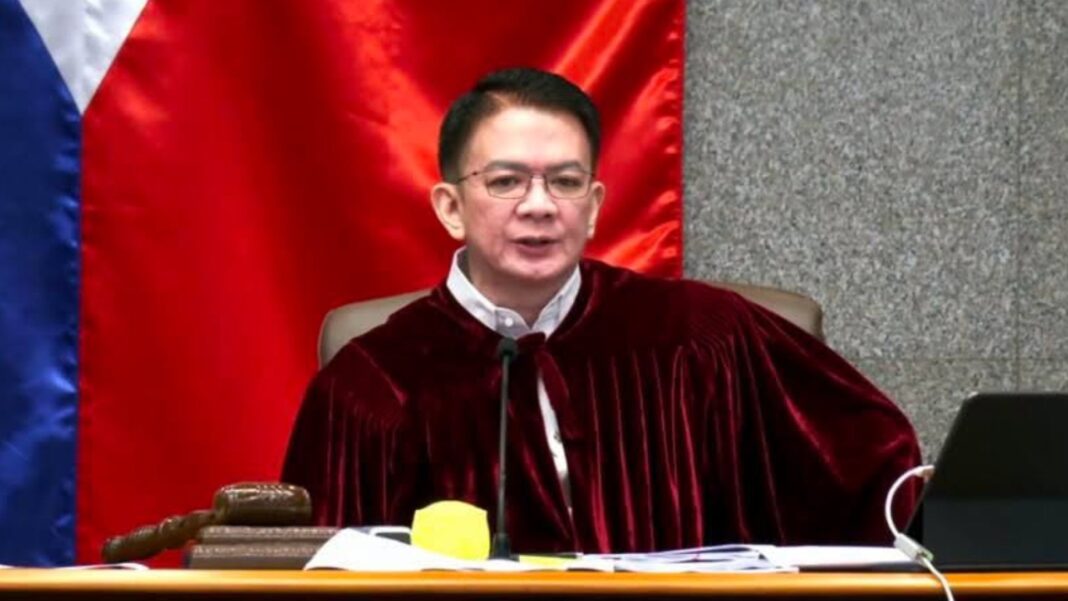

Impeachment court Presiding Officer Sen. Francis Escudero on Monday drew a firm line against personal attacks and degrading conduct in the impeachment trial of Vice President Sara Duterte, reminding lawyers and other participants that vigorous disagreement must not undermine the dignity of the proceedings.
Escudero opened the session with a warning on civility as he acknowledged that patience was wearing thin and tensions were beginning to rise inside and outside the courtroom.
“Our duty is not to conquer one another in these proceedings, but to illuminate the truth and serve the cause of justice,” he said.
“Let the arguments be forceful, but never personal. Let the contest be exacting, but never degrading,” he added.
Escudero also reminded members of the Bar that the Code of Professional Responsibility and Accountability requires lawyers to deal with one another with courtesy, civility, fairness and candor.
He said the same responsibility extends beyond counsel to parties, witnesses, public officials, commentators and observers following the proceedings.
“Disagreement may be vigorous and criticism unsparing, but no cause is strengthened by contempt,” Escudero said.
He stressed that the impeachment court would remain focused on deciding the case based on evidence, justice and fairness despite what he described as “rantings or tantrums” from inside or outside the courtroom.
Escudero said the proceedings are ultimately not about any individual participant but about the country, accountability and the fair administration of justice.
No Fixed Dec. 16 Verdict Date
The impeachment court also moved to clarify public statements on the trial schedule after Senator-judge Raffy Tulfo raised reports that a final verdict could be handed down by Dec. 16.
Escudero said such projections were based only on the number of trial dates requested by the prosecution and defense under the pre-trial order and did not reflect the impeachment court’s actual position.
“It’s based on math, not based on the realities on the ground of the trial,” he said.
The court later proceeded with the presentation of financial evidence, beginning with the Anti-Money Laundering Council.
Escudero said the court would continue to manage the proceedings according to the evidence presented and the time needed for direct examination, cross-examination and questions from senator-judges. (PNA)