

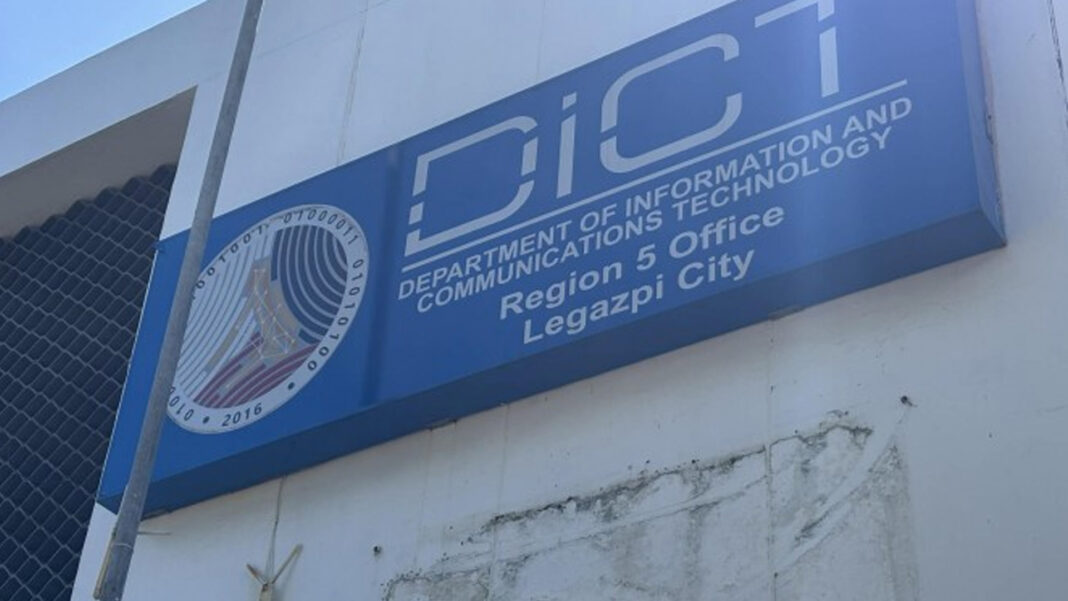

The Department of Information and Communications Technology (DICT) – Bicol is providing Internet connectivity to 352 public schools in Sorsogon, including those in geographically isolated and disadvantaged areas, to improve access to digital learning resources.
John Nomel Ebuenga, head of the DICT-Bicol’s Connectivity and Infrastructure Management Unit, said the schools were identified as priority sites under the agency’s Free Wi-Fi for All program, which prioritizes public schools in line with the directive of President Ferdinand R. Marcos Jr.
The schools are located in both urban and rural communities, including areas where conventional telecommunications and fiber-optic infrastructure are limited or unavailable.
Ebuenga said unreliable or limited connectivity has made it difficult for students and teachers to access online learning materials, conduct research, obtain updated information, and participate in digital learning activities.
In some geographically isolated areas, students and teachers have had to rely on mobile data, public Internet facilities or travel to locations with better connectivity to access online resources, he said.
“To address the connectivity gap, all 352 schools will have Internet access through Low Earth Orbit (LEO) satellite technology,” Ebuenga said.
LEO satellite technology can provide Internet service in remote and underserved areas where conventional connectivity infrastructure is not readily available.
“LEO satellite connectivity is an appropriate solution for these schools because many areas have limited or no available telecommunications services or fiber-optic infrastructure,” Ebuenga said.
The improved connectivity is expected to give students greater access to digital learning platforms and educational materials, while allowing teachers to use additional online resources in preparing and delivering lessons.
“The free Internet will help them adapt to digitalization and participate more actively in digital learning and education,” Ebuenga said.
He said expanding free Internet access to public spaces could also give communities greater opportunities to access information and online services and participate in the digital economy.
He said the initiative could benefit students, workers, entrepreneurs, patients, and other residents in underserved communities by providing access to online resources without the burden of costly or unreliable internet service.
“Through the initiative, DICT aims to help bridge the digital divide and enable more people, particularly those in underserved communities, to benefit from digital opportunities,” he said. (PNA)