

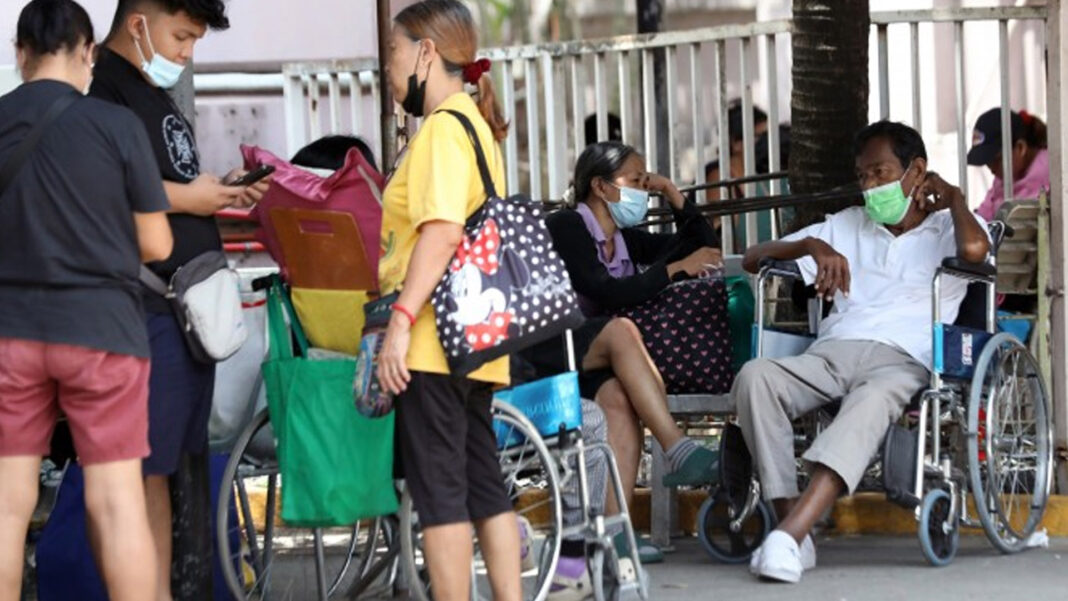

Patients in private hospitals may receive assistance under the expanded Medical Assistance to Indigent and Financially Incapacitated Patients (MAIFIP) program, a Department of Health official said Monday.
DOH Officer-in-Charge Assistant Secretary for Hospital Systems Cluster Dr. Tagumpay Maniquis said the program covers patients who are indigent as well as those with incomes but unable to afford medical treatment.
“Meron po silang trabaho pero sa pagkakataon na sila ay nagkasakit eh dito talaga sila nahihirapan na bayaran kung ano man mga kailangan para sa pagpapagamot (They have jobs, but when they fall ill, they struggle to pay for the care they need),” he said in an interview with PTV’s Sentro Balita.
The assistance may cover inpatient and outpatient care, surgical procedures, laboratory tests and rehabilitation, he said.
Patients undergoing cancer treatment, including chemotherapy, may also apply for assistance.
Availability, however, depends on whether the medical facility is participating in the program.
To streamline the process, the DOH has implemented the e-MAIFIP system, which helps patients complete required forms at participating facilities and speeds up the release of assistance.
The program is also accessible through the e-Gov app.
Maniquis distinguished MAIFIP from Zero Balance Billing, which applies to patients in basic accommodations at public hospitals.
“Ang Zero Balance Billing po eh ito sa public hospital, pero ito pong MAIFIP eh sinasaklaw po nito pati serbisyo po ng private hospital kung kinakailangan po ng pasyente (Zero Balance Billing applies to public hospitals, while MAIFIP also covers services at private hospitals when patients need them),” he said.
Citing President Ferdinand R. Marcos Jr.’s State of the Nation Address, Maniquis said about 8 million people had benefited from the medical assistance program.
He said the program has no fixed target for beneficiaries, as the government seeks to reach more Filipinos who need assistance.
Funding for the program is included in the proposed budget for next year. (PNA)