

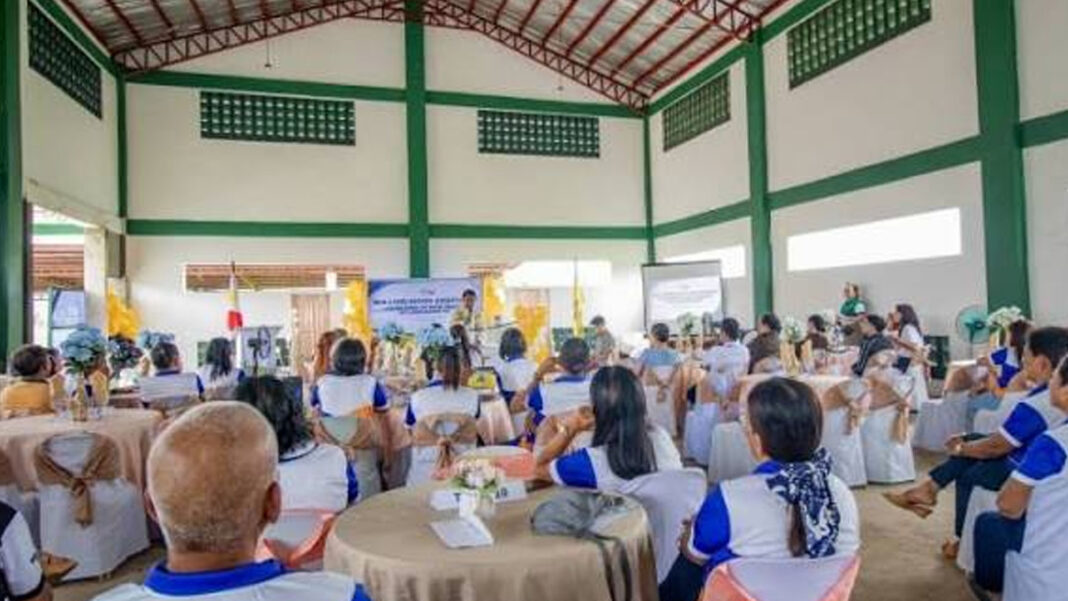

The National Irrigation Administration (NIA) – Eastern Visayas has provided PHP1.2 million in livelihood assistance to an irrigators’ federation in Ormoc City to support its rice trading business.
The assistance was granted to members of six irrigators’ federation of agriculture cooperatives through NIA’s Irrigation Management Transfer Support Services (IMTSS).
NIA regional institutional development section chief Karen Mades said the initiative is part of the agency’s efforts to help irrigators’ associations become more entrepreneurial by providing capital for livelihood projects.
“Apart from providing water and irrigation facilities to irrigators’ associations, one of the thrusts and directives of our new irrigation administrator, Eduardo Guillen, is to find initiatives to make our irrigators’ associations enterprising and help them have capital for livelihood through the IMTSS,” Mades said in an interview Wednesday.
The assistance is expected to benefit 2,259 federation members, whose rice farms cover a combined 2,482 hectares.
The federation recently secured a contract with the Ormoc City government under the Sagip Saka Act to supply 37,311 sacks of rice, each weighing 10 kg., at PHP500 per sack. The contract has a total value of about PHP18.6 million.
Mades said the federation initially submitted a feasibility study for the proposed livelihood project, which NIA later validated through an on-site assessment to determine its viability for the irrigators and the community.
She said NIA will continue monitoring the use of the assistance following its release.
“The livelihood assistance before was solely for training, but now we have ventured into another initiative, which is the livelihood program. We assess the projects and continue our monitoring,” Mades added.
The beneficiaries are among several irrigators’ organizations in Eastern Visayas that have received livelihood assistance from the regional NIA office since February.
The agency has provided more than PHP13 million in total assistance to various irrigators’ organizations in the region during the period.
The assistance has supported a range of livelihood activities, including agricultural lending, farm-input retail stores, free-range chicken farming, organic egg production, goat raising, small farm machinery services, microfinancing, virgin coconut oil and other coconut-based products, agricultural input merchandising, agri-vet supplies, rice retailing, frozen goods, and micro-savings.
Other supported activities include hog raising and various lending programs.
Through the IMTSS, NIA seeks to strengthen the capacity of irrigators’ organizations not only to manage irrigation systems but also to develop sustainable livelihood enterprises that can generate additional income for their members. (PNA)