

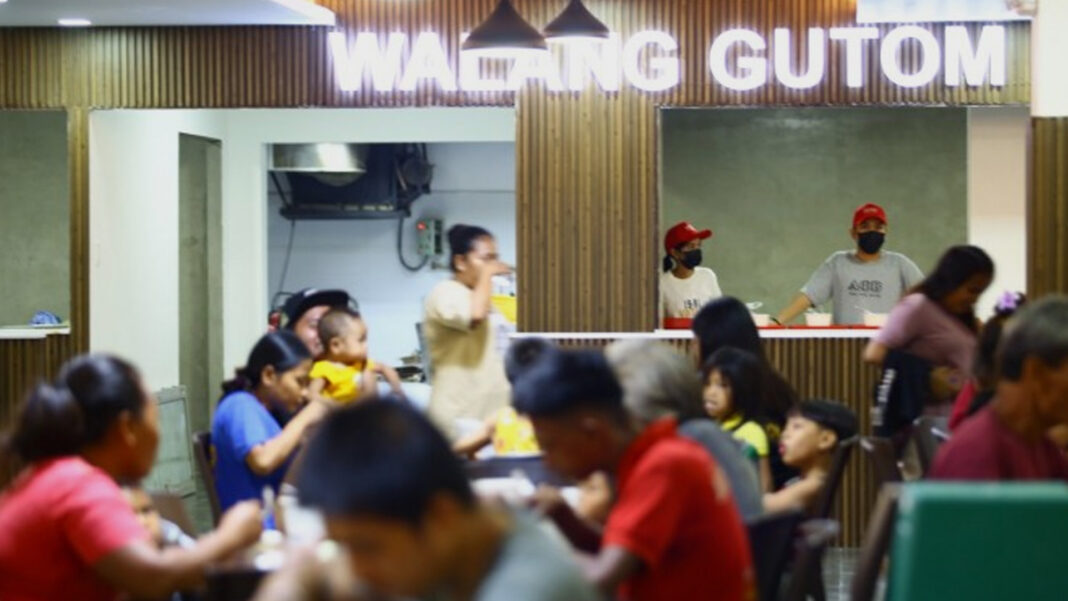

Sen. Francis “Kiko” Pangilinan on Tuesday said he wants President Ferdinand R. Marcos Jr.’s flagship Walang Gutom program on permanent legal footing, saying food assistance for vulnerable families should not change with administrations.
Pangilinan said he filed Senate Bill No. 2379, or the proposed Walang Gutom Act of 2026, which would institutionalize the program and provide a continuing basis for government funding, coordination and accountability.
“Hindi dapat paiba-iba ang tulong depende sa programa o sa kung sino ang nakaupo. Kailangan natin ng isang matatag at tuloy-tuloy na sistema para matiyak na may pagkain ang bawat pamilyang nangangailangan (Assistance should not keep changing depending on the program or whoever is in office. We need a stable and continuous system to ensure that every family in need has food),” Pangilinan said in a news release.
Marcos established the Walang Gutom 2027: Food Stamp Program as a flagship national government initiative through Executive Order No. 44 in October 2023, with the Department of Social Welfare and Development (DSWD) as lead implementing agency.
The program currently provides food-poor households with electronic benefit transfer cards loaded with PHP3,000 in monthly food credits that can be used to purchase selected nutritious food from accredited retailers.
DSWD said the program reached 600,000 household-beneficiaries nationwide in February, up from 300,000 previously covered, and is targeting 750,000 food-poor households by 2028.
Pangilinan said giving the program a statutory basis would help protect the anti-hunger initiative from being dependent solely on executive and administrative issuances.
“Kahit anong progreso at tagumpay ang matamasa natin in terms of economic figures, wala itong kwenta kapag gutom ang ating mga kababayan, lalo na ang mga kabataan sa eskwelahan. Hindi pwedeng umasenso ang isang bansa nang may naiiwang mga kababayang kumakalam ang sikmura (Whatever progress and success we achieve in terms of economic figures mean nothing if our people, especially schoolchildren, remain hungry. A country cannot prosper while some of its people are left with empty stomachs),” he said.
The bill’s explanatory note cited government data showing that 31.4 percent of Filipino households experienced moderate to severe food insecurity in 2023, with the rate higher in rural areas at 35.3 percent than in urban areas at 27.8 percent.
Under the proposed law, food assistance would also be linked with local agriculture by sourcing through farmers, fisherfolk, cooperatives, associations, Kadiwa outlets and similar channels.
Pangilinan said this would allow Walang Gutom to address two concerns at once — putting nutritious food on the tables of vulnerable families while providing additional markets for local food producers.
The existing program also requires beneficiaries to attend Kalusugan, Kakayahan, at Kabuhayan or 3K sessions, which combine nutrition education with productivity and livelihood interventions.
SB 2379 would further provide for community farming areas and school-based food gardens, with the Department of Agriculture (DA) extending seedlings, gardening tools and other inputs and the Department of Education (DepEd) overseeing the school component.
Initial funding would come from the existing appropriations of the DA, DepEd and Department of the Interior and Local Government, while succeeding requirements would be included in the annual national budget.
“Walang dapat maiwan sa pag-unlad. Walang dapat nagtitiis ng gutom (No one should be left behind in progress. No one should have to endure hunger). Our success as a country should be measured by how we can uplift ordinary Filipinos — by making sure that they have food on the table, they have decent livelihood, and they have opportunities to succeed,” Pangilinan said. (PNA)