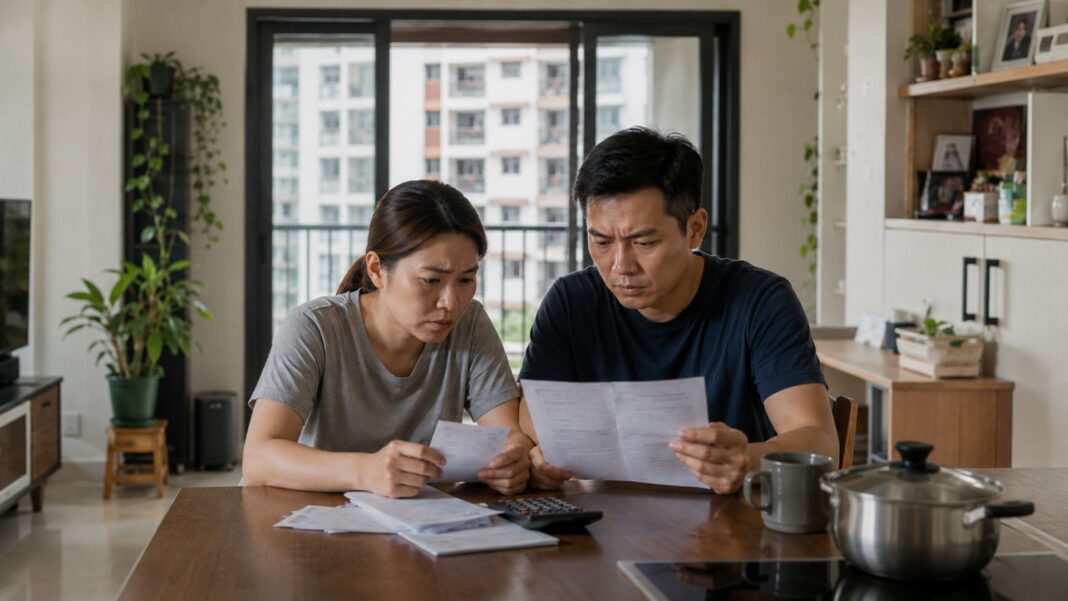

Singapore’s Energy Market Authority confirmed on June 30 that regulated household electricity tariffs will rise 17 percent for the July to September 2026 quarter, the steepest increase since the Strait of Hormuz crisis began disrupting global gas markets in February. The hike will add roughly S$17 a month to a typical four-room HDB household’s bill, with town gas tariffs also climbing 7.1 percent over the same period.
Key Facts At A Glance
- New electricity tariff: 31.91 cents per kWh before GST, up 4.64 cents from the April-June quarter
- With 9% GST added, the rate works out to 34.78 cents per kWh
- Typical 4-room HDB household: bill rises by about S$17.14 before GST per month
- Town gas tariff rises 7.1%, to 23.48 cents per kWh before GST
- Singapore generates about 95% of its electricity from imported natural gas
- Tariffs are set quarterly using gas prices from the first 2.5 months of the prior quarter, so this quarter reflects April to mid-June fuel costs
- A second tranche of GSTV U-Save rebates, worth up to S$190 per eligible HDB household, will be disbursed in July
- EMA says a fourth-quarter reduction is possible if Middle East conditions stabilize
Singapore’s Energy Market Authority said the increase stems from natural gas prices that rose sharply at the end of February and stayed elevated through April and June because of the conflict in the Middle East. Grid operator SP Group set the new rate at 31.91 cents per kWh before GST, an increase of 4.64 cents from the prior quarter, bringing the rate with GST included to 34.78 cents per kWh. City Energy, the piped town gas provider, said its tariff would rise 1.56 cents per kWh, to 23.48 cents before GST.
Why The Increase Lags The Conflict
EMA explained that Singapore’s tariffs are calculated using average gas prices from the first two and a half months of the preceding quarter, meaning the fuel costs behind any given quarter’s price only reach consumers three to four months later. That structural lag is why the April to June tariff rose only modestly, since it captured just the initial two weeks of the conflict’s impact starting February 28. This quarter’s tariff, by contrast, incorporates a fuller stretch of elevated fuel costs from April through mid-June, which is why the increase is far steeper.
For a typical four-room flat, the change translates to an extra S$17.14 a month before GST. Larger landed properties, which typically consume several times more power, will see proportionally bigger increases.
Relief Is Not Immediate
Notably, the tariff jump comes even as global oil prices have eased following a ceasefire agreement between the US and Iran signed in mid-June. EMA has acknowledged this apparent contradiction is a function of timing: gas prices lag oil prices, and the tariff lags gas prices, so any benefit from the ceasefire will not show up until the fourth quarter of 2026 at the earliest, and possibly not until early 2027. EMA said the fourth-quarter tariff could fall if Middle East conditions continue to improve, but cautioned that the situation remains uncertain.
To cushion the impact, eligible HDB households will receive a second tranche of GST Voucher U-Save rebates in July, worth up to S$190 depending on flat type, credited automatically to SP Group accounts. Households can also compare fixed-price, discount-off-tariff, and time-of-use plans from retailers through EMA’s price comparison website, rather than defaulting to the regulated tariff. EMA is also encouraging basic conservation measures, such as setting air-conditioning to 25 degrees Celsius or higher, as a way to blunt bill increases while supporting overall energy resilience.
The increase leaves Singapore’s tariff at its highest level since fuel cost pass-through mechanisms began reflecting the war-linked disruption to Gulf gas supplies, and follows a smaller 2.1 percent rise in the prior quarter.