

The Department of Education in Eastern Visayas (DepEd-8) is confident that implementing the new three-term school calendar will help address low reading comprehension levels in the region by providing more time for classroom instruction and targeted remediation.
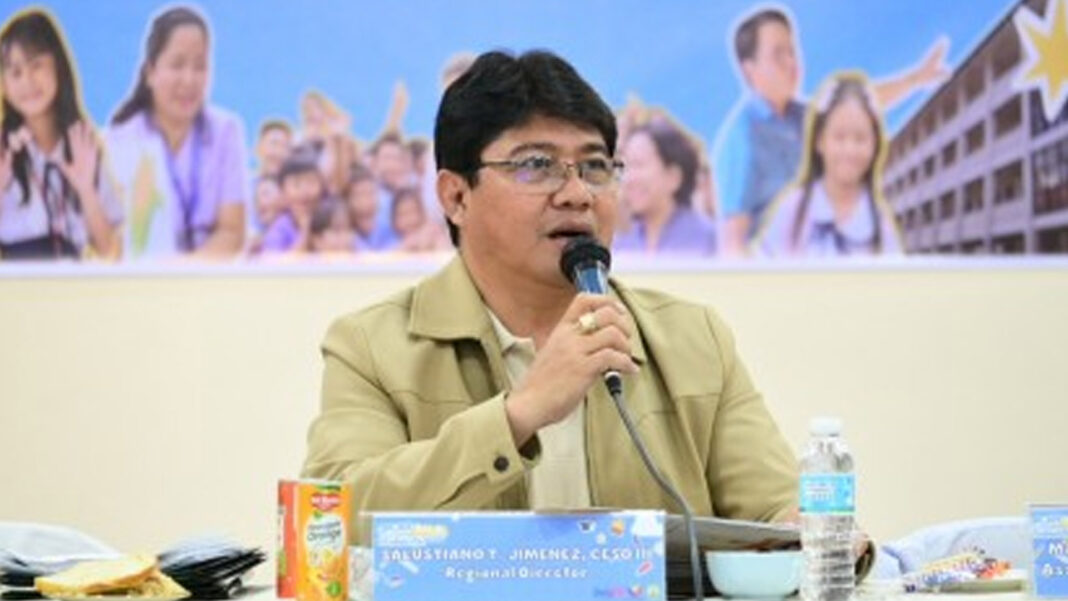
Speaking to reporters on Thursday, DepEd-8 Director Salustiano Jimenez said the revised academic calendar is designed to directly tackle learning gaps, particularly in reading.
“In the old calendar, some school days focused on extracurriculars. Under the new calendar, instruction remains uninterrupted, and teachers can schedule targeted remediation at the end of each term for struggling learners,” Jimenez said.
The new calendar features an end-of-term block for interventions, remediation and enrichment, mainly supporting students in reading.
Jimenez noted that the end-of-term blocks for the first two terms of each academic year will be devoted to implementing Project ARAL (Academic Recovery and Accessible Learning).
Project ARAL is DepEd’s flagship national learning intervention program, providing free, targeted tutoring to struggling learners in public schools from Kindergarten through Grade 10. The initiative aims to help students strengthen foundational skills in reading, mathematics, and science.
Jimenez acknowledged that low reading comprehension remains a challenge not only in Eastern Visayas but also in other regions nationwide.
According to DepEd’s Comprehensive Rapid Literacy Assessment, some 6,799 learners in Grades 1 to 3 in Eastern Visayas were identified as struggling readers, representing 6.79 percent of total enrollment for those grade levels in school year 2025–2026.
Among pupils in Grades 4 to 6, at least 30,397 learners, or 11.33 percent of the total enrollment, were classified as poor readers in Filipino. The situation is more serious in English, where 38,472 pupils, or 14.34 percent of those enrolled, showed poor reading performance.
For Grades 7 to 10, approximately 40,304 students, or 13.90 percent of total enrollment, were identified as struggling readers in Filipino.
In English, 65,183 junior high school students, representing 22.48 percent of enrolled learners, were identified as poor readers.
Reading proficiency among learners in Grades 4 to 10 was assessed using the Philippine Informal Reading Inventory (Phil-IRI), a revised assessment tool consisting of graded reading passages administered to both entire classes and individual students to determine their reading levels.
Meanwhile, results from the Senior High School Literacy Assessment showed that 31,261 Grade 11 students were struggling readers in Filipino, while 29,717 students, or 40.80 percent of those assessed, were classified as poor readers in English. (PNA)