

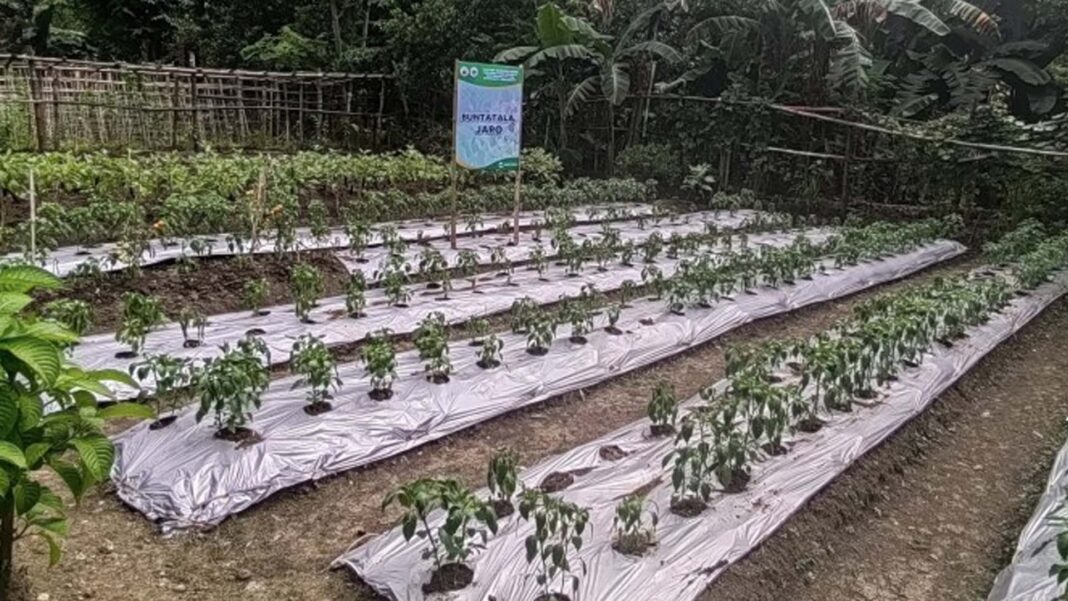

The local government here is eyeing the activation of communal gardens in the barangays (villages) in anticipation of the possible impact of the high cost of fuel on food supplies.
City Agriculturist Iñigo Garingalao, in an interview on Thursday, said the initiative is a way to ensure the community have a sustainable food source for its daily needs.
The communal garden started as an edible landscape in barangays, a competition that ran for six years, he said.
‘It is being done in cycles, lasting for almost eight months. The community garden has a component that provides a feeding program for malnourished children in their barangay, and the excess products are sold, giving them a source of income,” Garingalao said.
Last year, close to 90 communal gardens were established, but others opted to temporarily stop this year to allow the soil to recover.
“This year, we target 100 communal gardens even if others will no longer join the competition,” he said.
Garingalao said they have already completed the orientation training last week for communities where the gardens will be established.
‘They plan to start planting by the end of May in time for the early rains,’ he said.
Other than the communal garden, Garingalao said they also have peri-urban, or the small farms usually in the outskirts of barangays, and composed of clusters of associations.
There is also a program for a cluster of barangays that are into vegetable and rice farming.
He said Mayor Raisa Treñas would like to maximize the city’s nursery complex so that they will have a ready source for the community kitchen anytime, should the city government want to provide food to barangays in case of emergencies. (PNA)