

Vietnam’s central highland province of Gia Lai approved a consortium of three domestic developers on April 16 to build four renewable energy projects totaling 230 megawatts and nearly USD 190 million in investment, the largest single investor selection announced in the province this month, underscoring the province’s role as a national hub for utility-scale clean power as Vietnam confronts rising fossil fuel import costs from the ongoing Middle East supply crisis.
Key Facts At A Glance
- Gia Lai People’s Committee approved investor selection for the Nhon Hoa project cluster on April 16, 2026
- Investor consortium: EMI Investment JSC, Nhon Hoa Wind Power JSC No.1, and Nhon Hoa Energy JSC No.2
- Four projects: Nhon Hoa 1, Nhon Hoa 1A, and Nhon Hoa 2 solar plants (188 MW combined); Nhon Hoa 3 wind project (42 MW)
- Total combined installed capacity: 230 MW
- Total investment value: approximately VND 5 trillion (USD 190 million)
- Land footprint: approximately 275 hectares for solar in Ia Le commune; roughly 27.3 hectares across Ia Le and Chu Puh communes for wind
- Projected annual generation from solar plants: approximately 345,715 MWh
- Construction scheduled from November 2026; commercial operations targeted August 2028
- Province-wide renewable energy capacity target under Power Development Plan VIII: approximately 9,657 MW by 2035
The Provincial Decision
The Gia Lai People’s Committee issued its investor selection decision on April 16, formalizing the consortium of EMI Investment JSC, Nhon Hoa Wind Power JSC No.1, and Nhon Hoa Energy JSC No.2 as developers for the Nhon Hoa cluster. The committee simultaneously assigned provincial departments to oversee land allocation procedures, grid connection agreements, and compliance with technical standards under Vietnam’s National Power Development Plan VIII.
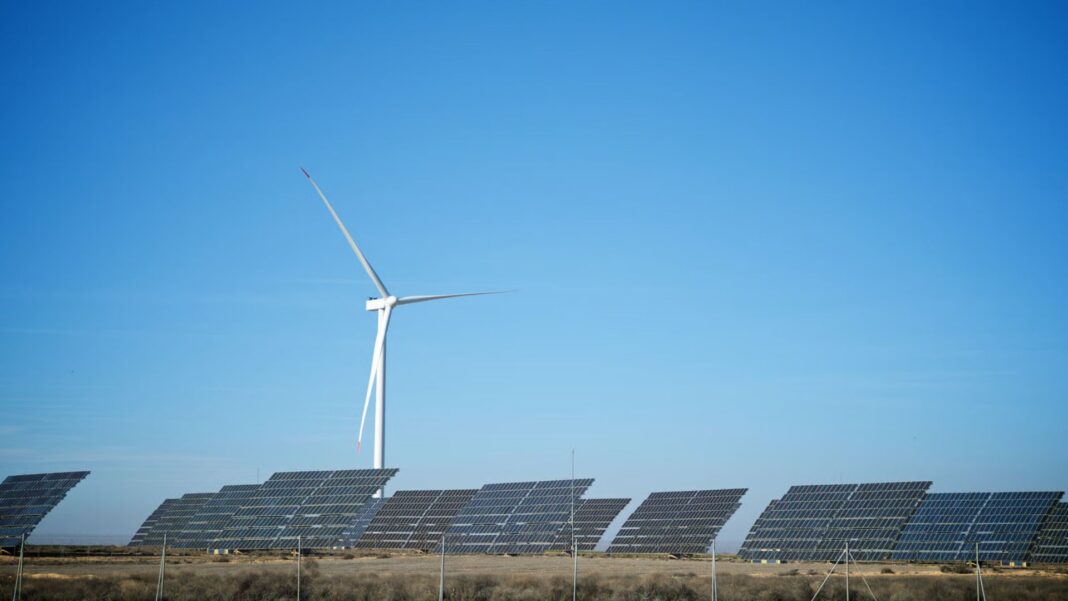
The three solar plants, designated Nhon Hoa 1, Nhon Hoa 1A, and Nhon Hoa 2, will occupy nearly 275 hectares in Ia Le commune and carry a combined installed capacity of 188 megawatts. Projected annual output from the solar plants stands at approximately 345,715 megawatt-hours. The fourth project, the Nhon Hoa 3 wind farm, spans approximately 27.3 hectares across Ia Le and Chu Puh communes, contributing an additional 42 megawatts. Construction is scheduled to begin in November 2026, with all four projects expected to enter commercial operations in August 2028.
Gia Lai’s Strategic Position In Vietnam’s Power Pipeline
The approval of the Nhon Hoa cluster is part of a broader wave of investor selections in Gia Lai as provincial authorities work to translate Power Development Plan VIII capacity allocations into commitments with named developers. Vietnam’s Ministry of Industry and Trade Institute of Energy ranks Gia Lai among the country’s most favorable locations for renewable energy, citing stable year-round solar radiation and annual sunshine hours ranging from 2,500 to 3,100, among the highest recorded nationally.
Under the adjusted National Power Development Plan for 2021 to 2030 with a vision to 2050, total renewable energy capacity in Gia Lai is projected to reach approximately 9,657 megawatts by 2035. Beyond projects formally approved under the plan, the province holds a pipeline of potential developments with combined capacity exceeding 23,000 megawatts, according to provincial government figures. Multiple investor selections have been announced in the province across the first quarter of 2026, spanning onshore wind, solar, and early-stage offshore wind exploration.
Energy Demand Context And Import Pressure
The April 16 decision arrives as Vietnam’s national power system is operating under growing strain. Total electricity generation and imports in the first quarter of 2026 reached 76.86 billion kilowatt-hours, a 6.6 percent increase year-on-year, according to Vietnam Electricity. On March 31, daily consumption exceeded one billion kilowatt-hours for the first time in the month of March, with peak capacity touching 48,789 megawatts, a record for that period.
In the first-quarter generation mix, coal-fired thermal plants provided 52.8 percent of total output, hydropower contributed 20.9 percent, and renewables including solar, wind, rooftop solar, and biomass supplied 15.4 percent. Gas turbines and imports covered the remainder. The figures illustrate the continued dominance of coal in Vietnam’s baseload mix despite PDP8 targets to expand the renewable share substantially by 2030.
Fossil Fuel Import Costs And The Renewable Acceleration Rationale
Vietnam’s exposure to the 2026 Middle East energy crisis has significantly raised the financial cost of fossil fuel imports and elevated the policy urgency around domestic renewable development. In the first quarter of 2026, Vietnam spent nearly USD 3 billion importing petroleum products, a 78 percent increase compared to the same period in 2025, driven by global oil, gas, and coal price increases stemming from the Strait of Hormuz closure. Inflationary pressure from rising energy costs is passing through to transportation, manufacturing, and logistics, creating what official commentary has described as a risk of imported inflation.
The Direct Power Purchase Agreement mechanism, which took effect in 2025, now allows large industrial consumers to procure electricity directly from renewable generators outside the state utility structure, removing a key barrier that had previously limited the commercial incentive for private-sector solar and wind investment. The DPPA framework is expected to accelerate developer interest in provinces like Gia Lai, where resource conditions support commercially viable projects at scale.
Regulatory Framework Governing Investor Selection
The Nhon Hoa approval follows investor selection procedures under Vietnam’s National Assembly Resolution adopted for the 2026 to 2030 period, which introduced mechanisms to address land-use, environmental assessment, and permitting bottlenecks that had stalled earlier renewable projects. Authorities have emphasized that all equipment used in the projects must have verified origins and meet technical and safety standards assessed by competent agencies. Developers are also required to complete forest land conversion procedures and survey affected forest areas before construction begins.
This regulatory emphasis reflects a broader governance concern. A 2023 Government Inspectorate review found that over 40 solar and wind projects across several provinces, including ten in Gia Lai, had been stalled by land-use disputes, overlapping zoning classifications, and missing land-use certificates. The 2026 resolution framework is intended to eliminate these bottlenecks prospectively for newly approved projects.
Grid Connection And Transmission Requirements
The four Nhon Hoa projects will connect to Vietnam’s national grid under terms to be established through grid connection agreements overseen by provincial departments. PDP8 and its revised implementation plan require that transmission investment proceeds in synchrony with generation development, with the 2026 to 2030 period demanding an estimated USD 18.1 billion in grid spending alongside USD 118.2 billion in generation investment. Grid capacity constraints have historically limited the ability of Gia Lai’s installed wind and solar capacity to deliver at full output, a problem that contributed to curtailment in earlier project cycles.
Vietnam’s Ministry of Industry and Trade has maintained that national power supply in 2026 will be fully secured, while forecasting electricity demand growth of 10 to 12 percent for the year under normal conditions, with an extreme scenario of up to 15 percent tied to sustained economic growth and heatwave conditions. If demand growth meets the upper range, projects such as the Nhon Hoa cluster, targeted for commercial operation in August 2028, will be entering service at a point when the national system requires the capacity additions.