

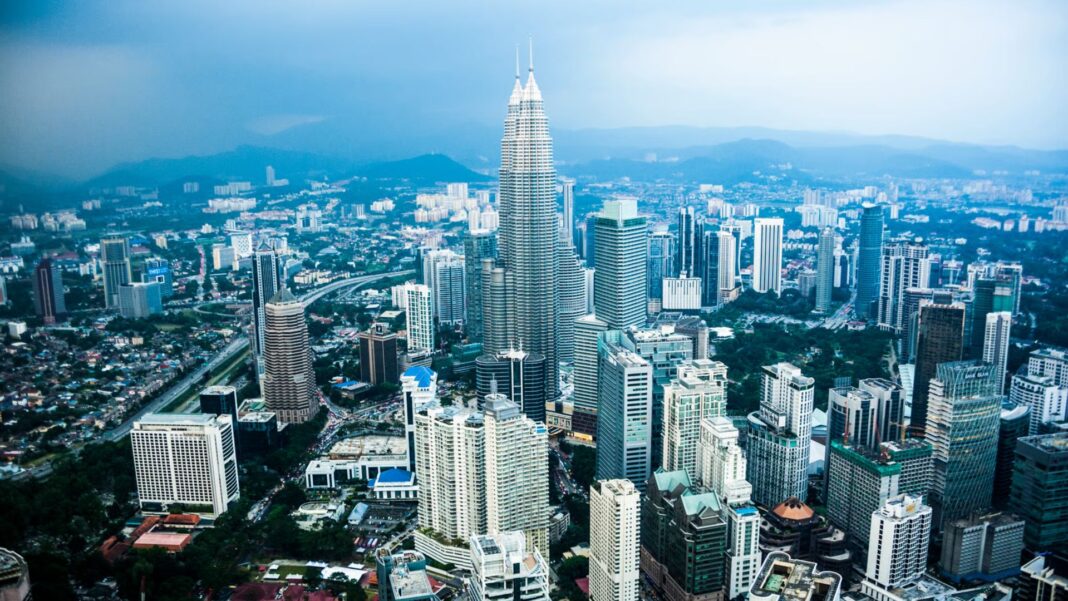

The Milken Institute’s 2026 Global Opportunity Index has ranked Malaysia 23rd and Vietnam 39th globally in investment attractiveness among emerging and developing economies, placing both countries at the top of a Southeast Asian cohort that collectively absorbed 8.2 percent of total capital inflows to developing economies between 2021 and 2024. The annual index, released April 7 from Washington D.C., evaluates six high-growth Southeast Asian markets across 101 variables.
Key Facts At A Glance
- Report released April 7, 2026 by the Milken Institute, a nonprofit, nonpartisan think tank based in Washington D.C.
- Six developing Southeast Asian markets covered: Cambodia, Indonesia, Lao PDR, Malaysia, the Philippines, and Vietnam
- The six markets collectively attracted 8.2% of total capital inflows to emerging and developing economies, 2021–2024; FDI accounts for more than 70% of those inflows
- Malaysia: 23rd globally, 17th in Financial Services, 18th in Business Perception
- Vietnam: 39th globally, 2nd in Economic Performance, 14th in Financial Size and Conditions; 7.1% real GDP growth in 2024, fastest in the group
- Indonesia: Financial Services ranking improved from 78th globally in 2022 to 38th in 2026; 28th in Financial Access
- Philippines: 6th in Economic Performance, 56th in Business Perception, 59th in Institutional Framework; 5.7% projected GDP growth in 2026
- Singapore, assessed separately as a developed economy, ranked 7th overall globally
About The Global Opportunity Index
The Milken Institute’s Global Opportunity Index is an annual ranking designed to assist investors seeking opportunities outside their home markets, and to provide governments with a comparative assessment of their business environment. The 2026 edition evaluates countries using 101 variables organized into five major categories: Business Perception, Economic Fundamentals, Financial Services, Institutional Framework, and International Standards and Policy. The five categories are further divided into 14 subcategories.
Data sources include the World Bank, the International Monetary Fund, the United Nations, and Transparency International. The 2026 edition incorporates updated indicators from the World Bank’s Business Ready project and expands coverage of the digital economy to capture both the quality and extent of countries’ digital infrastructure and technology adoption.
Malaysia: The Regional Leader
Malaysia ranks highest among the six developing Southeast Asian economies covered in the 2026 GOI, placing 23rd globally. The report attributes its position to strong performance across almost all five major categories, with particular distinction in Financial Services, where it ranks 17th globally, and Business Perception, where it ranks 18th. The report characterizes Malaysia as a well-rounded investment environment anchored by institutional quality and economic fundamentals.
Vietnam: Growth And Financial Depth
Vietnam ranks second in the developing Southeast Asian group at 39th globally. Its strongest scores are in Economic Performance, where it places 2nd globally, and Financial Size and Conditions, where it places 14th. Vietnam recorded real GDP growth of 7.1% in 2024, the fastest rate among the six countries assessed. The report frames Vietnam’s positioning as reflecting both its economic momentum and the rapid deepening of its financial sector.
Indonesia: Financial Sector Improvement
Indonesia, the largest economy in the group, is highlighted for the most notable improvement among the six markets. Its Financial Services ranking advanced from 78th globally in 2022 to 38th in 2026, driven in particular by gains in financial access, where it now ranks 28th. The report presents this trajectory as evidence of structural progress in Indonesia’s banking and financial infrastructure that is relevant to investors assessing the country’s medium-term capital market development.
The Philippines: Growth Meets Governance Gap
The Philippines presents a split profile in the 2026 GOI. It ranks 6th globally in Economic Performance, a position the report attributes to strong post-pandemic growth, and carries a projected GDP growth rate of 5.7% for 2026. However, it ranks 56th in Business Perception and 59th in Institutional Framework globally, scores the report identifies as governance and regulatory challenges that may constrain longer-term investment prospects.
Cambodia And Laos
Cambodia and Laos rank below their regional peers across the five assessment categories, with the report citing persistent institutional weaknesses as the primary factor limiting their investment attractiveness relative to Malaysia, Vietnam, Indonesia, and the Philippines.
Singapore As Reference Point
Singapore is assessed separately in the report as a developed economy rather than as part of the six-market developing-economy group. It ranks 7th globally overall, placing 3rd in Financial Size and Conditions, 11th in Financial Access, and 4th in both Business Perception and International Standards and Policy. The Milken Institute positions Singapore as a benchmark reference point for the six developing markets covered in the main body of the report.
Capital Flows And The Investment Context
The report’s headline capital flow finding, that the six Southeast Asian markets absorbed 8.2% of total inflows to emerging and developing economies between 2021 and 2024, with FDI comprising more than 70% of that total, is presented by the institute as evidence of the region’s sustained appeal to long-term investors despite global headwinds. Matthew Aleshire, director of Geo-Economics at the Milken Institute and one of the report’s authors, noted that investors are becoming increasingly selective, and that countries able to maintain macroeconomic stability while deepening financial systems and strengthening governance will be best positioned to attract long-term capital.