
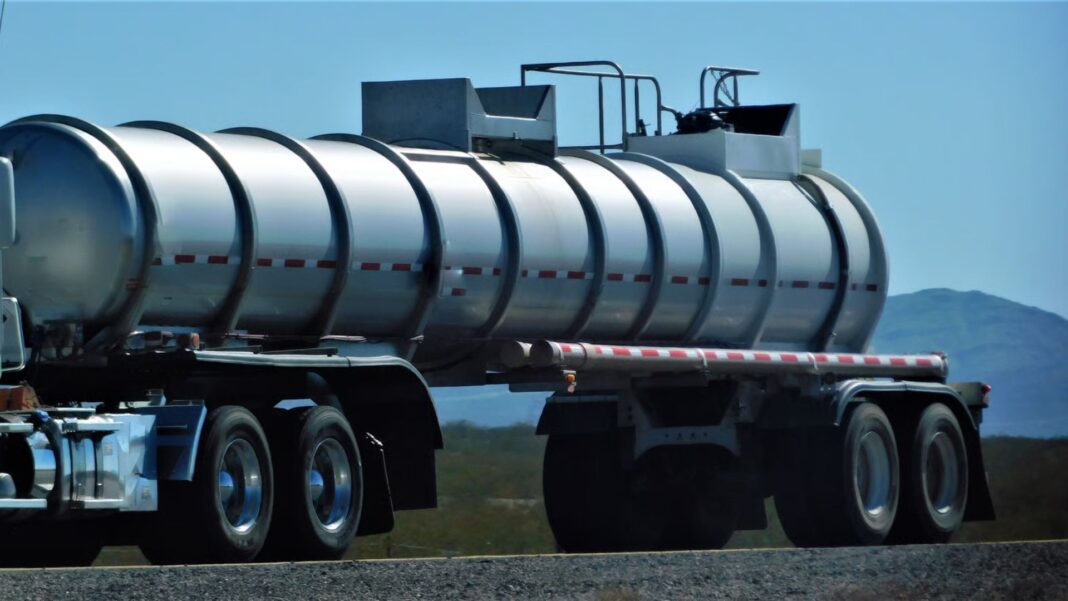

A Petronas-chartered tanker carrying approximately one million barrels of Iraqi crude transited the Strait of Hormuz on April 5 to 6, 2026, becoming the first of seven Malaysia-linked vessels cleared by Iran to pass the chokepoint following high-level government negotiations. The development, confirmed by both PETRONAS and Malaysia’s Ministry of Foreign Affairs, marks the first verified commercial crude delivery advancing through the blockaded strait to a Malaysian refinery since Iran effectively closed the waterway to most shipping in early March 2026.
Key Facts At A Glance
- The tanker Ocean Thunder, registered under the Panama flag and chartered by Petco, a unit of Petroliam Nasional Berhad, loaded approximately one million barrels of Basrah Heavy crude at Basra, Iraq on March 2, 2026, and transited the Strait of Hormuz on April 5 to 6, with cargo destined for the Pengerang Integrated Petroleum Complex in Johor; expected discharge is mid-April 2026.
- Seven Malaysia-linked vessels linked to Petronas, MISC Berhad, and Vantris Energy Berhad were cleared by Iran for toll-free Hormuz transit following a March 26, 2026 call between Prime Minister Anwar Ibrahim and Iranian President Masoud Pezeshkian.
- Iran’s Ambassador to Malaysia confirmed on April 7 that the remaining six vessels would be cleared to transit one by one in stages.
- PETRONAS stated in mid-March that domestic fuel supply was secured through end-May 2026, with contingency measures already activated to ensure continuity through June. By April 7, Anwar publicly updated the supply assurance to June.
- PETRONAS activated parallel supply diversification measures, including sourcing additional crude from West Africa and Latin America, and preparing the Pengerang Refinery and Chemical Complex to process available feedstock for petrol, jet fuel, diesel, and LPG.
- Malaysia’s total refining capacity stands at approximately 997,000 barrels per day, anchored by the Pengerang Integrated Complex, Melaka, and Port Dickson refineries.
- Iran’s transit exemption architecture is informal and bilateral in character; no publicly disclosed written agreement governs the arrangement’s scope or duration.
The Strait Closes And The Vessels Stall
When coordinated United States and Israeli airstrikes on Iran began on February 28, 2026, Tehran moved rapidly to restrict commercial shipping through the Strait of Hormuz, the 33-kilometer waterway through which approximately one-fifth of global crude oil and LNG flows pass. Iran did not impose a complete formal blockade but exercised selective control, allowing passage to vessels flagged by, or carrying cargo for, countries it deemed non-aligned with Washington and Tel Aviv. The practical effect was a near-total stoppage of normal commercial traffic, with ship movement through the strait falling by roughly 90% compared to pre-war levels, according to Iran’s own state media.
For Malaysia, the closure immediately trapped a set of vessels mid-voyage. Seven Malaysia-linked tankers, including those operated by or for Petronas, national tanker operator MISC Berhad, and Kuala Lumpur-listed bunker and energy trader Vantris Energy Berhad, found themselves unable to complete their journeys. The Ocean Thunder had loaded Basrah Heavy crude in Iraq on March 2, a day after the Hormuz restrictions effectively began, and then spent more than a month staged in the region.
Diplomatic Groundwork: Decades In The Making
Malaysia’s ability to secure transit clearance rested not on any new emergency agreement but on a relationship with Tehran that spans several decades. When Iran emerged from its war with Iraq in the late 1980s economically weakened and diplomatically isolated, Malaysia under then-Prime Minister Mahathir Mohamad extended trade cooperation through palm oil barter arrangements that bypassed the US dollar and offered practical support without conditions. That posture, sustained even as Western sanctions tightened around Tehran across subsequent decades, is widely credited as the foundation for the access Malaysia secured in 2026.
Foreign Minister Mohamad Hasan spoke with his Iranian counterpart, Abbas Araghchi, on March 24, 2026, in what was one of the first high-level diplomatic contacts in the current crisis. Two days later, Anwar spoke directly with Iranian President Pezeshkian and raised the specific situation of Malaysian vessels stranded in the strait. According to Anwar, Pezeshkian ordered passage to be granted immediately following the call. Iran’s embassy in Kuala Lumpur later posted on its official social media platform: “We had said that the Islamic Republic of Iran does not forget its friends. The first Malaysian ship passed through the Strait of Hormuz.”
The Transit: Route And Cargo
The Ocean Thunder departed Jebel Ali port in the United Arab Emirates on April 3, 2026. It transited the Strait of Hormuz on April 5 to 6, travelling close to the Iranian coast rather than through standard commercial lanes. Maritime intelligence data from LSEG and Kpler, confirmed by Reuters sourcing from two individuals with knowledge of the matter, tracked the vessel’s passage. Petronas confirmed to Bloomberg News that the vessel was loaded with Iraqi crude bound for its refinery in Pengerang.
The routing along the Iranian-controlled corridor north of Larak Island reflected the broader pattern emerging for vessels with bilateral clearance during this period. Separate maritime tracking data showed that 15 vessels in total transited the strait over a 24-hour period around April 6, primarily using the Iranian-controlled northern corridor. Standard commercial lanes along the Omani coast remained the alternative route, though the passage through it carried distinct risk profiles.
The Ocean Thunder’s approximately one million barrel cargo, if processed at the Pengerang Integrated Petroleum Complex, would contribute to the refinery’s output of petrol, jet fuel, diesel, and LPG, all of which PETRONAS identified as priority fuel categories under its crisis management framework.
Petronas’s Parallel Supply Response
Well before the Ocean Thunder transited the strait, PETRONAS had already activated a multi-track supply response. In a March 12 statement, the company said it had secured additional crude from West Africa and Latin America to reduce reliance on any single shipping route. It was also activating the Pengerang refinery to process feedstock as it became available and maximising domestic crude production from Malaysia’s offshore Sabah, Sarawak, and Peninsular Malaysia fields.
Malaysia’s refining infrastructure, with capacity of approximately 997,000 barrels per day across facilities in Pengerang, Melaka, and Port Dickson, provided a downstream buffer that countries without equivalent processing capability did not have. As PETRONAS stated in March, domestic fuel supply was secured through end-May 2026 at prevailing consumption rates, with mitigation measures in place to sustain continuity through June.
By April 7, Anwar updated this public commitment, stating that Malaysia had sufficient fuel supply through June. The extension of the stated supply horizon by approximately one month, from the end-May figure cited in mid-March, reflects the effect of combined measures: the crude arriving via the Ocean Thunder, supplementary sourcing from non-Gulf supply chains, and domestic output prioritization.
The Bilateral Carve-Out And Its Limits
Malaysia’s Hormuz access rested on a structure that analysts characterized as informal and subject to revision on short notice. Iran did not publish a formal list of exempted flag states or companies. Instead, passage clearances appear to have been granted on a case-by-case basis, shaped by the bilateral relationship and diplomatic engagement. The seven Malaysian-linked vessels were cleared as a discrete group, not as part of any broader framework governing Malaysian-flagged or Malaysian-chartered commercial shipping generally.
Reports that Iran imposed a toll on Malaysian vessels circulated widely but traced back not to an official government statement but to a remark by a Malaysian member of parliament. Both the Malaysian government and Iran’s embassy declined to confirm a toll arrangement, and Anwar stated publicly that the seven vessels would pass toll-free. Disputed reports of transit fees of approximately RM8 million per vessel were not officially acknowledged by either side.
Iran’s Ambassador to Malaysia confirmed on April 7 that the remaining six vessels would clear the strait one at a time. As of the date of that statement, no timeline had been provided for their individual transits.
The fragility of the arrangement was underscored by continued US strikes on Kharg Island, Iran’s primary crude oil export terminal, in the days surrounding the Ocean Thunder’s passage. Each escalation in the conflict carries potential to disrupt the informal understanding that enabled the transit.