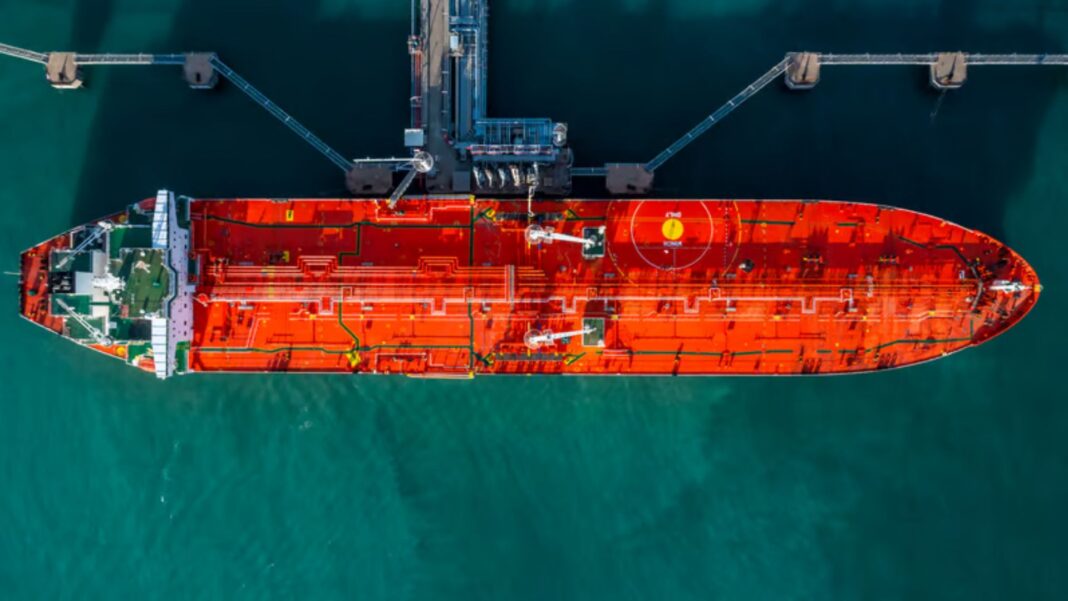

Prime Minister Lawrence Wong convened Singapore’s highest-level crisis governance mechanism on April 2, 2026, establishing the Homefront Crisis Ministerial Committee to coordinate the city-state’s national response to the global energy crunch triggered by the near-closure of the Strait of Hormuz, a chokepoint through which approximately 20 percent of the world’s oil and LNG flows.
Key Facts At A Glance
- The Homefront Crisis Ministerial Committee (HCMC) was formally announced on April 2, 2026 via a video address by Prime Minister Lawrence Wong
- The HCMC is chaired by Coordinating Minister for National Security and Minister for Home Affairs K. Shanmugam, with Deputy Prime Minister and Minister for Trade and Industry Gan Kim Yong as adviser
- The HCMC comprises the Ministry of Trade and Industry, Ministry of Sustainability and the Environment, Ministry of Foreign Affairs, Ministry of Defence, and Ministry of Home Affairs
- Below the HCMC sits the Homefront Crisis Executive Group (HCEG), comprising Permanent Secretaries and agency heads, which reports upward to the HCMC and in turn to Cabinet
- Singapore generates approximately 95 percent of its electricity from natural gas, with roughly 40 percent of total gas supply arriving as LNG and the remainder piped from Malaysia and Indonesia
- In 2025, approximately 45 percent of Singapore’s LNG imports came from Qatar, a source now severely constrained by the Strait of Hormuz disruption
- Oil prices had risen by more than 60 percent since the outbreak of the US-Israel-Iran conflict in late February 2026 at the time of PM Wong’s address
- Singapore has not yet imposed mandatory energy conservation measures; LNG and diesel stockpiles were described as sufficient for months
Parliament was scheduled to sit on April 7, 2026, when detailed measures would be disclosed
The HCMC And Singapore’s Crisis Governance Architecture
The HCMC is the apex political body in Singapore’s Homefront Crisis Management System, a framework codified in 2004 and invoked at points of acute national risk. It has been activated previously during the SARS outbreak, the 2011 Fukushima nuclear incident in Japan, and the COVID-19 pandemic. The structure is designed for what the government calls “whole-of-government” coordination, integrating economic, security, diplomatic, and social dimensions of a crisis under a single command hierarchy. For lesser threats such as the 2013 regional haze crisis, Singapore has historically convened mid-level inter-ministerial committees rather than the HCMC itself. The decision to activate the apex body on April 2 reflects the government’s internal assessment that the current energy crisis carries a severity comparable to Singapore’s most consequential modern emergencies.
Shanmugam confirmed on April 4 that the HCMC had in fact been working “for a few weeks” before the public announcement, meaning preparatory work began as early as mid-March, shortly after the Strait of Hormuz closure began to take effect. The public announcement came as PM Wong determined the situation warranted direct communication with the population.
Why Singapore Is Exposed
Singapore’s structural energy vulnerability is the context for understanding why a city-state that has described its immediate LNG and diesel supplies as adequate nonetheless activated its highest crisis governance tier. Approximately 95 percent of Singapore’s electricity is generated from natural gas. Around 40 percent of total gas supply arrives as LNG shipped into the Singapore LNG Terminal on Jurong Island; the remainder is piped from Malaysia and Indonesia via contracts that are progressively expiring. Malaysian pipeline gas exports to Singapore are expected to end by 2027 as Peninsular Malaysia’s domestic production declines. Indonesian piped gas contracts have already been renegotiated at lower volumes. LNG, accordingly, was already becoming Singapore’s primary gas supply vector before this crisis began.
Singapore GasCo Pte. Ltd., the government-owned central gas procurement entity that became operational on January 1, 2026, is now the mechanism through which the city-state’s power generation companies receive gas. GasCo was designed precisely to address the energy security risks that decentralized procurement posed, risks that the current crisis has validated. Prior to GasCo, Singapore’s power generation companies managed gas procurement independently, creating concentrated exposure during supply shocks. PM Wong confirmed on April 2 that LNG importers were actively securing alternative supplies from producers outside the Middle East, with Australia cited as a key partner. Singapore’s Minister for Energy, Dr. Tan See Leng, was in Australia on April 1, where he met with Australian energy counterparts to reinforce supply coordination.
The supply risk extends well beyond electricity. Singapore imports essentially all of its food, and a substantial share of fertilizer used in global food production transits the Strait of Hormuz. Shanmugam on April 4 described food as “an obvious example” of a sector facing “inevitable price rises” alongside fuel, citing rising fertilizer and transportation costs. Helium, used in Singapore’s semiconductor and biomedical manufacturing sectors, also transits the strait.
Stagflation Warning And Fiscal Response
PM Wong’s April 2 address contained the most explicit stagflation warning issued by any Southeast Asian head of government since the crisis began. He described the risk of “a prolonged period of falling economic output but with rising prices” and noted that once stagflation takes hold, “it is deeply damaging and very hard to bring under control.” The warning was framed not as prediction but as risk scenario, one the HCMC is mandated to help prevent by ensuring supply continuity and cushioning household costs before the dynamic becomes self-reinforcing.
On the fiscal side, PM Wong announced that the government would enhance existing Budget 2026 support measures and accelerate delivery of several. Measures already being deployed include additional U-Save rebates to offset higher household electricity bills. Targeted support for sectors more severely affected by price increases was flagged for disclosure at the April 7 Parliamentary sitting, with delivery workers specifically cited by Shanmugam as an example of a group already bearing higher operating costs. PM Wong separately confirmed that Singapore had been working bilaterally with Australia and New Zealand to reinforce supply lines for essential goods and food, describing both partnerships as “long-term security” arrangements.
Shanmugam told reporters on April 4 that Singapore had not yet introduced mandatory energy-saving restrictions, in contrast to several regional neighbors, and that the government would explain its approach to that question in Parliament. He did not rule out such measures. His framing suggested the government was preserving policy optionality while monitoring whether supply conditions deteriorated further.