

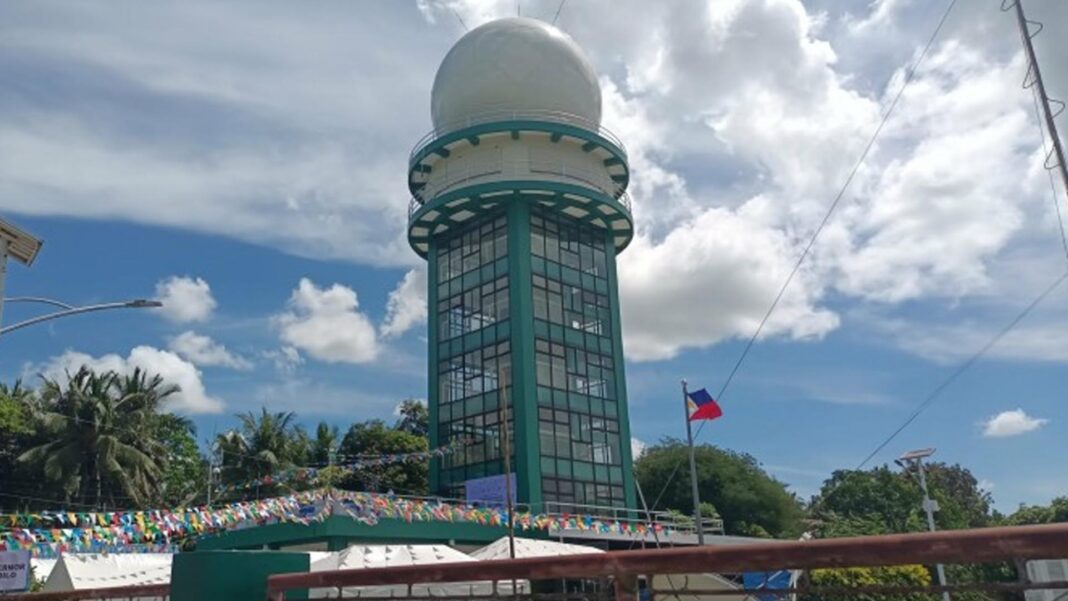

The Department of Science and Technology-Philippine Atmospheric, Geophysical and Astronomical Services Administration (DOST-PAGASA) strengthened its weather monitoring in Iloilo with the inauguration of its new S-band Radar Facility in Barangay Buntatala in Jaro district and the groundbreaking of the new synoptic station at the Iloilo International Airport in the municipality of Cabatuan on Friday.
DOST Secretary Renato Solidum Jr. said the facility is equipped with a state-of-the-art dual-polarimetric Doppler radar system, significantly strengthening weather monitoring across Western Visayas and nearby provinces.
“Its ability to detect atmospheric conditions even during intense rainfall allows DOST-PAGASA to track severe thunderstorms, heavy rainfall, and tropical cyclones with greater precision,” Solidum said in his keynote message.
He said the PHP176.6-million S-band type radar can effectively detect atmospheric conditions even during intense rainfall, making it reliable for large-scale weather observations.
It can cover a range of 480 kilometers, which means its observation can reach other provinces in Visayas, the southern part of Luzon and Mindanao.
Solidum said the data generated by the radar can be used by local government units to decide and prepare.
Meanwhile, the synoptic station at the airport will continuously record key meteorological parameters such as temperature, rainfall, wind, and air pressure –data that form the very foundation of every weather forecast.
PAGASA Administrator Nathaniel Servando, in his message, said the synoptic station is not just an infrastructure project, but a concrete step in strengthening their ability to serve and protect communities.
“The station will provide continuous and reliable observation of atmospheric elements. The synoptic station is also vital for airport operation to ensure the safety of the navigational transport sector,” Servando said.
Solidum said the facilities strengthen the backbone of the country’s weather monitoring network.
However, he said technology alone does not save lives, but “it is the combination of technology, skilled scientists, proactive leaders, and a well-informed public that truly builds resilience.”
“This is why we in the Department of Science and Technology continue to invest in modernizing PAGASA’s equipment, enhancing forecasting capabilities, and bringing science closer to communities,” he added.
Meanwhile, Mayor Raisa Treñas said the facility matters in the safety of the public.
“With better, localized weather information, we can make clearer decisions for our people. We can preempt flooding and protect lives and livelihoods before damage becomes severe,” she said in her message.
Treñas looked forward to a stronger aviation weather service at the Iloilo airport, which serves thousands of passengers and supports economic activity in the region.
“Reliable weather monitoring means greater confidence for our locals and visitors,” she added. (PNA)