

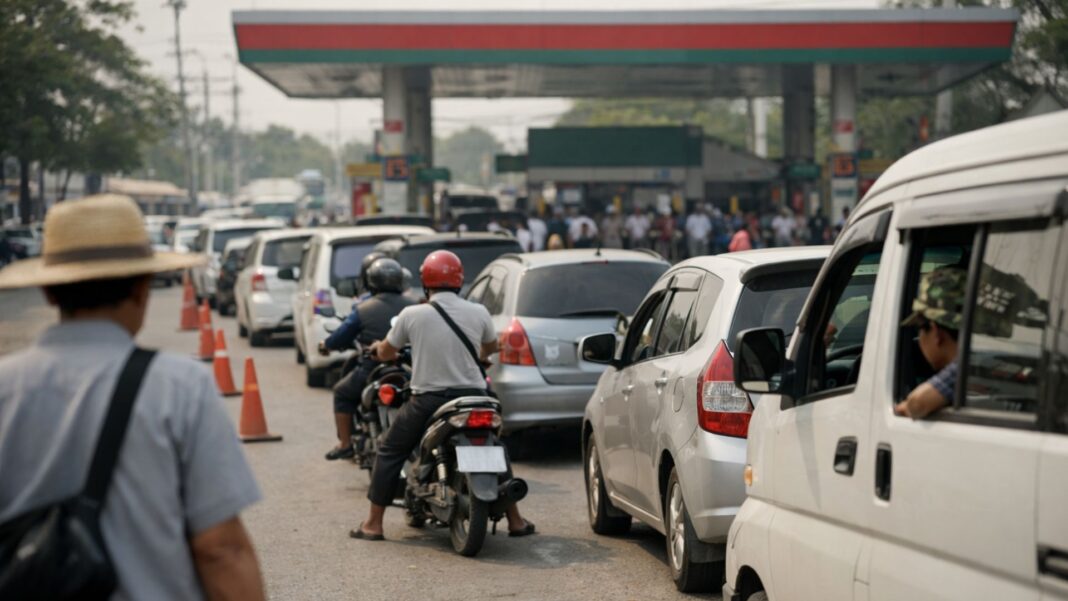

Governments in Thailand and Myanmar introduced energy conservation measures in early March 2026 as global fuel prices increased and supply pressures emerged across parts of Asia. Authorities in both countries moved to reduce fuel consumption and manage domestic demand amid concerns about disruptions to international energy supplies.
Key Facts At A Glance
- Thailand advised government agencies to reduce energy consumption in offices
- Measures include limiting air-conditioning use and reducing official travel
- Myanmar implemented alternating vehicle driving days to reduce fuel demand
- Long queues at petrol stations have been reported in parts of Myanmar
- Policies were introduced amid global fuel price increases linked to Middle East tensions
- Energy import dependency has increased regional vulnerability to supply disruptions
Authorities in Thailand and Myanmar introduced demand-side energy measures during the first week of March as governments responded to rising fuel prices and tightening supply conditions.
Thai officials advised government agencies to reduce energy consumption in public buildings and limit official travel as part of broader conservation efforts. Measures included moderating air-conditioning use and encouraging agencies to adopt practices aimed at lowering fuel demand, according to reporting on the government guidance.
The policies were introduced as global oil prices increased following escalating geopolitical tensions in the Middle East, which raised concerns about potential disruptions to energy shipments moving through key international trade routes.
Thailand is a net importer of energy and relies heavily on imported crude oil and liquefied natural gas to support transportation and electricity generation. Rising international fuel prices can therefore directly affect domestic energy costs and government subsidy requirements.
In neighboring Myanmar, military authorities implemented stricter fuel conservation policies amid reports of shortages at petrol stations. One measure requires vehicles to follow alternating driving days based on license plate numbers in an effort to reduce gasoline and diesel consumption.
The measure was introduced after reports of long queues forming at fuel stations in several areas of the country. Authorities said the restrictions were intended to stabilize fuel availability and prevent rapid depletion of existing supply.
Myanmar’s energy system has faced persistent supply challenges in recent years, including reduced domestic refining capacity and difficulties securing imported fuel supplies. Demand-management policies have periodically been used to manage shortages during periods of limited fuel availability.
Regional energy analysts note that developments in the Middle East can have immediate impacts on Asian energy markets due to the importance of Gulf exporters in global oil and liquefied natural gas supply. A significant share of Asia’s imported fuel travels through the Strait of Hormuz, one of the world’s busiest maritime energy trade routes.
Any disruption to shipping through the area can affect fuel availability and prices across energy-importing economies in Asia, including those in Southeast Asia that rely on maritime imports to supply power plants and transportation networks.
In response to these risks, governments across the region have periodically introduced energy conservation measures during periods of price volatility. These policies typically aim to reduce short-term demand while authorities evaluate longer-term supply and pricing responses.
For electricity systems, higher fuel costs can translate into increased generation costs for power plants that rely on oil, natural gas, or imported liquefied natural gas. In some countries, these costs are passed through to consumers through tariff adjustments or government subsidy programs.
Thailand’s electricity generation mix includes natural gas, coal, renewable energy, and imported hydropower, with natural gas playing a central role in baseload generation. Myanmar’s electricity system relies heavily on hydropower but remains vulnerable to fuel supply disruptions affecting transport and backup generation.
The recent conservation policies highlight how global geopolitical developments can quickly translate into domestic energy policy responses across Southeast Asia.