


Agriculture Secretary Francisco Tiu Laurel Jr. on Thursday said tighter measures are needed to sustain stable food prices in the Philippines.
The DA chief made the statement as food inflation eased sharply in January.
The country’s food inflation slowed to 0.7 percent last month, slower than 1.2 percent in December and far lower than 4 percent for the same period last year, according to the Philippine Statistics Authority (PSA).
The PSA, however, warned that emerging pressures in some food categories can reverse the gains.
Tiu Laurel said there is “no room for complacency” and stressed the need for tighter management of the country’s food supply for the months ahead.
“We are looking very closely at how we manage food supply, from production to imports and distribution, because any slippage can quickly translate into higher prices that hurt consumers and weigh on overall economic activity,” Tiu Laurel said in a statement.
He noted that the downward trend of food costs remains fragile for now.
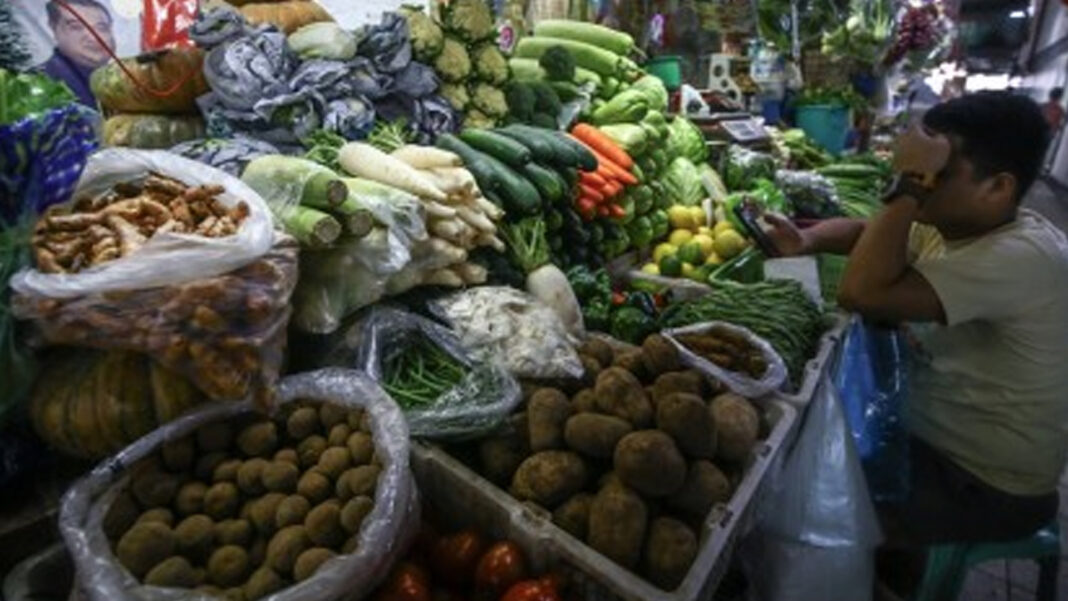
Among the main drivers of lower food prices in January were vegetables, tubers, plantains, cooking bananas, and pulses, at 3.3 percent year-on-year, reflecting a sharp drop from 11.6 percent in December 2025.
For rice, the DA’s maximum suggested retail price (MSRP) for 5 percent broken imported rice contributed to slower food inflation, which is at 3.4 percent, lower than 8.5 percent in January 2025.
The MSRP for 5 percent broken imported rice is PHP43 per kilo.
Other food commodities with slower price upticks were corn, meat, fish and seafood, and oils and fats.
“The numbers are encouraging, but they’re not a signal to relax,” Tiu Laurel said.
Some food items showed upward pressures, signaling risks, like bread and bakery products, dairy and eggs, fruits and nuts, and ready-made food. (PNA)